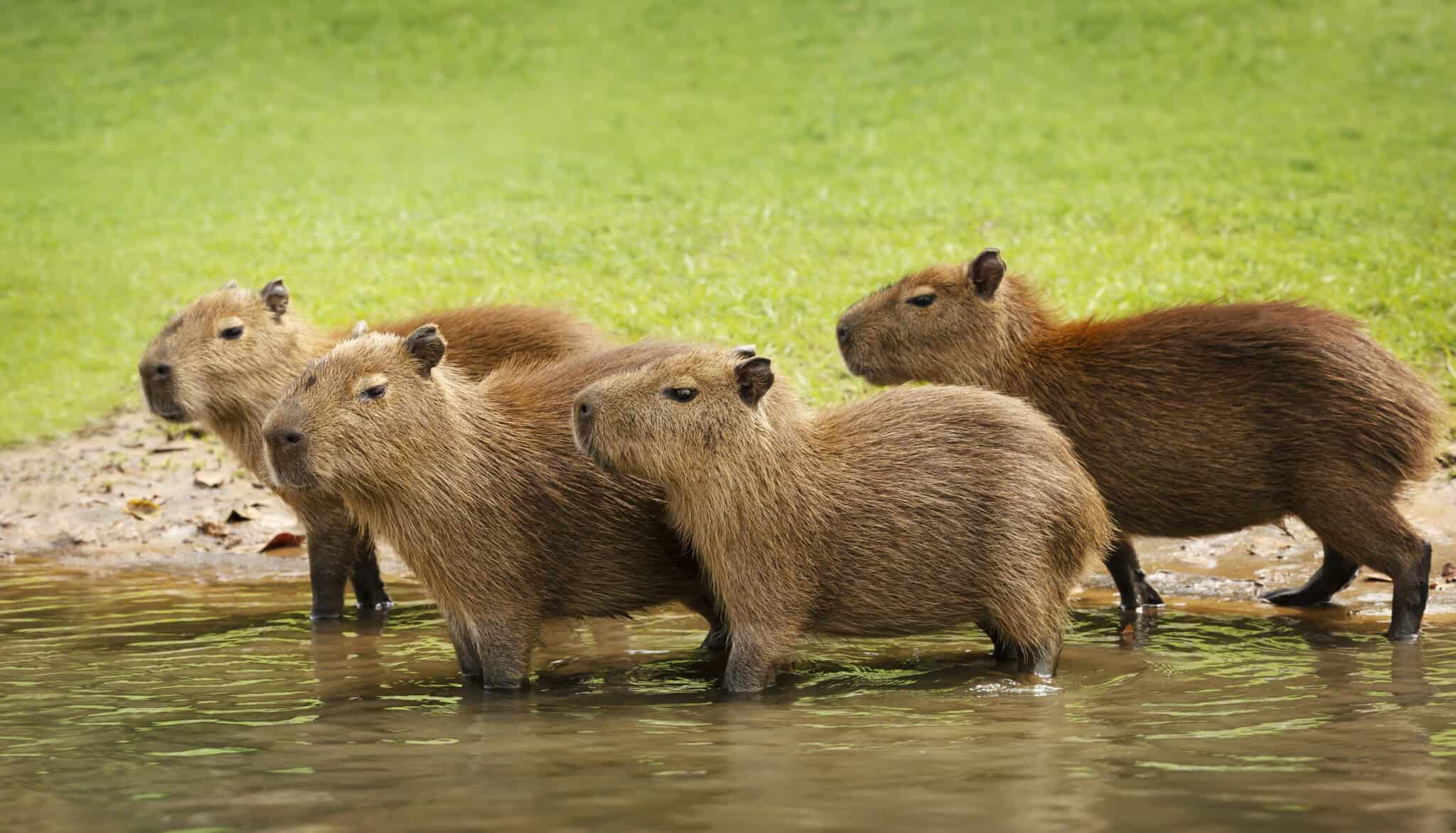
Hey there, fellow animal lovers. Today, we're going on an exciting journey to explore the habitats of one of the most fascinating creatures in the animal kingdom: the capybara. If you're wondering where capybaras are found, you're in the right place. These large rodents are quite unique and can be found in specific regions around the world. So, let's dive in and discover the amazing world of capybaras.
Introduction to Capybaras
Capybaras are the world's largest rodents, and they can grow up to 130 cm in length and weigh up to 66 kg. They have a stocky body, webbed feet, and sharp teeth, which make them well adapted to their semi-aquatic lifestyle. Capybaras are herbivores and feed on a variety of plants, including grasses, aquatic plants, and fruit. They are also excellent swimmers and can stay underwater for up to 5 minutes. But where do these incredible creatures call home?
Habitat and Distribution
Capybaras are found in the wild in South America, specifically in the grasslands, savannas, and wetlands of Argentina, Uruguay, Brazil, and parts of Colombia, Venezuela, and Guyana. They inhabit areas with dense vegetation, such as marshes, swamps, and lakeshores, where they can find plenty of food and shelter. Capybaras are also found in agricultural areas, such as farmlands and plantations, where they can feed on crops and other vegetation.

In the wild, capybaras live in large groups, called "herds," which can consist of up to 100 individuals. These social creatures are known to be very vocal, and they communicate with each other using a variety of sounds, including whistles, grunts, and clicks. They are also very territorial and have a complex social hierarchy, with dominant males leading the herd. But what makes their habitats so unique, and how do they adapt to their environments?
Adaptation to Environment
Capybaras have adapted to their environments in remarkable ways. Their webbed feet, for example, make them excellent swimmers, and their sharp teeth allow them to feed on a variety of plants, including tough aquatic vegetation. They also have a special coating on their fur that helps to repel water, keeping them dry and warm in cold and wet conditions.

In addition to their physical adaptations, capybaras have also developed unique behaviors to survive in their environments. They are crepuscular, meaning they are most active at dawn and dusk, when the temperatures are cooler and the risk of predation is lower. They are also skilled at hiding and can remain submerged in water for long periods, making them difficult to spot. But what about their habitats in different countries, and how do they vary?
Capybara Habitats by Country
In Argentina, capybaras are found in the eastern and central regions, particularly in the provinces of Buenos Aires, Santa Fe, and Entre Rios. They inhabit the grasslands, savannas, and wetlands of the Pampas region, where they can feed on a variety of plants, including grasses and aquatic vegetation.

In Uruguay, capybaras are found throughout the country, particularly in the departments of Artigas, Salto, and Paysandu. They inhabit the grasslands, savannas, and wetlands of the Uruguayan countryside, where they can feed on crops and other vegetation. In Brazil, capybaras are found in the southern and southeastern regions, particularly in the states of Rio Grande do Sul, Santa Catarina, and Paraná. They inhabit the grasslands, savannas, and wetlands of the Brazilian countryside, where they can feed on a variety of plants, including grasses and aquatic vegetation.
Conservation Status
Capybaras are listed as "least concern" on the IUCN Red List, but their populations are declining in some areas due to habitat loss, hunting, and other human activities. In Argentina, for example, capybaras are hunted for their meat and skin, which has led to a decline in their populations. In Uruguay, capybaras are considered an invasive species and are often controlled by farmers who see them as pests.
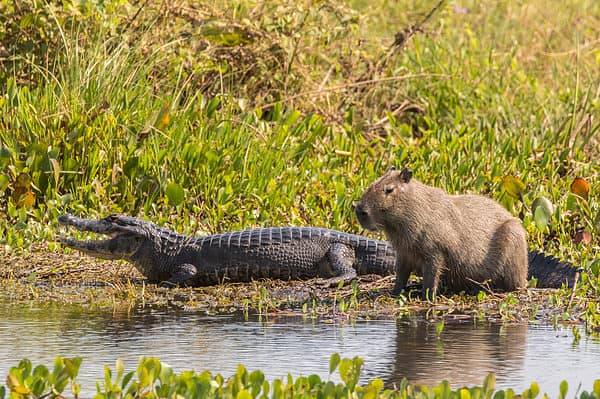
However, in Brazil, capybaras are protected by law, and their populations are stable. Efforts are being made to conserve and protect capybara habitats, including the creation of national parks and wildlife reserves. Additionally, education and outreach programs are being implemented to raise awareness about the importance of capybara conservation and the impact of human activities on their populations.
Interesting Facts
Did you know that capybaras are excellent divers and can stay underwater for up to 5 minutes? They are also very social creatures and live in large groups, called "herds," which can consist of up to 100 individuals. Capybaras are also very intelligent and have been known to outsmart predators, such as caimans and jaguars. They are also very good parents and take care of their young, which are born after a gestation period of approximately 130 days.
In conclusion, capybaras are fascinating creatures that can be found in the wild in South America, specifically in the grasslands, savannas, and wetlands of Argentina, Uruguay, Brazil, and parts of Colombia, Venezuela, and Guyana. They have adapted to their environments in remarkable ways and have developed unique behaviors to survive in their habitats. However, their populations are declining in some areas due to habitat loss, hunting, and other human activities, and conservation efforts are necessary to protect these incredible creatures.

Thanks for joining me on this journey to explore the habitats of capybaras. I hope you've learned something new and interesting about these amazing creatures. If you have any questions or comments, please feel free to share them below. And if you're interested in learning more about capybaras and other animals, be sure to check out my future blog posts.