If you're an animal lover, you might have come across the term "capybara" and wondered what it means. The capybara is a fascinating creature that is native to South America, and it's the world's largest rodent. Yes, you read that right - the capybara is a rodent, but it's unlike any other rodent you've ever seen. In this article, we'll delve into the meaning of capybara, its characteristics, habits, and some interesting facts about this amazing animal.
What is a Capybara?
A capybara is a large semi-aquatic rodent that belongs to the family Hydrochoeridae. It's native to the grasslands and dense forests of South America, and can be found in countries such as Argentina, Uruguay, and Brazil. The capybara is a herbivore, which means it only eats plants, and its diet consists of grasses, aquatic plants, and fruit. It's a social animal that lives in large groups, called "herds", and can be found in a variety of habitats, from dense forests to open grasslands.
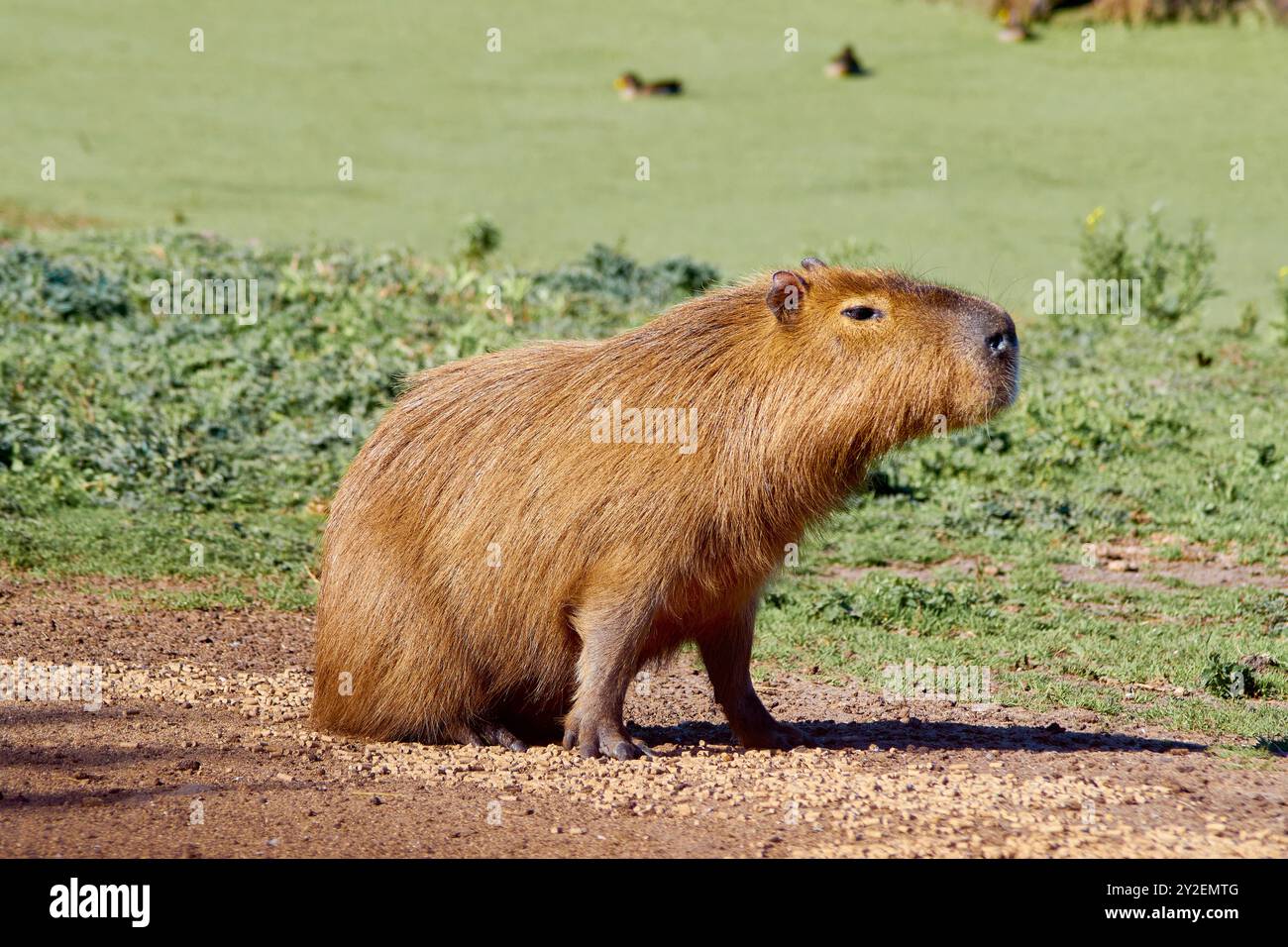
The capybara is a large animal, with adults reaching up to 130 cm in length and weighing up to 66 kg. It has a stocky body, with a rounded head, small ears, and a short tail. Its fur is coarse and brown, with a distinctive reddish-brown color on its face and legs. The capybara is also an excellent swimmer, and can be found in rivers, lakes, and wetlands.

Physical Characteristics
The capybara has several distinctive physical characteristics that set it apart from other rodents. Its large size is one of its most notable features, and it's not uncommon to see capybaras that weigh over 50 kg. Its fur is also unique, with a coarse texture and a distinctive color pattern. The capybara's teeth are specially adapted for its herbivorous diet, with large incisors that are perfect for gnawing on tough plant material.
The capybara's webbed feet are another notable feature, and are perfectly adapted for its semi-aquatic lifestyle. Its eyes, nostrils, and ears are located on top of its head, which allows it to stay mostly submerged in the water while still being able to see, breathe, and hear. This is a clever adaptation that allows the capybara to stay safe while still being able to graze on aquatic plants.

Habitat and Distribution
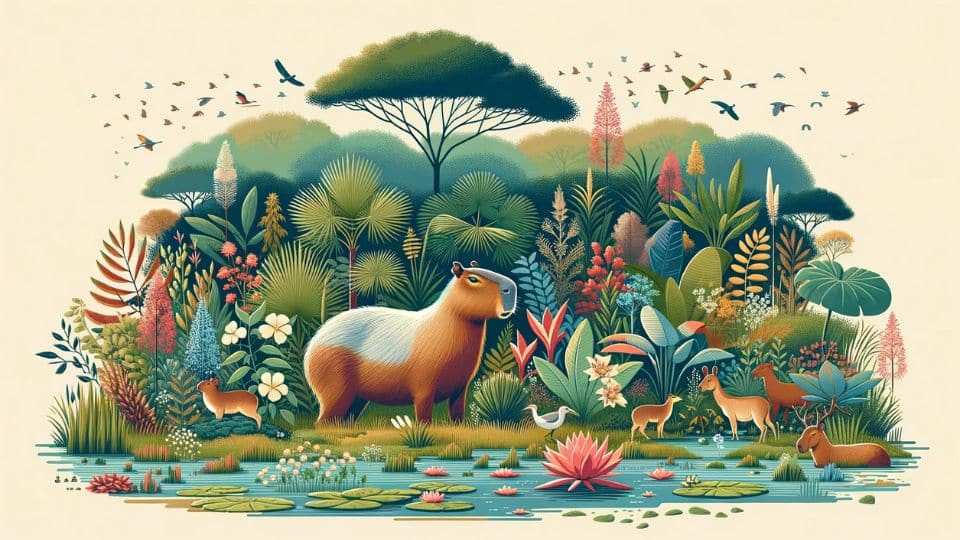
The capybara is found in a variety of habitats, including grasslands, forests, and wetlands. It's a highly adaptable animal that can thrive in a range of environments, from the dense forests of the Amazon to the open grasslands of the Pampas. The capybara is also an excellent swimmer, and can be found in rivers, lakes, and wetlands throughout its range.
The capybara's habitat is typically characterized by abundant vegetation, access to water, and a warm climate. It's a social animal that lives in large groups, and is often found in areas with dense vegetation and plenty of cover. The capybara is also a important part of its ecosystem, playing a key role in seed dispersal and vegetation management.
Behavior and Social Structure
The capybara is a social animal that lives in large groups, called "herds". These herds can range in size from 10 to 100 individuals, and are typically made up of females, their young, and one or more males. The capybara is a highly communicative animal, and uses a range of vocalizations, scent markings, and body language to communicate with other members of its herd.
The capybara is also a crepuscular animal, which means it's most active at dawn and dusk. It spends most of its day grazing on plants, and can eat up to 3.5 kg of food per day. The capybara is also an excellent swimmer, and can stay underwater for up to 5 minutes.

Conservation Status
The capybara is listed as "least concern" on the IUCN Red List, which means it's not considered to be a threatened species. However, the capybara is still hunted for its meat and hide, and is also threatened by habitat loss and fragmentation. The capybara's habitat is being converted into agricultural land, urban areas, and other human-dominated landscapes, which is reducing the availability of its food and shelter.
Conservation efforts are underway to protect the capybara and its habitat. National parks and protected areas have been established in several countries to provide a safe haven for the capybara and other wildlife. Education and outreach programs are also being implemented to raise awareness about the importance of conservation and the need to protect the capybara's habitat.
Cultural Significance
The capybara has significant cultural and economic importance in many countries. In some parts of South America, the capybara is considered a delicacy, and its meat is highly prized. The capybara's hide is also used to make leather goods, such as shoes, belts, and handbags.
The capybara is also an important part of the ecosystem, playing a key role in seed dispersal and vegetation management. It's a "keystone species", which means it has a disproportionate impact on its environment and is crucial for maintaining the balance of its ecosystem. The capybara is also a popular animal in zoos and wildlife parks, where it's often exhibited as an example of a unique and fascinating species.
Interesting Facts
Here are some interesting facts about the capybara: it's the world's largest rodent, it can eat up to 3.5 kg of food per day, and it's an excellent swimmer. The capybara is also a highly social animal that lives in large groups, and is known for its distinctive vocalizations and scent markings.
The capybara has a number of adaptations that allow it to thrive in its environment. Its webbed feet are perfect for swimming, and its eyes, nostrils, and ears are located on top of its head, which allows it to stay mostly submerged in the water. The capybara's fur is also specially adapted to its semi-aquatic lifestyle, with a coarse texture that helps to repel water.
Diet and Nutrition
The capybara is a herbivore, which means it only eats plants. Its diet consists of grasses, aquatic plants, and fruit, and it can eat up to 3.5 kg of food per day. The capybara is also a important part of its ecosystem, playing a key role in seed dispersal and vegetation management.
The capybara's diet is varied and includes a range of plants, from grasses and aquatic plants to fruit and vegetation. It's a highly adaptable animal that can thrive in a range of environments, from the dense forests of the Amazon to the open grasslands of the Pampas. [IMAGE]
Conclusion
In conclusion, the capybara is a fascinating and unique animal that is native to South America. It's the world's largest rodent, and is known for its distinctive physical characteristics, social behavior, and adaptability. The capybara is an important part of its ecosystem, playing a key role in seed dispersal and vegetation management, and is also a popular animal in zoos and wildlife parks.
The capybara is also an important cultural and economic species, with its meat and hide being highly prized in some parts of South America. However, the capybara is still hunted and threatened by habitat loss and fragmentation, and conservation efforts are underway to protect it and its habitat. By learning more about the capybara and its habitat, we can work to protect this amazing animal and preserve its place in the ecosystem.