
Have you ever stopped to think about the intricate social structures of bees? These tiny creatures are capable of communicating with each other in complex ways, and one of the most fascinating examples of this is the waggle dance. In this article, we'll delve into the secret language of bees and explore the fascinating world of the waggle dance. So, let's get started and see what we can learn from these incredible insects.
Introduction to the Waggle Dance
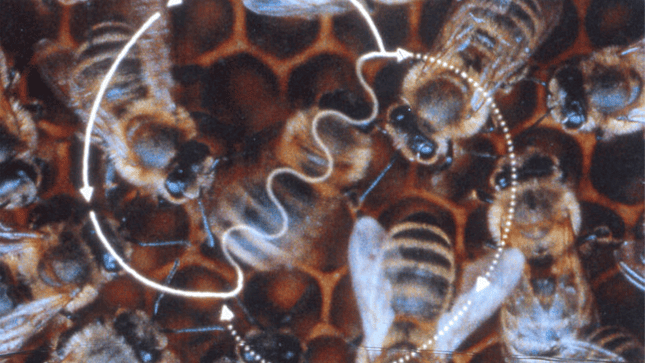
The waggle dance is a figure-eight pattern of movement that bees use to communicate with each other about the location of food sources. It's a complex language that involves a series of movements, including the waggle phase, the turn phase, and the tremble dance. But what's really interesting about the waggle dance is that it's not just a simple matter of bees moving around in a certain pattern - it's a highly nuanced and sophisticated form of communication.

Scientists have been studying the waggle dance for decades, and they've made some remarkable discoveries about how it works. For example, did you know that the angle of the waggle dance corresponds to the direction of the food source relative to the sun? It's true - bees use the position of the sun to orient their dance and communicate the location of nectar-rich flowers or other food sources to their fellow bees. And it's not just the angle of the dance that's important - the duration of the waggle phase also plays a critical role in communicating the distance to the food source.
How Bees Learn the Waggle Dance
So, how do bees learn the waggle dance in the first place? It's a great question, and the answer is fascinating. Young bees, known as nurse bees, learn the dance by observing experienced forager bees. They watch as the foragers perform the dance and gradually begin to mimic the movements themselves. It's a process that requires a lot of practice and patience, but eventually, the young bees become proficient in the dance and are able to use it to communicate with their fellow bees.

But the waggle dance is not just something that bees learn through observation - it's also influenced by their genetic makeup. Scientists have discovered that certain genes play a critical role in the development of the dance, and that bees that are genetically predisposed to be good dancers are more likely to become successful foragers. It's a remarkable example of how genetics and environment interact to shape the behavior of these incredible insects.
The Importance of the Waggle Dance
So, why is the waggle dance so important to bees? The answer is simple - it's a matter of survival. Bees need to be able to communicate with each other about the location of food sources in order to survive, and the waggle dance is the key to this process. Without the dance, bees would be unable to coordinate their foraging efforts and would likely struggle to find enough food to sustain themselves.

But the waggle dance is not just important for bees - it's also fascinating for scientists and bee enthusiasts. By studying the dance, we can gain insights into the complex social structures of bees and learn more about how these incredible insects communicate with each other. And who knows - we may even be able to apply some of the principles of the waggle dance to our own communication systems. After all, if bees can use a complex dance to communicate with each other, maybe we can learn to do the same thing in our own way.
As we continue to learn more about the waggle dance, we're also discovering more about the importance of bees in our ecosystem. These tiny creatures play a vital role in pollinating plants and crops, and without them, our food supply would be severely impacted. So, the next time you see a bee buzzing around a flower, remember the intricate social structures and complex communication systems that are at work behind the scenes.
The Science Behind the Waggle Dance
So, what's the science behind the waggle dance? It's a great question, and the answer is fascinating. Scientists have been studying the dance for decades, and they've made some remarkable discoveries about how it works. For example, did you know that the waggle dance is performed in a specific pattern, with the bee moving in a figure-eight shape? This pattern is critical to the dance, as it allows the bee to communicate the direction and distance of the food source to its fellow bees.
But the science behind the waggle dance goes far beyond just the pattern of movement. Scientists have also discovered that the dance is influenced by a range of factors, including the quality of the food source, the distance to the food source, and even the time of day. For example, bees are more likely to perform the dance in the morning, when the sun is high in the sky, and they're less likely to dance in the afternoon, when the sun is lower in the sky. It's a remarkable example of how bees are able to adapt their behavior to their environment and communicate with each other in a highly nuanced way.
One of the most interesting things about the science behind the waggle dance is the way that bees use pheromones to communicate with each other. Pheromones are chemical signals that bees release into the air, and they play a critical role in the dance. For example, when a bee performs the waggle dance, it releases a pheromone that attracts other bees and encourages them to follow the dance. It's a remarkable example of how bees are able to use chemical signals to communicate with each other and coordinate their behavior.
The Future of the Waggle Dance
So, what's the future of the waggle dance? It's a great question, and the answer is uncertain. As we continue to learn more about the dance and the importance of bees in our ecosystem, we're also facing a range of challenges that threaten the survival of these incredible insects. From habitat loss to pesticide use, there are many factors that are impacting bee populations and threatening the future of the waggle dance.
But despite these challenges, there's also a lot of reason to be hopeful. Scientists are working hard to learn more about the waggle dance and the importance of bees in our ecosystem, and they're developing new strategies to protect and conserve bee populations. For example, some scientists are working on developing new types of pesticides that are safer for bees, while others are creating bee-friendly habitats that provide a safe haven for these incredible insects.
As we look to the future, it's clear that the waggle dance will continue to play a critical role in the lives of bees. Whether it's through the development of new technologies that allow us to communicate with bees more effectively, or through the creation of new strategies to protect and conserve bee populations, the waggle dance will remain an important part of the intricate social structures of these incredible insects. And who knows - maybe one day we'll even be able to use the principles of the waggle dance to develop new forms of communication that allow us to connect with each other in more nuanced and sophisticated ways.
Conclusion
In conclusion, the waggle dance is a fascinating example of the complex social structures and communication systems of bees. Through this intricate dance, bees are able to communicate with each other about the location of food sources and coordinate their foraging efforts. It's a remarkable example of how these incredible insects are able to work together to survive and thrive, and it's a powerful reminder of the importance of bees in our ecosystem.
As we continue to learn more about the waggle dance and the importance of bees, we're also reminded of the need to protect and conserve these incredible insects. Whether it's through the development of new technologies or the creation of bee-friendly habitats, there are many ways that we can help to support the health and well-being of bee populations. So, the next time you see a bee buzzing around a flower, remember the intricate social structures and complex communication systems that are at work behind the scenes, and do your part to help protect these incredible insects. [IMAGE]