When we think of the largest animals to have ever existed, our minds often wander to the dinosaurs that roamed the Earth millions of years ago. However, the largest animal to have ever existed is not a dinosaur, but a creature that is still alive today. The blue whale, a massive marine mammal, holds the record for the largest animal to have ever existed, and it's still swimming in our oceans. In this article, we'll delve into the fascinating world of blue whales and explore what makes them so unique and incredible.
Introduction to Blue Whales
Blue whales are the largest animals on Earth, with some individuals reaching lengths of up to 100 feet (30 meters) and weighing up to 200 tons. To put that in perspective, they can grow up to 3 times the length of a school bus and weigh as much as 50 elephants combined. Despite their massive size, blue whales are incredibly streamlined and can swim at speeds of up to 30 miles per hour (48 kilometers per hour). They are found in all of the world's oceans, from the Arctic to the Antarctic, and are known for their distinctive blue-gray color and mottled patterns.

Habitat and Distribution
Blue whales are a migratory species, traveling long distances each year to find food and breed. They can be found in both warm and cold waters, from the surface to depths of up to 3,000 feet (900 meters). They are most commonly found in areas with high productivity, such as near coral reefs or in areas with upwelling currents. Blue whales are known to migrate across entire ocean basins, with some individuals traveling over 12,000 miles (19,000 kilometers) in a single year. This makes them one of the most widely distributed animals on the planet.
Despite their wide distribution, blue whales are still a relatively rare sight. They are a solitary species, only coming together to mate or feed. They are also incredibly shy, avoiding areas with high levels of human activity. This makes them difficult to study, and as a result, much of what we know about blue whales has been learned through observations of their behavior and tracking of their movements.
Feeding Habits
Blue whales are filter feeders, using their baleen plates to strain tiny krill and other organisms from the water. They can consume up to 40 million krill in a single day, making them one of the largest consumers of krill on the planet. Blue whales have a highly efficient feeding system, using their massive tongue to take in huge amounts of water and then filtering it through their baleen plates to capture their prey. This process is so efficient that they can feed on krill that are as small as 1 millimeter in length.

Despite their massive size, blue whales are incredibly agile and can make sharp turns and quick changes in direction when feeding. They are also able to dive to great depths in search of food, with some individuals reaching depths of up to 3,000 feet (900 meters). This allows them to access areas of the ocean that are rich in krill and other nutrients, making them one of the most successful feeders in the ocean.
Conservation Status
Blue whales are currently listed as endangered on the IUCN Red List, with estimates suggesting that there are only around 5,000-12,000 individuals remaining in the wild. The main threat to blue whales is ship strikes, with many individuals being killed or injured each year by collisions with ships. Noise pollution is also a major concern, as the increasing levels of noise in the ocean can disrupt blue whale communication and behavior.
Overhunting is also a major threat to blue whales, with many individuals being hunted for their meat, oil, and baleen. Although commercial whaling is now banned, many blue whales are still caught accidentally in fishing gear or are targeted by poachers. Climate change is also a major concern, as changes in ocean temperature and chemistry can affect the availability of krill and other nutrients that blue whales rely on for food.
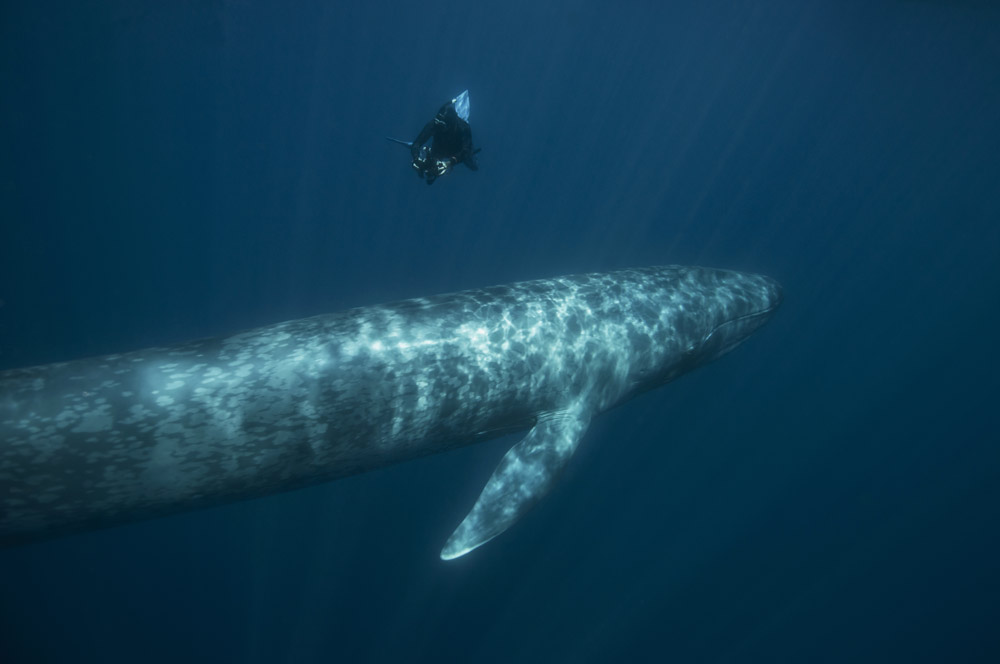
Efforts are being made to protect blue whales and their habitats, including the establishment of marine protected areas and the implementation of regulations to reduce ship strikes and noise pollution. However, more needs to be done to address the scale and complexity of the threats facing blue whales. This includes increasing funding for conservation efforts, supporting research and monitoring programs, and raising awareness about the importance of protecting these incredible creatures.
Interesting Facts About Blue Whales
Blue whales are not only the largest animals on Earth, but they are also one of the most fascinating. Here are a few interesting facts about blue whales that you might not know: they can produce sounds that are louder than a jet engine, with some vocalizations reaching levels of up to 188 decibels. They are also incredibly long-lived, with some individuals estimated to be up to 90 years old. Blue whales are also able to hold their breath for up to 20 minutes, allowing them to dive to great depths in search of food.
Blue whales have a unique way of communicating with each other, using a variety of clicks, whistles, and pulses to convey information. They are also able to make a wide range of other sounds, including grunts, groans, and even what can only be described as a kind of whale "singing". This complex communication system allows blue whales to coordinate their behavior, find mates, and warn other whales of potential threats.

Despite their massive size, blue whales are incredibly streamlined and can swim at speeds of up to 30 miles per hour (48 kilometers per hour). They are also able to make sharp turns and quick changes in direction, allowing them to chase down prey or avoid predators. Blue whales are also able to dive to great depths, with some individuals reaching depths of up to 3,000 feet (900 meters) in search of food.
Conclusion
In conclusion, the blue whale is an incredible creature that continues to fascinate and inspire us. As the largest animal to have ever existed, they are a reminder of the awe-inspiring diversity and complexity of life on Earth. However, they are also a reminder of the importance of conservation and the need to protect these incredible creatures and their habitats. By learning more about blue whales and the challenges they face, we can work to ensure that they continue to thrive for generations to come.
As we continue to learn more about blue whales and their behavior, we are reminded of the importance of preserving our oceans and the creatures that call them home. By supporting conservation efforts and reducing our impact on the environment, we can help to protect these incredible animals and ensure that they continue to thrive. So next time you're out on the water, keep an eye out for these gentle giants and remember the important role they play in our planet's ecosystem.