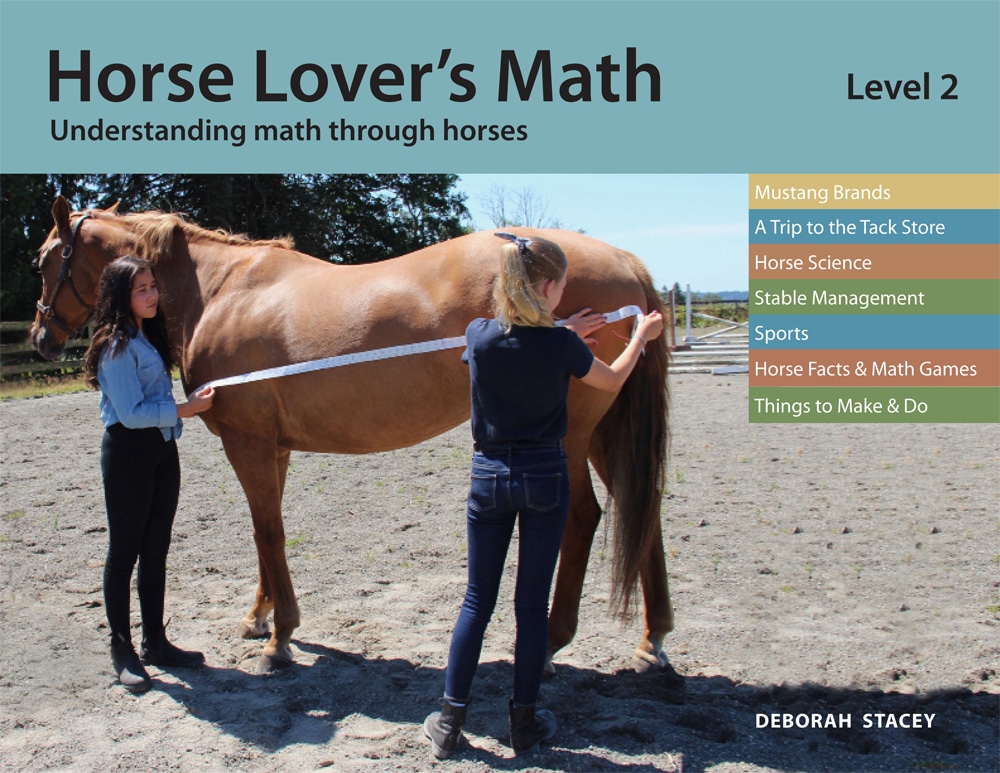
Have you ever heard of a horse that can do math? It sounds like something out of a fantasy novel or a joke, but believe it or not, there was a horse named Clever Hans that gained international fame in the early 20th century for its supposed ability to perform mathematical calculations. In this article, we'll delve into the fascinating story of Clever Hans and how it fooled everyone into thinking it was a math whiz.
A Brief Introduction to Clever Hans
Clever Hans was a German horse owned by a mathematician named Wilhelm von Osten. Von Osten claimed that he had taught Hans to perform mathematical calculations, and the horse became a sensation in Germany and beyond. People would come from all over to see Hans in action, and the horse would allegedly solve complex math problems with ease. But was Hans really a math genius, or was there something more going on?

The Methods Behind the Magic
So, how did Hans appear to be doing math? The answer lies in the way von Osten interacted with the horse. When someone would ask Hans a math question, von Osten would provide a subtle cue, such as a slight nod or a movement of his head, to indicate the correct answer. Hans, being a highly intelligent and observant animal, had learned to associate these cues with the correct responses. In other words, Hans wasn't actually doing math; it was simply reading von Osten's body language and responding accordingly.
But here's the amazing part: Hans was so good at reading these cues that it was almost impossible to detect. Von Osten's movements were incredibly subtle, and he had developed a system of cues that were tailored to specific types of math problems. For example, if someone asked Hans to add two numbers, von Osten would use a slightly different cue than if someone asked Hans to multiply two numbers. It was a sophisticated system, and Hans had learned to respond to it with remarkable accuracy.
The Investigation Begins
As Hans' fame grew, so did the skepticism surrounding its abilities. Many people suspected that von Osten was somehow cheating, and a formal investigation was launched to get to the bottom of things. The investigation was led by a psychologist named Oskar Pfungst, who was determined to figure out how Hans was doing its math.
Pfungst began by observing Hans and von Osten in action, looking for any signs of cheating or cues that might be being used. At first, he couldn't detect anything out of the ordinary, but he was convinced that there must be some explanation for Hans' remarkable abilities. So, he decided to conduct a series of experiments to test Hans' math skills and see if he could uncover the truth.

In one of the experiments, Pfungst asked Hans a series of math questions, but this time, he made sure that von Osten was not in a position to provide any cues. To his surprise, Hans was unable to answer the questions correctly, and it became clear that the horse was relying on von Osten's cues to respond. Pfungst repeated the experiment several times, using different types of questions and varying the conditions, but the results were always the same: without von Osten's cues, Hans was just a regular horse with no math abilities.
The Truth Revealed
So, what did Pfungst's investigation reveal? In short, it showed that Hans was not a math genius at all, but rather a highly trained animal that had learned to respond to subtle cues from its owner. The cues were so subtle that they were almost imperceptible, but they were enough to allow Hans to appear as if it was doing complex math calculations.

The revelation was a bit of a disappointment to the public, which had been fascinated by the idea of a mathematically gifted horse. But it was also a testament to the intelligence and trainability of animals, and it highlighted the importance of careful observation and experimentation in understanding animal behavior. Today, the story of Clever Hans is often cited as a classic example of the importance of skepticism and critical thinking in science.
In conclusion, the story of Clever Hans is a fascinating one that teaches us about the power of observation, the importance of skepticism, and the amazing abilities of animals. While Hans may not have been a math genius, it was certainly a remarkable animal that was able to fool people into thinking it was. And who knows? Maybe there are other animals out there with hidden talents, just waiting to be discovered.

Legacy of Clever Hans
The legacy of Clever Hans extends far beyond the story of a horse that could do math. It has become a cultural phenomenon, symbolizing the power of intelligence, observation, and training. The story has been retold and reinterpreted in countless ways, from films and books to artworks and musical compositions. It has also inspired new generations of animal trainers and researchers, who are working to unlock the secrets of animal intelligence and behavior.
Today, the name "Clever Hans" is synonymous with intelligence, cleverness, and adaptability. It's a reminder that even the most unlikely creatures can possess remarkable abilities, and that with patience, training, and observation, we can uncover the hidden talents of the animal kingdom. So the next time you hear someone say "Clever Hans," you'll know that they're not just talking about a horse that could do math – they're talking about a cultural icon that continues to inspire and fascinate us to this day.
In the end, the story of Clever Hans is a powerful reminder of the importance of curiosity, creativity, and critical thinking. It shows us that even the most extraordinary claims can have ordinary explanations, and that with careful observation and experimentation, we can uncover the truth behind even the most remarkable phenomena. So let's keep exploring, keep discovering, and keep pushing the boundaries of what we thought was possible – just like Clever Hans, the horse that learned to do math and fooled everyone.