
When it comes to the world of rodents, there's one creature that stands out from the rest - the capybara. These large, semi-aquatic rodents are native to South America and are known for their unique appearance and impressive size. But just how big are capybaras, and what makes them so fascinating? In this article, we'll delve into the world of capybaras and explore their size, habitat, behavior, and more.
Introduction to Capybaras
Capybaras are the world's largest rodents, and they can be found in the wild throughout much of South America, including Argentina, Uruguay, and parts of Brazil. They are members of the Hydrochoeridae family and are closely related to guinea pigs and cavies. Despite their large size, capybaras are excellent swimmers and can be found in a variety of aquatic habitats, including rivers, lakes, and wetlands.

In the wild, capybaras are herbivores and feed on a variety of plants, including grasses, aquatic plants, and fruit. They are social creatures and are often found in large groups, called herds.These herds can range in size from just a few individuals to over 100 capybaras, and are usually led by a dominant male. Capybaras are also known for their unique communication style, which includes a variety of clicks, whistles, and grunts.
Size and Weight
So, just how big are capybaras? On average, adult capybaras can grow to be around 3.5 to
4.5 feet (107 to 137 cm) in length, and weigh between 77 and 150 pounds (35 to 68 kg). However, some capybaras have been known to reach lengths of up to 5 feet (152 cm) and weigh as much as 200 pounds (91 kg).
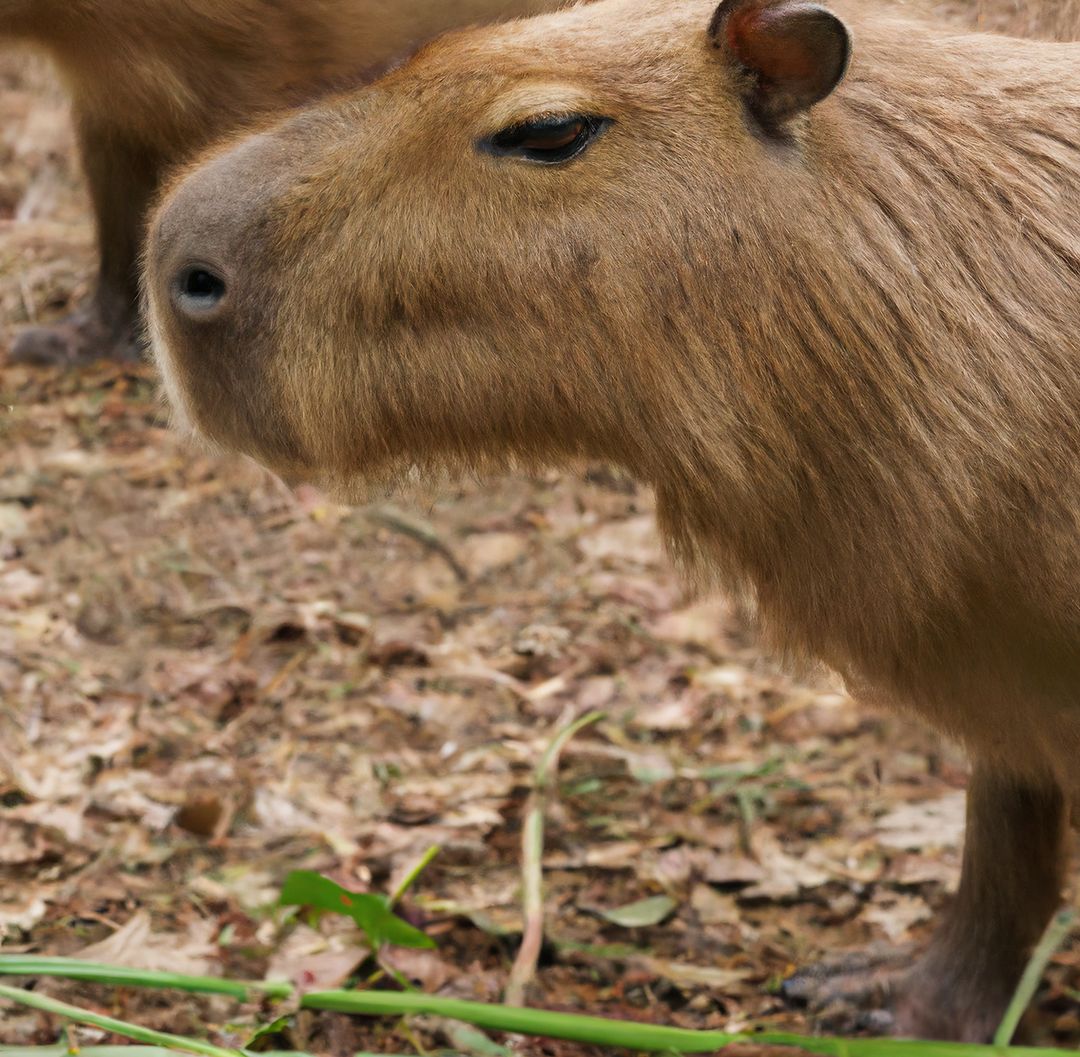
To put that in perspective, capybaras are roughly the same size as a large dog, such as a German Shepherd or a Labrador Retriever. However, despite their large size, capybaras are relatively compact and have a stocky build, which helps them to move easily through dense vegetation and swim through the water. Their webbed feet and powerful tails also make them well-suited to their aquatic environment.
Comparison to Other Rodents
While capybaras are the largest rodents in the world, they are still much smaller than many other mammals. For example, the average adult human is around 5 to 6 feet (152 to 183 cm) tall, and can weigh anywhere from 100 to 200 pounds (45 to 91 kg). However, compared to other rodents, capybaras are truly massive. The average guinea pig, for example, weighs around 2 to 3 pounds (0.9 to
1.4 kg) and is around 8 to 12 inches (20 to 30 cm) in length.

Even the largest species of rats and mice are dwarfed by capybaras. The Norway rat, for example, is one of the largest species of rats and can weigh up to 1.5 pounds (0.7 kg) and reach lengths of up to 18 inches (46 cm). However, capybaras are still around 10 to 15 times larger than these rodents, and are truly in a league of their own when it comes to size.
Habitat and Distribution
Capybaras are found in a variety of habitats throughout South America, including grasslands, savannas, and wetlands. They are excellent swimmers and can be found in rivers, lakes, and estuaries, as well as in coastal areas and mangrove swamps. In the wild, capybaras are typically found in areas with dense vegetation, such as aquatic plants and grasses, which provide them with food and shelter.
Capybaras are also found in a variety of different elevations, from sea level to over 4,000 feet (1,200 meters) above sea level. They are most commonly found in areas with warm temperatures and high humidity, and are able to tolerate a wide range of different environments. In the wild, capybaras are an important part of their ecosystems, playing a key role in seed dispersal and nutrient cycling.
Unfortunately, capybaras are also threatened by a variety of different human activities, including habitat destruction, hunting, and the introduction of invasive species. As a result, conservation efforts are necessary to protect these amazing creatures and their habitats. This can include the creation of protected areas, such as national parks and wildlife reserves, as well as education and outreach programs to raise awareness about the importance of conservation.
Behavior and Social Structure
Capybaras are social creatures that live in large groups, called herds.These herds are usually led by a dominant male, and can range in size from just a few individuals to over 100 capybaras. Within these herds, capybaras have a complex social structure, with different individuals playing different roles.

For example, dominant males will often lead the herd and protect it from predators, while females will often care for the young and teach them important skills, such as swimming and foraging. Subordinate males, on the other hand, will often play a role in defending the herd's territory and warning other capybaras of potential threats.
Capybaras are also known for their unique communication style, which includes a variety of clicks, whistles, and grunts. They are able to make a wide range of different sounds, from high-pitched squeaks to low-frequency grunts, and are able to use these sounds to convey different messages and warnings. For example, a capybara may use a high-pitched squeak to alert other capybaras to the presence of a predator, while a low-frequency grunt may be used to signal aggression or dominance.
Reproduction and Lifespan
Capybaras are able to breed throughout the year, and females will typically give birth to between 2 and 8 young after a gestation period of around 130 to 150 days. The young capybaras, called "kits," are born with their eyes open and are able to swim and walk within hours of birth. [IMAGE]
Females will often care for the kits, nursing them and teaching them important skills, such as swimming and foraging. The kits will stay with their mother for around 6 to 12 months, during which time they will learn everything they need to know to survive on their own. After this time, the kits will become independent and will start to venture out on their own, eventually forming their own herds and starting the cycle over again.
In the wild, capybaras can live for up to 8 to 10 years, although their average lifespan is around 5 to 6 years. In captivity, capybaras have been known to live for up to 12 years, although this is less common. With proper care and management, capybaras can thrive in captivity, and are often kept in zoos and wildlife sanctuaries where they can be appreciated by the public.
Conclusion
In conclusion, capybaras are truly one of the most fascinating creatures in the animal kingdom. With their large size, unique appearance, and complex social structure, they are a joy to learn about and observe. Whether you're interested in learning more about these amazing rodents or simply want to appreciate their beauty, there's no denying the appeal of capybaras. [IMAGE]
By learning more about capybaras and their habitats, we can gain a greater appreciation for the importance of conservation and the need to protect these amazing creatures and their ecosystems. Whether you're a wildlife enthusiast, a scientist, or simply someone who loves animals, capybaras are sure to captivate and inspire you. So next time you're out in nature, keep an eye out for these incredible creatures, and remember the important role they play in their ecosystems.