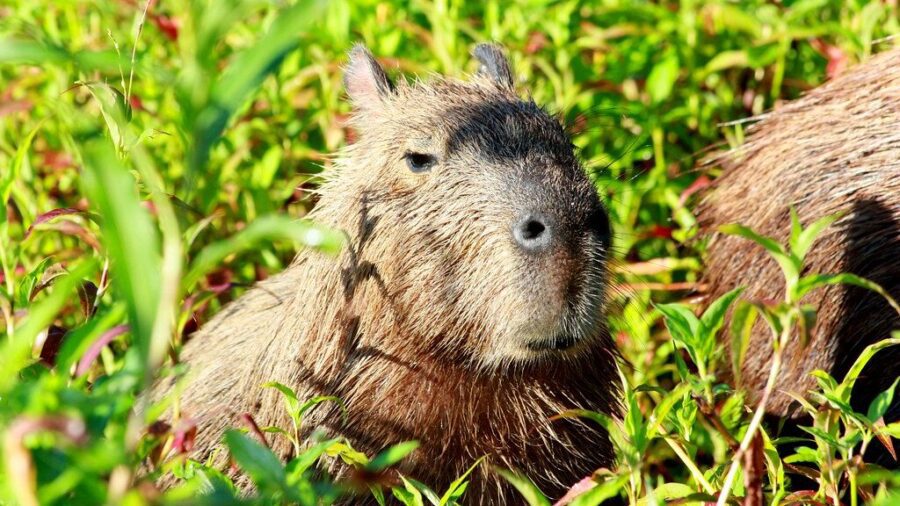
When it comes to the world of rodents, there are few creatures as fascinating as the capybara. These large, semi-aquatic rodents are native to South America and are known for their unique appearance and intriguing habits. One of the most interesting things about capybaras is their habitat, and in this article, we're going to explore the answer to the question: dónde vive el capibara, or where does the capybara live?
Introduction to Capybaras
Capybaras are the world's largest rodents, with adults reaching lengths of up to 130 cm and weighing up to 66 kg. They have a distinctive appearance, with a stocky body, short legs, and a broad, flat head. Their fur is coarse and brown, and they have webbed feet that are perfectly adapted for their semi-aquatic lifestyle. Capybaras are herbivores, feeding on a variety of plants, including grasses, aquatic plants, and fruit.

Capybara Habitat
So, where does the capybara live? Capybaras are found in the wild in much of South America, including Argentina, Uruguay, Brazil, and parts of Colombia, Venezuela, and Guyana. They inhabit a variety of freshwater habitats, including rivers, lakes, swamps, and wetlands. Capybaras are highly adaptable and can be found in a range of different environments, from dense rainforests to open grasslands. They are excellent swimmers and can often be found in the water, where they feed on aquatic plants and escape from predators.
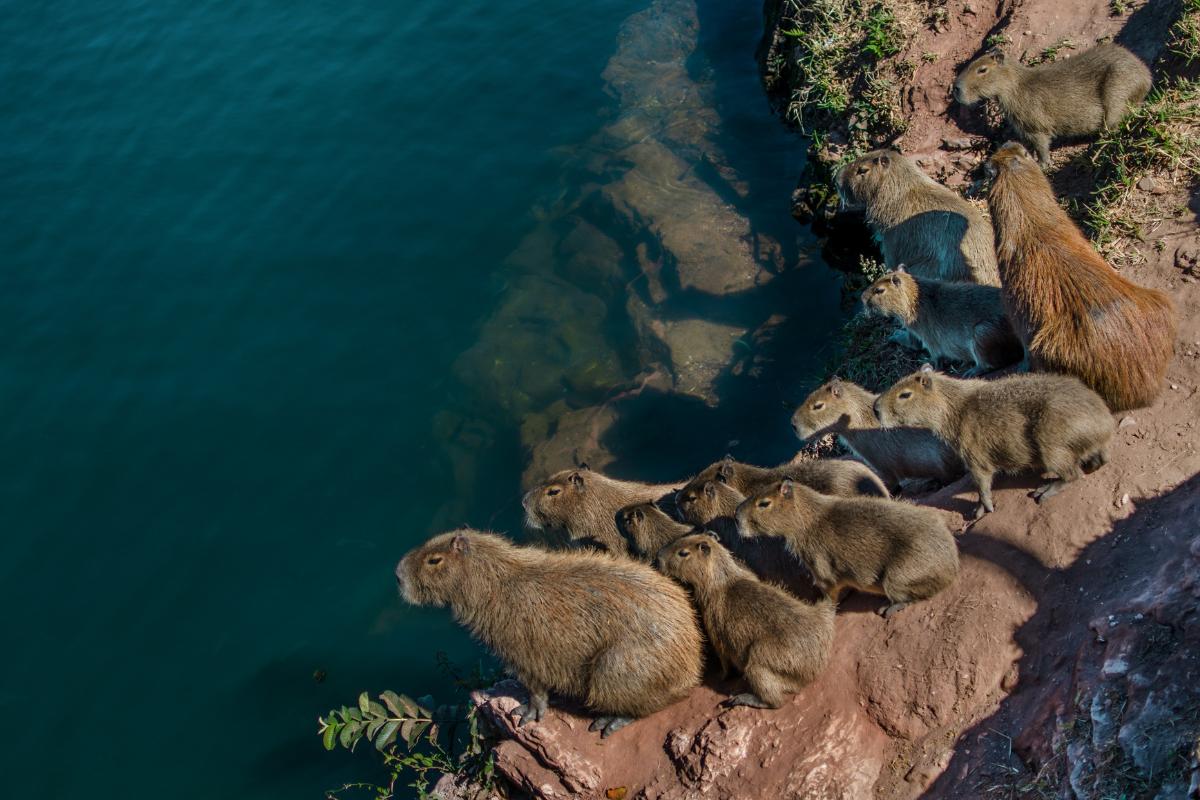
Capybaras are social creatures and are often found in large groups, known as "herds". These herds can range in size from a few individuals to hundreds of capybaras, and are usually made up of females, their young, and one or more males. The males will often engage in fierce battles for dominance, and the dominant male will lead the herd and protect it from predators.
Capybara Distribution
The distribution of capybaras is closely tied to the availability of water and suitable habitat. In general, capybaras are found in areas with slow-moving or still water, and plenty of vegetation to feed on. They are often found in areas with dense vegetation, such as marshes and swamps, where they can hide from predators and feed on aquatic plants. Capybaras are also found in areas with more open habitats, such as grasslands and savannas, where they can graze on grasses and other vegetation.

In terms of specific countries, capybaras are found in the following regions: Argentina (eastern and central regions), Bolivia (eastern region), Brazil (southern, southeastern, and central-western regions), Colombia (eastern and central regions), Paraguay (eastern and central regions), Uruguay (entire country), Venezuela (northern and central regions). They are also found in the Guyanas, including Guyana, Suriname, and French Guiana.
Capybara Behavior
Capybaras are fascinating creatures, and their behavior is closely tied to their habitat and social structure. They are highly social animals and are often found in large groups, where they interact and communicate with each other using a variety of clicks, whistles, and scent markings. Capybaras are also excellent swimmers and can often be found in the water, where they feed on aquatic plants and escape from predators.
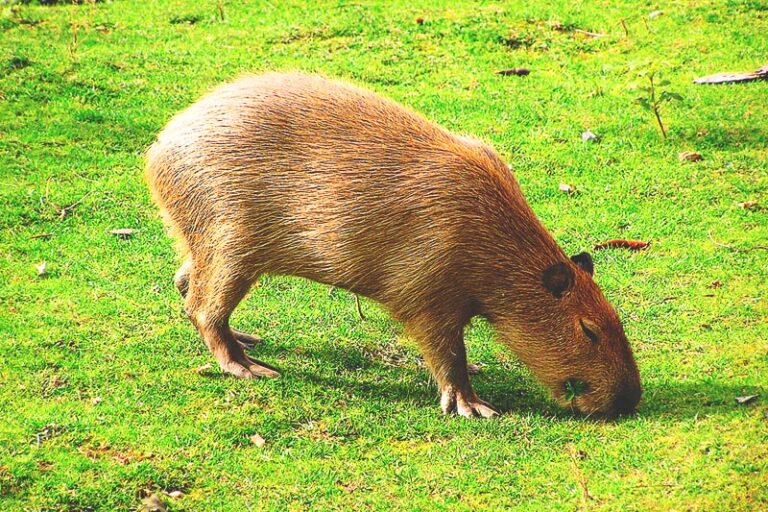
Capybaras are herbivores and feed on a variety of plants, including grasses, aquatic plants, and fruit. They have a specialized digestive system that allows them to break down and extract nutrients from plant material, and they can eat a wide range of different plants. In the wild, capybaras play an important role in their ecosystems, helping to disperse seeds and propagate new plant growth.
Capybara Conservation Status
Capybaras are listed as Least Concern on the IUCN Red List, although their populations are declining in some parts of their range due to habitat loss and hunting. They are hunted for their meat and hide, and are also persecuted as pests by farmers and ranchers who see them as competitors for food and water. Capybaras are also vulnerable to habitat loss and degradation, as their habitats are converted into agricultural land, urban areas, and other human-dominated landscapes.
Conservation efforts are underway to protect capybaras and their habitats, including the creation of protected areas and the development of sustainable land-use practices. In some areas, capybaras are considered an important part of the ecosystem and are protected by local laws and regulations. However, more needs to be done to address the ongoing threats to capybara populations and to ensure the long-term survival of these amazing creatures.
Capybara Interesting Facts
Here are some interesting facts about capybaras: they are excellent divers and can stay underwater for up to 5 minutes, they have a highly developed sense of smell and can detect predators from far away, they are able to run at speeds of up to 30 km/h, and they are able to jump high and long distances to escape from predators. Capybaras are also highly social creatures and are known to form close bonds with each other, and they have a complex communication system that includes a variety of clicks, whistles, and scent markings.
In conclusion, the capybara is a fascinating creature that is well adapted to its semi-aquatic lifestyle. Their unique appearance, intriguing habits, and important role in their ecosystems make them a valuable and interesting species to study and learn about. By understanding more about the capybara and its habitat, we can work to protect and conserve these amazing creatures and the ecosystems they inhabit.