The Truth About the Giant Squid: Real Life Sea Monster

The ocean has always been a place of mystery and wonder, with its vast depths and unexplored creatures. One of the most fascinating and feared creatures of the sea is the giant squid. For centuries, stories of this massive sea monster have been told and retold, with many considering it to be the stuff of legend. However, the giant squid is very real, and its existence has been confirmed by numerous sightings and scientific discoveries. In this article, we'll delve into the truth about the giant squid, exploring its habits, habitats, and the myths that surround it.
Introduction to the Giant Squid
The giant squid, also known as Architeuthis dux, is a deep-sea cephalopod that is found in the oceans around the world. It is the largest invertebrate on Earth, with some specimens reaching lengths of up to 20 feet and weighing over 100 pounds. The giant squid has a long, slender body, with eight arms and two longer tentacles that it uses to catch its prey. Its massive eyes are said to be the largest of any animal, with some specimens having eyes that are over 10 inches in diameter.

Despite its massive size, the giant squid is a relatively elusive creature, and very little is known about its behavior and habits. It is thought to be a deep-sea creature, living in the oxygen-poor waters of the abyssal zone. However, it has been known to venture into shallower waters, where it can be found by fishermen and other marine animals. The giant squid is a formidable predator, feeding on deep-sea fish, other squid, and even small whales. Its powerful beak and suckers make it a force to be reckoned with, and it is not uncommon for giant squid to be found with scars and wounds from battles with other sea creatures.
Habitat and Distribution
The giant squid is found in the oceans around the world, from the freezing waters of the Arctic to the warm waters of the tropics. It is a deep-sea creature, and is typically found in waters that are between 200 and 700 meters deep. However, it has been known to venture into shallower waters, where it can be found in areas with steep drop-offs or near underwater mountains. The giant squid is a solitary creature, and is not often found in large groups. However, it is not uncommon for multiple giant squid to be found in the same area, particularly in areas with an abundance of food.

The giant squid is a skilled hunter, and is able to survive in the harsh conditions of the deep sea. It has a number of adaptations that allow it to thrive in this environment, including its massive eyes, which are capable of detecting the faint glow of bioluminescent creatures in the dark waters. It also has a powerful beak and suckers, which it uses to catch and eat its prey. The giant squid is also able to change the color and texture of its skin to blend in with its surroundings, making it a formidable predator in the deep sea.
Myths and Legends
For centuries, the giant squid has been the subject of myths and legends. In ancient times, it was believed to be a sea monster, capable of dragging ships and sailors down to a watery grave. The giant squid was often depicted in art and literature as a massive, tentacled creature, with a powerful beak and glowing eyes. While these stories were certainly exaggerated, they were based on the real-life encounters of sailors and fishermen who had seen the giant squid up close.
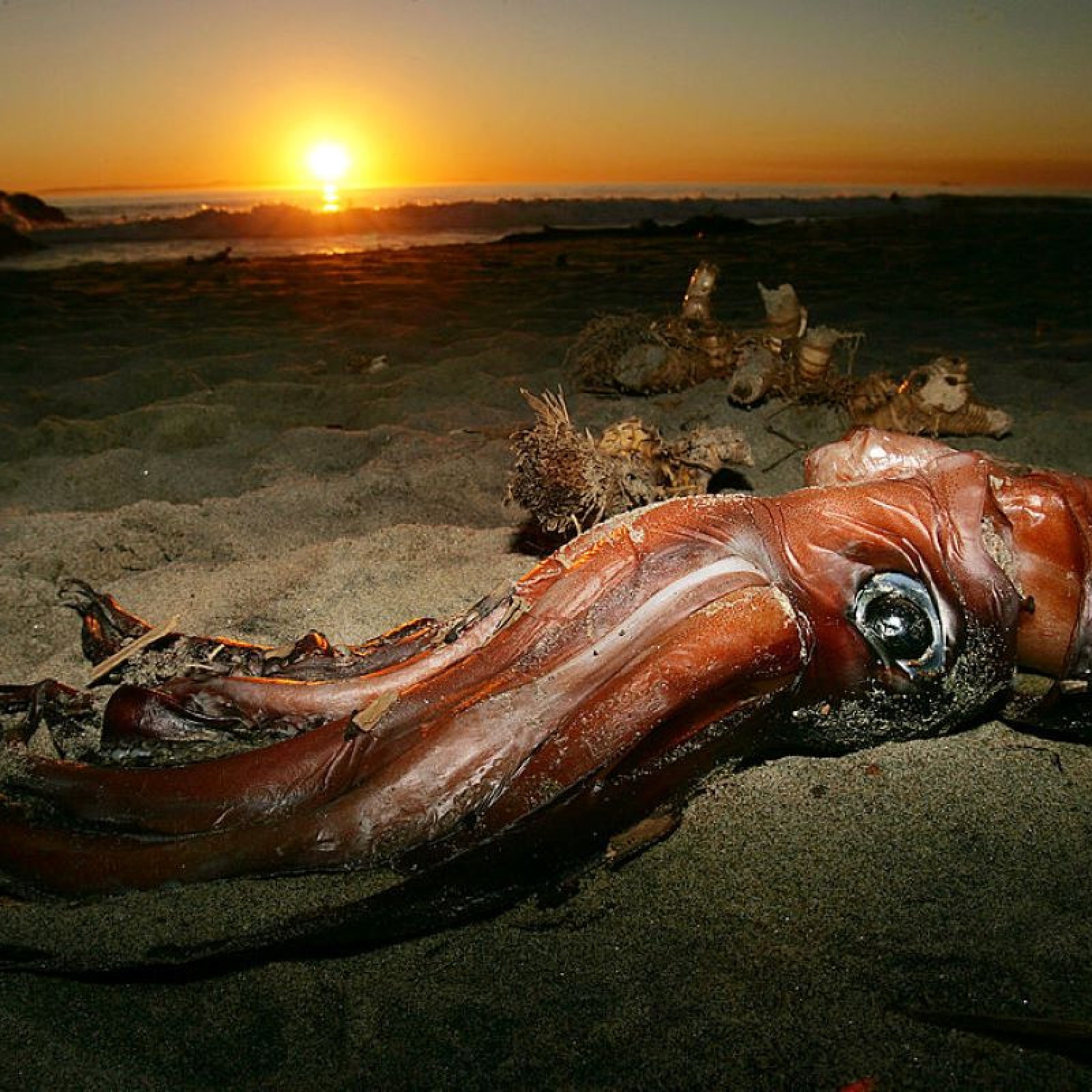
One of the most famous stories about the giant squid is the legend of the Kraken, a massive sea monster that was said to dwell off the coast of Norway. According to legend, the Kraken was a massive squid-like creature that was capable of dragging ships down to the sea floor. While the Kraken is certainly a mythical creature, it is likely that it was based on the real-life giant squid. The giant squid is a massive and formidable creature, and it is not hard to see how it could have inspired such legends and myths.
In addition to its role in mythology, the giant squid has also played a significant role in popular culture. It has been featured in numerous films, books, and television shows, often as a monstrous creature that is feared and revered by humans. The giant squid has also been the subject of numerous scientific studies, and has been featured in documentaries and nature programs.

Scientific Discoveries
In recent years, scientists have made a number of significant discoveries about the giant squid. In 2004, a team of scientists from the National Museum of Natural History in Washington, D.C. discovered a giant squid in the Gulf of Mexico. The squid was caught on camera, and its massive size and impressive tentacles were seen by people around the world. This discovery helped to shed new light on the giant squid, and to dispel some of the myths and legends that surround it.
Since then, scientists have made a number of other significant discoveries about the giant squid. In 2013, a team of scientists from the University of Tokyo discovered a giant squid in the depths of the Pacific Ocean. The squid was found to be over 15 feet long, and its massive eyes and powerful beak were seen up close. This discovery helped to further our understanding of the giant squid, and to shed new light on its behavior and habits.
Despite these discoveries, the giant squid remains a mysterious and elusive creature. It is still not well understood, and much of its behavior and habits remain a mystery. However, scientists continue to study the giant squid, using advanced technology and techniques to learn more about this fascinating creature. As we continue to explore the oceans and to learn more about the creatures that live there, it is likely that we will discover even more about the giant squid and its role in the marine ecosystem.
Conservation Status
The giant squid is not currently considered to be a threatened or endangered species, although its populations are often affected by fishing and other human activities. The giant squid is a deep-sea creature, and is not often caught by fishermen. However, it is sometimes caught accidentally in fishing nets and lines, and its habitat is often damaged by human activities such as oil drilling and mining. As a result, it is important to take steps to protect the giant squid and its habitat, and to ensure that it continues to thrive in the oceans.
One of the main threats to the giant squid is the destruction of its habitat. The giant squid is a deep-sea creature, and its habitat is often damaged by human activities such as oil drilling and mining. These activities can cause damage to the sea floor, and can lead to the destruction of the giant squid's habitat. Additionally, the giant squid is sometimes caught accidentally in fishing nets and lines, and its populations can be affected by overfishing and other human activities.
To protect the giant squid and its habitat, it is essential to take steps to reduce our impact on the oceans. This can include reducing our use of plastics and other pollutants, and taking steps to protect the sea floor from damage. Additionally, it is essential to establish protected areas where the giant squid and other deep-sea creatures can thrive. By taking these steps, we can help to ensure that the giant squid continues to thrive in the oceans, and that it remains a source of fascination and wonder for generations to come.
Conclusion
In conclusion, the giant squid is a fascinating and mysterious creature that continues to capture the imagination of people around the world. Its massive size, powerful beak, and formidable tentacles make it a force to be reckoned with, and its elusive nature has led to numerous myths and legends. However, through scientific discoveries and research, we are learning more about the giant squid and its role in the marine ecosystem. As we continue to explore the oceans and to learn more about the creatures that live there, it is likely that we will discover even more about the giant squid and its place in the natural world.
The giant squid is an important part of the marine ecosystem, and plays a vital role in the food chain. It is a formidable predator, and its massive size and powerful beak make it a force to be reckoned with. However, it is also an important prey species, and is fed upon by a number of other marine animals. As a result, it is essential to protect the giant squid and its habitat, and to ensure that it continues to thrive in the oceans.
By learning more about the giant squid and its role in the marine ecosystem, we can gain a greater appreciation for the importance of conservation and the need to protect the oceans. The giant squid is an incredible creature, and its study can help us to better understand the complex relationships between species in the marine ecosystem. As we continue to explore the oceans and to learn more about the creatures that live there, it is likely that we will discover even more about the giant squid and its place in the natural world.
0 Response to "The Truth About the Giant Squid: Real Life Sea Monster"
Post a Comment