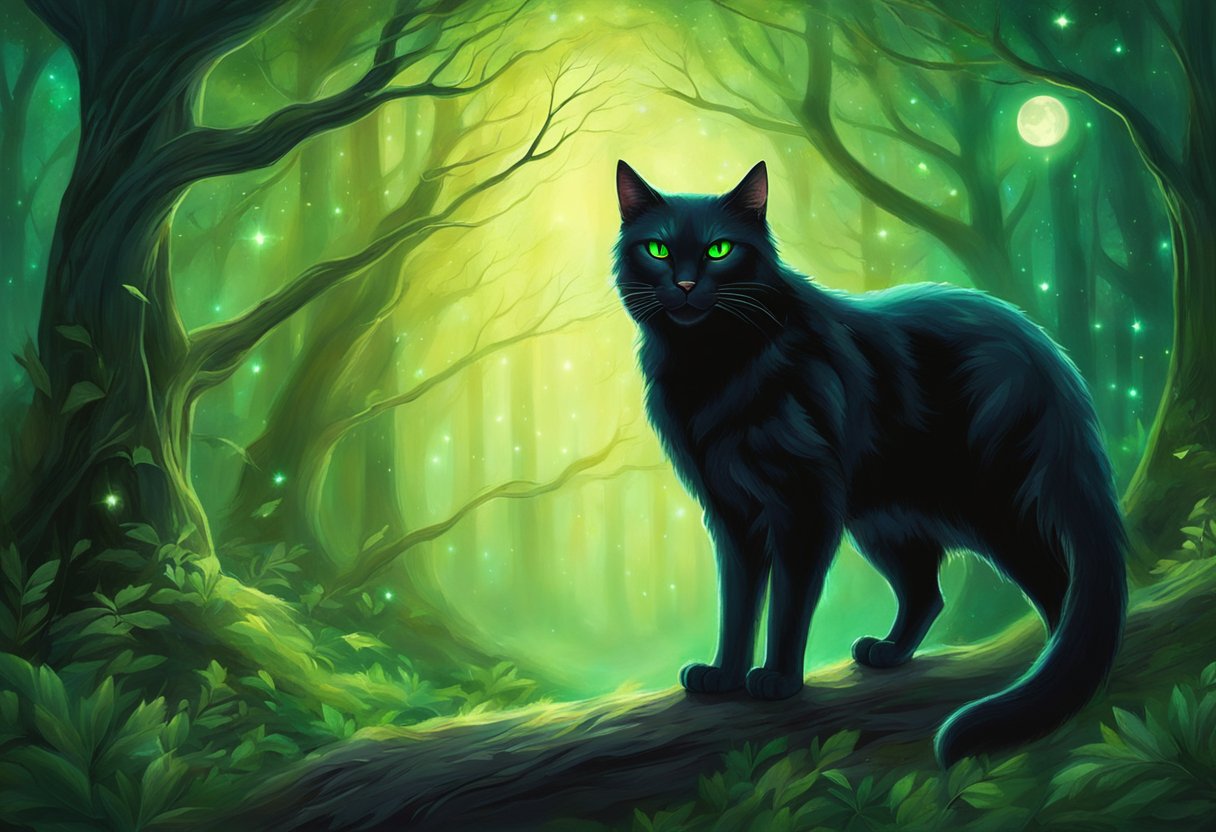
Imagine walking through the serene English countryside, the familiar sounds of birdsong and rustling leaves filling the air. Suddenly, a flash of tawny fur catches your eye – a large cat, far bigger than any domestic feline, disappearing into the undergrowth. Could it be? A lion, a panther, roaming free in the British Isles? The tales persist, whispered in pubs and shared online, painting a picture of a hidden world where exotic creatures roam, unseen and unexplained.
Many dismiss these stories as fanciful imagination or misidentification. Explaining away sightings of large cats, especially in areas where they're not native, can be challenging. Reports often lack clear evidence, relying on fleeting glimpses or grainy photographs. This leaves a gap between the belief of those who claim to have seen these creatures and the skepticism of the scientific community.
This article seeks to explore the phenomenon of "Phantom Cats" – the alleged sightings of big cats in regions where they are not naturally found, specifically focusing on the United Kingdom. We will delve into the history, theories, and possible explanations surrounding these enigmatic creatures, examining the evidence and the cultural impact of these captivating tales.
In this exploration, we'll discuss what Phantom Cats are, and their history, delving into the myths that surround them and some hidden secrets. We'll offer recommendations for further exploration of the topic, and provide tips for investigating alleged sightings. We'll also explore fun facts, and discuss how these sightings persist and what might happen if a confirmed population were ever discovered. Ultimately, we aim to provide a comprehensive overview of this fascinating and enduring mystery. Key themes include: cryptozoology, big cat sightings, British wildlife, folklore, and unexplained phenomena.
Personal Encounters and Shifting Perspectives
I remember being a child, poring over books on wildlife, utterly fascinated by the idea of animals existing outside their "supposed" habitats. The idea of a panther prowling the woods near my house was both terrifying and incredibly exciting. This childhood fascination led me down a rabbit hole of research, reading accounts of sightings, theories about escaped pets, and even the occasional government investigation.
The initial thrill slowly shifted to a more nuanced understanding. While the idea of a wild big cat in the UK is undoubtedly exciting, the reality is likely far more complex. Could some sightings be misidentified domestic cats, perhaps seen from a distance or in poor light? Are there viable breeding populations, sustained by a hidden food source? Or are these sightings simply a product of collective imagination, fueled by folklore and a desire for the extraordinary?
The lack of definitive proof, such as clear photographs or genetic evidence, remains a significant challenge. However, the sheer volume of reports, spanning decades and geographical locations, suggests that something is happening. Whether it's a misidentification, escaped animals, or something more, the phenomenon of Phantom Cats continues to captivate and intrigue, reminding us that there are still mysteries to be uncovered in the world around us. One thing I believe is that if people reported seeing Big Cats in their area, it's important for proper investigation to take place, and be taken seriously.
Defining the Phantom Cat Phenomenon
Phantom Cats, also sometimes referred to as Alien Big Cats (ABCs), are defined as sightings of large felines – such as leopards, pumas, or lynx – in regions where they are not native. In the UK, this primarily refers to rural areas, where sightings have been reported for decades. The term "phantom" implies that these animals exist outside of established scientific understanding, their presence unconfirmed by concrete evidence.
These sightings often occur in areas with dense vegetation, making verification difficult. Witness accounts vary widely, with descriptions of size, color, and behavior differing significantly. This lack of consistency further complicates the investigation process. One of the challenges in proving the existence of Phantom Cats is the potential for misidentification. Large domestic cats, dogs, or even deer can be mistaken for big cats, especially in poor lighting conditions or at a distance.
Furthermore, the lack of photographic or video evidence of sufficient quality makes it difficult to assess the validity of reported sightings. Even when photographic evidence exists, it is often grainy or taken from a distance, making accurate identification impossible. Despite these challenges, the persistence of these sightings over time suggests that something is happening, warranting further investigation and a more open-minded approach.
History and Myths of Phantom Cats
The history of Phantom Cat sightings in the UK dates back several decades, with reports becoming more frequent in the latter half of the 20th century. One prevailing theory suggests that the sightings increased following the introduction of the Dangerous Wild Animals Act in
1976. This legislation required owners of exotic animals to obtain licenses and adhere to strict regulations. It's theorized that some owners, rather than comply with the law, released their animals into the wild, leading to the establishment of small, localized populations.
Beyond this practical explanation, the idea of large, exotic cats roaming the British countryside also taps into deeper cultural myths and legends. Tales of mythical beasts and wild creatures have long been a part of British folklore, and the Phantom Cat phenomenon can be seen as a modern manifestation of this enduring fascination.
Stories of black panthers, mysterious lynx, and even the occasional lion have become ingrained in the local folklore of certain regions, passed down through generations. These stories often carry an element of fear and wonder, reflecting the power and mystery of these elusive creatures. Whether rooted in fact or fiction, the history and myths surrounding Phantom Cats contribute to their enduring appeal and the ongoing debate about their existence.
Unveiling the Hidden Secrets of Phantom Cats
One of the most intriguing aspects of the Phantom Cat phenomenon is the potential for hidden secrets and unexplained elements. The fact that these animals are, at least officially, absent from the British ecosystem raises several questions: How could a population of large predators survive undetected for so long? What is their primary food source? And why has there been so little concrete evidence to support their existence?
The answers to these questions may lie in a combination of factors. The UK has large areas of dense woodland and remote countryside, providing ample cover for elusive animals. Additionally, the abundance of prey species, such as deer and rabbits, could potentially sustain a small population of big cats.
However, the lack of conclusive evidence remains a major hurdle. Some researchers suggest that the animals are incredibly skilled at avoiding detection, utilizing their natural camouflage and hunting prowess to remain unseen. Others believe that the sightings are primarily the result of misidentification or hoaxes. Regardless of the explanation, the hidden secrets surrounding Phantom Cats continue to fuel speculation and inspire ongoing investigations. A lot of sightings may be in the more rural area of England for example Devon, somerset and Cornwall.
Recommendations for Further Exploration
If you're intrigued by the phenomenon of Phantom Cats, there are several avenues you can explore to delve deeper into this fascinating topic. Start by researching documented sightings in your local area. Websites and online forums dedicated to cryptozoology often contain detailed accounts and reports.
Read books and articles on the subject, paying attention to both the evidence presented and the counter-arguments offered by skeptics. Consider joining a local wildlife observation group or attending lectures by experts in the field. You can also explore the scientific research that has been conducted on big cat populations and their behavior in other parts of the world.
Remember to approach the topic with a critical and open mind, evaluating the evidence carefully and considering alternative explanations. By engaging with the available information and participating in discussions with other enthusiasts, you can form your own informed opinion about the existence and potential impact of Phantom Cats in the UK.
The Role of Misidentification and Confirmation Bias
The human element plays a significant role in the Phantom Cat phenomenon. Misidentification of animals is common, especially when sightings are fleeting or occur in poor lighting. Size perception can also be distorted, leading to domestic cats being mistaken for larger felines. Moreover, confirmation bias can influence how people interpret ambiguous evidence. If someone already believes in the existence of Phantom Cats, they may be more likely to interpret a blurry photograph or a distant glimpse as proof of their belief.
Skepticism is crucial when evaluating reported sightings. Consider the experience of the witness, the lighting conditions, the distance to the animal, and the potential for misidentification. Look for corroborating evidence, such as footprints or scat samples, and compare the descriptions to known characteristics of different big cat species. While the possibility of genuine sightings cannot be dismissed, it's important to acknowledge the potential for human error and bias in the interpretation of evidence.
Tips for Investigating Alleged Sightings
If you encounter a potential Phantom Cat sighting, there are several steps you can take to investigate further. Firstly, try to obtain clear photographs or video footage of the animal, paying attention to its size, color, and markings. Note the location of the sighting, the date, and the time of day. If possible, examine the area for tracks or scat samples, and take photographs of these as well.
Report your sighting to local wildlife authorities or a reputable cryptozoology organization. Be prepared to provide detailed information about your experience, including a description of the animal, its behavior, and the surrounding environment. Remember to approach your investigation with caution and respect for wildlife, avoiding any actions that could disturb or endanger the animal. Most importantly, report your sightings, because a lot of sightings will lead to possible proof of the existence of big cats in areas such as rural parts of England for example.
Understanding Cryptozoology and its Limitations
Cryptozoology, the study of animals whose existence has not yet been proven by mainstream science, is often associated with the search for Phantom Cats. While cryptozoology can be a valuable tool for investigating anomalous animal sightings, it's important to recognize its limitations. Cryptozoology typically relies on anecdotal evidence and eyewitness accounts, which can be unreliable and difficult to verify. The lack of concrete scientific evidence often makes it challenging to draw definitive conclusions about the existence of cryptids, including Phantom Cats.
Furthermore, cryptozoology is sometimes criticized for its lack of scientific rigor and its tendency to embrace unsubstantiated claims. While it can be a fascinating field of study, it's essential to approach cryptozoological investigations with a critical and skeptical mindset, recognizing the importance of verifiable evidence and the potential for misinterpretation.
Fun Facts About Phantom Cats
Did you know that the Beast of Bodmin Moor, a large cat reportedly sighted in Cornwall, is one of the most famous Phantom Cats in the UK? Or that there have been reported sightings of lynx, a native British cat that was hunted to extinction centuries ago, leading some to believe that they may have secretly survived in remote areas?
Sightings of Phantom Cats have been reported in virtually every region of the UK, from the Scottish Highlands to the south coast of England. Some researchers believe that there may be multiple species of Phantom Cats present in the UK, including leopards, pumas, and lynx.
While the existence of Phantom Cats remains unproven, the phenomenon has inspired countless books, articles, and documentaries, highlighting the enduring fascination with these elusive creatures. The phenomenon has caught the attention of many people, and because of that people are aware when they see a strange animal that does not belong in that area.
How to Prepare for a Potential Sighting
While actively searching for Phantom Cats may not be advisable, there are steps you can take to be prepared if you happen to encounter one in the wild. Carry a camera or smartphone with you whenever you're exploring rural areas, and be ready to take clear photographs or video footage if you see something unusual. Familiarize yourself with the characteristics of different big cat species, so you can better identify any potential sightings.
Keep a safe distance from any large animals you encounter, and avoid approaching them directly. If you're walking with pets, keep them on a leash and under control. Report any sightings to local wildlife authorities or a reputable cryptozoology organization, providing as much detail as possible about your experience.
What if Phantom Cats are Real?
If Phantom Cats were proven to be a real and established part of the British ecosystem, the implications would be significant. Firstly, it would require a reassessment of our understanding of British wildlife and the carrying capacity of the environment. The presence of large predators could have a significant impact on prey populations and the overall ecological balance.
Additionally, it would raise ethical questions about how to manage these animals. Should they be protected and allowed to roam freely, or should efforts be made to control their population and minimize potential conflicts with humans and livestock? The discovery of a confirmed population of Phantom Cats would undoubtedly spark a debate about conservation, wildlife management, and the human-animal relationship.
Listicle of Phantom Cats
1. The Beast of Bodmin: A legendary big cat said to roam Bodmin Moor in Cornwall.
- The Surrey Puma: A series of sightings of a large cat, believed to be a puma, in the Surrey Hills.
- The Fen Tiger: A Phantom Cat reported in the Fens of East Anglia.
- The Scottish Wildcat: Though native, its populations have been diluted with domestic cats. Some believe pure wildcats are 'phantoms' in their own right due to rarity.
- The Beast of Exmoor: Another famous phantom cat, reportedly sighted on Exmoor, known for its sheep killings.
Question and Answer
Q: What is the most common explanation for Phantom Cat sightings?
A: The most common explanation is misidentification of domestic cats, dogs, or other animals, often due to poor lighting or distance.
Q: Is there any scientific evidence to support the existence of Phantom Cats?
A: There is no definitive scientific evidence to support their existence, such as DNA samples or clear photographs.
Q: What should I do if I think I see a Phantom Cat?
A: Take photographs or videos if possible, note the location and time, and report the sighting to local wildlife authorities.
Q: Are Phantom Cats dangerous to humans?
A: While most big cats avoid humans, it's always best to keep a safe distance and avoid approaching them directly.
Conclusion of Phantom Cats: Big Cats Out of Place
The phenomenon of Phantom Cats remains an intriguing enigma, a blend of folklore, misidentification, and perhaps a touch of the unknown. While concrete evidence remains elusive, the persistence of these sightings over decades suggests that something is happening. Whether it's a case of escaped exotic pets, misidentified domestic animals, or something more mysterious, the stories of big cats roaming the British countryside continue to capture the imagination and spark debate. The search for Phantom Cats serves as a reminder that there are still mysteries to be uncovered in the world around us, and that even in well-explored landscapes, the possibility of the unexpected remains.