The Mystery of the 'Immortal' Shark Living for 400 Years

Have you ever heard of a creature that can live for over 400 years? Sounds like something out of a fantasy novel, right? But, believe it or not, scientists have discovered that the Greenland shark, also known as the "immortal" shark, can indeed live for centuries. In this article, we'll delve into the mystery of this incredible creature and explore the fascinating world of these ancient predators.
Introduction to the Greenland Shark
The Greenland shark is one of the largest predatory fish in the world, reaching lengths of up to 24 feet and weighing over 3,000 pounds. Found in the Arctic and North Atlantic oceans, these sharks are known for their distinctive brownish-gray color and their ability to thrive in the harsh, icy waters of the polar regions. But what's truly remarkable about these sharks is their incredible longevity. According to recent studies, the Greenland shark can live for an estimated 272 to 512 years, making them one of the longest-living vertebrates on the planet.

How Do Scientists Determine the Age of a Shark?
So, how do scientists determine the age of a shark that's been living for centuries? It's not like they have birth certificates or any other kind of documentation. To estimate the age of a Greenland shark, researchers use a technique called radiocarbon dating. This method involves analyzing the levels of radiocarbon in the shark's eye lenses, which are made of a hard, calcified material that doesn't change much over time. By comparing the levels of radiocarbon in the eye lenses to the levels of radiocarbon in the atmosphere, scientists can estimate the age of the shark. It's a bit like counting the rings on a tree trunk, but instead of rings, they're counting the levels of radiocarbon.
Another way scientists determine the age of a shark is by looking at the growth layers in their teeth. Just like trees, sharks have growth layers in their teeth that can be counted to estimate their age. This method is a bit more straightforward than radiocarbon dating, but it's not always possible to get a clear reading. Either way, the results are astonishing – these sharks are incredibly old, and they've been living in our oceans for centuries.
The Significance of the Greenland Shark's Longevity
So, what does it mean that the Greenland shark can live for over 400 years? For one thing, it's a remarkable example of the incredible diversity of life on our planet. These sharks have been thriving in the harsh, icy waters of the polar regions for centuries, and their longevity is a testament to their adaptability and resilience. But the Greenland shark's longevity also has significant implications for our understanding of the natural world. For example, it suggests that some species may be more resilient to climate change than we thought, and that they may be able to adapt to changing environmental conditions in ways that we're still not fully understanding.
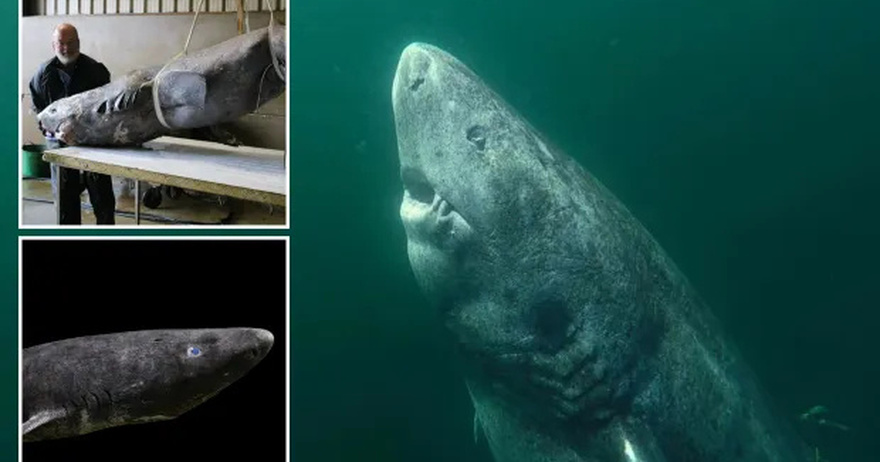
The Greenland shark's longevity also raises interesting questions about the evolution of longevity in animals. Why do some species live longer than others? What are the genetic and environmental factors that contribute to longevity, and how can we learn from them? These are all questions that scientists are still trying to answer, but the study of the Greenland shark is providing some fascinating insights. For example, researchers have found that the Greenland shark's longevity may be linked to its slow growth rate and its ability to conserve energy in the food-scarce environment of the polar regions.
The Threats Facing the Greenland Shark
Despite their incredible longevity, the Greenland shark is facing a number of threats in the wild. One of the main threats is overfishing – these sharks are often caught accidentally in fishing nets and lines, and they're also targeted for their meat and liver oil. The Greenland shark is also vulnerable to climate change, which is altering the distribution of their prey species and the availability of food in the polar regions. And, of course, there's the added threat of pollution – these sharks are apex predators, which means they're at the top of the food chain, and they're vulnerable to the accumulation of toxins in their bodies.

Conservation efforts are underway to protect the Greenland shark and its habitat. For example, the International Union for Conservation of Nature (IUCN) has listed the Greenland shark as "near threatened," and there are efforts to regulate fishing and protect the shark's habitat. But more needs to be done to protect these incredible creatures and the ecosystem they inhabit. The Greenland shark is a remarkable species that deserves our respect and our protection – and by learning more about them, we can gain a deeper appreciation for the natural world and our place in it.
What Can We Learn from the Greenland Shark?
So, what can we learn from the Greenland shark? For one thing, we can learn about the importance of conservation and protecting the natural world. These sharks have been living in our oceans for centuries, and they're an important part of the ecosystem. By studying them, we can gain a deeper understanding of the interconnectedness of all living things and the importance of preserving the natural balance. We can also learn about the incredible adaptability and resilience of life on Earth – the Greenland shark is a testament to the ability of species to thrive in even the harshest environments.

The Greenland shark also has a lot to teach us about longevity and aging. By studying the genetic and environmental factors that contribute to the shark's longevity, we may be able to gain insights into the aging process and how to promote healthy aging in humans. And, of course, there's the added benefit of inspiring a sense of wonder and awe at the natural world. The Greenland shark is a reminder that there's still so much we don't know about the world around us, and that there's always more to discover and explore.
Conclusion
In conclusion, the Greenland shark is an incredible creature that continues to fascinate and inspire us. Its remarkable longevity is a testament to the diversity and complexity of life on Earth, and it raises important questions about the natural world and our place in it. By studying the Greenland shark, we can gain a deeper understanding of the ecosystem and the interconnectedness of all living things. We can also learn about the importance of conservation and protecting the natural world, and we may even gain insights into the aging process and how to promote healthy aging in humans. The Greenland shark is a true marvel of nature, and it's a reminder that there's still so much to discover and explore in the incredible world around us.
0 Response to "The Mystery of the 'Immortal' Shark Living for 400 Years"
Post a Comment