where do capybaras come from
Have you ever seen a capybara, the world's largest rodent, and wondered where these fascinating creatures come from? If so, you're not alone. The capybara, with its distinctive appearance and intriguing habits, has captured the hearts of many animal lovers around the globe. In this article, we'll delve into the origins of the capybara, exploring their native habitats, evolutionary history, and the factors that have contributed to their widespread distribution.
Native Habitat: South America
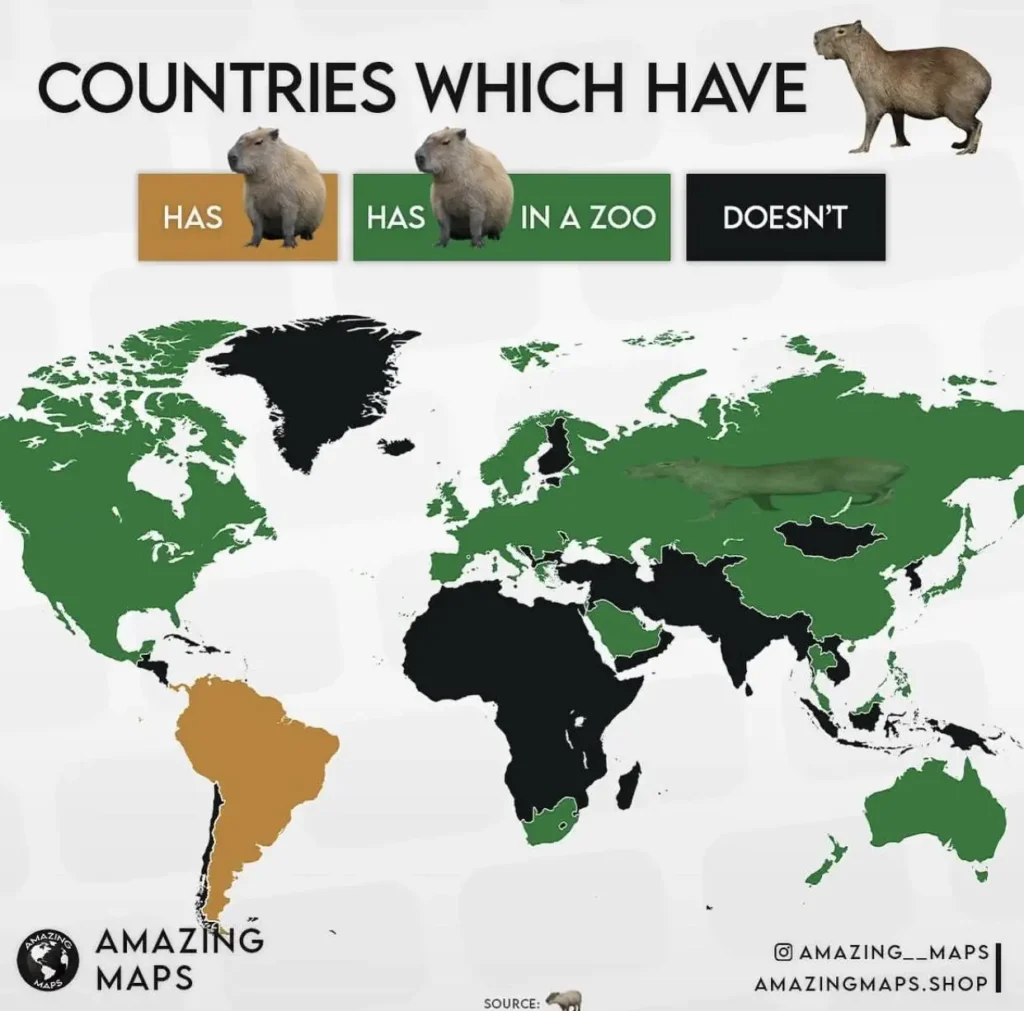
The capybara is native to South America, specifically in the grasslands, savannas, and wetlands of Argentina, Uruguay, Brazil, and parts of Colombia, Venezuela, and Guyana. These semi-aquatic rodents thrive in areas with abundant water sources, such as rivers, lakes, and swamps, where they can feed on aquatic plants and escape from predators. The capybara's adaptability to different environments has allowed them to inhabit a wide range of ecosystems, from tropical rainforests to temperate grasslands.

Evolutionary History
The capybara's evolutionary history dates back to the Pleistocene era, around 2 million years ago. Fossil records indicate that the capybara's ancestors were smaller, more terrestrial rodents that gradually adapted to their aquatic environment over time. As the climate changed and water sources expanded, the capybara's ancestors evolved to become more semi-aquatic, developing webbed feet, a stocky body, and a distinctive set of teeth that allowed them to feed on aquatic plants. This unique combination of traits has enabled the capybara to thrive in its native habitats, making it one of the most successful rodent species in South America.
One of the most interesting aspects of the capybara's evolutionary history is its relationship with other rodents. Phylogenetic studies have revealed that the capybara is closely related to the guinea pig and the mara, two other South American rodent species. These findings suggest that the capybara's ancestors shared a common ancestor with these species, which later diverged and evolved into distinct lineages. This complex evolutionary history has shaped the capybara's behavior, physiology, and ecology, making it a fascinating subject for scientific study.
Geographic Distribution
Today, the capybara is found in a wide range of habitats across South America, from the tropical rainforests of Brazil to the temperate grasslands of Argentina. Their geographic distribution is influenced by factors such as climate, vegetation, and the availability of water sources. In general, capybaras prefer areas with dense vegetation, slow-moving water, and abundant food sources. They are also skilled swimmers and can be found in areas with access to rivers, lakes, and coastal regions.

In addition to their native habitats, capybaras have been introduced to other parts of the world, including Europe, North America, and Asia. These introductions have been made for a variety of reasons, including the pet trade, hunting, and conservation efforts. While some introduced populations have established themselves in the wild, others have failed to thrive or have been eradicated due to concerns about invasive species and disease transmission. As a result, the capybara's global distribution is complex and dynamic, reflecting both their natural range and human activities.
Habitat and Ecology
The capybara's habitat and ecology are closely linked to their native environments. In the wild, capybaras are found in areas with dense vegetation, such as grasslands, savannas, and wetlands. They are herbivores and feed on a wide range of plants, including aquatic plants, grasses, and fruit. Their diet is influenced by the season, with capybaras eating more aquatic plants during the wet season and more terrestrial plants during the dry season.
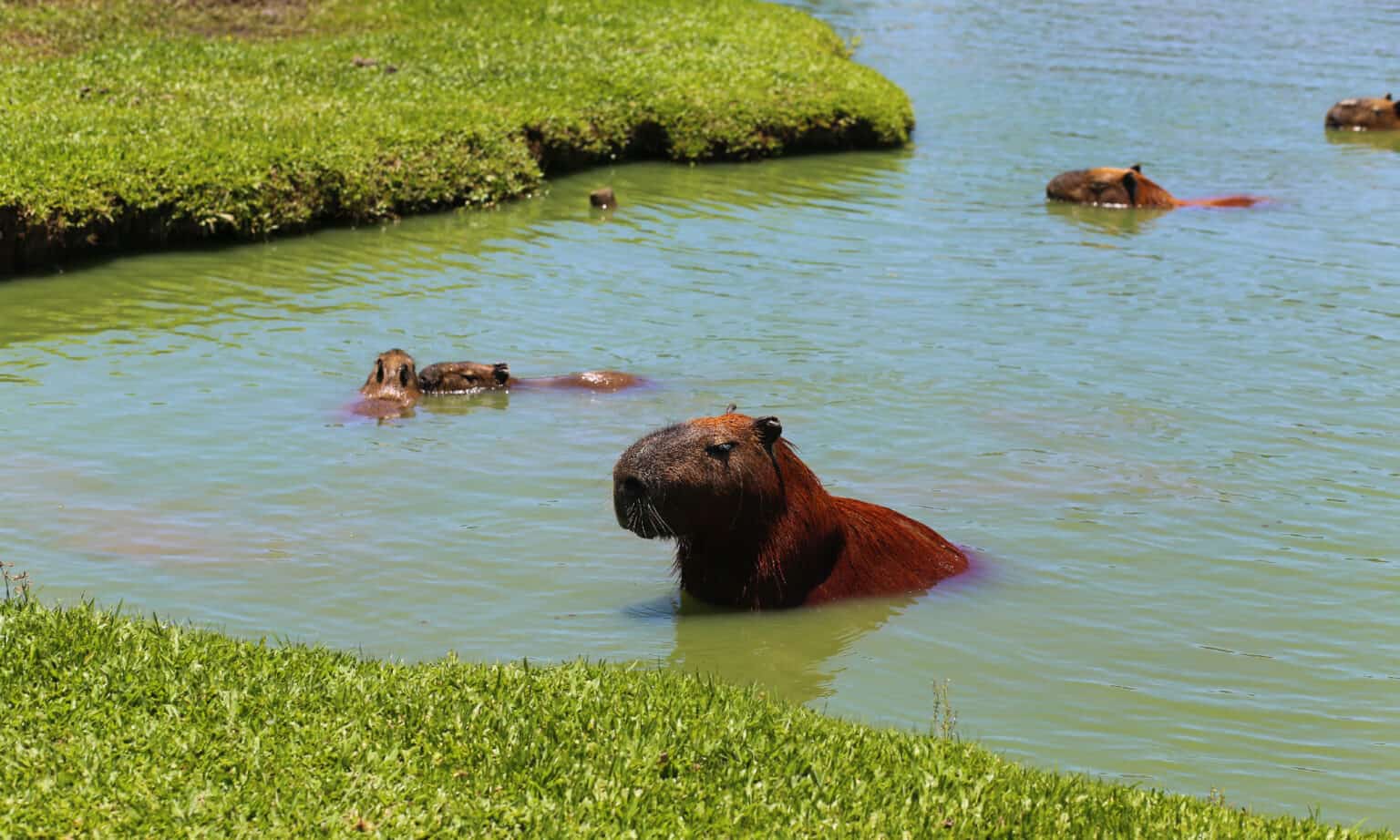
Capybaras are also skilled swimmers and can be found in areas with access to water. They are excellent divers and can stay underwater for up to 5 minutes, allowing them to escape from predators or feed on aquatic plants. In addition to their aquatic abilities, capybaras are also skilled runners and can reach speeds of up to 30 km/h (18.6 mph) when threatened or chasing after food.
Social Structure
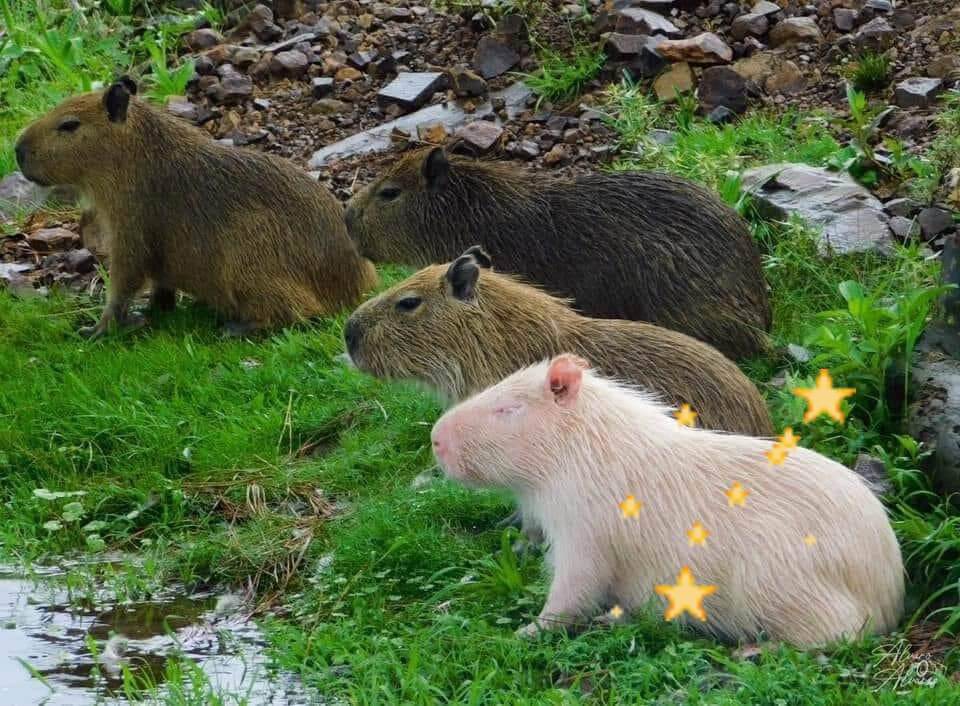
Capybaras are highly social animals and live in large groups, called herds.These herds can range in size from 10 to 100 individuals and are usually led by a dominant male. Within the herd, capybaras have a complex communication system that includes vocalizations, scent marking, and body language. They are also known to be affectionate animals and have been observed grooming and playing with each other.
The capybara's social structure is influenced by factors such as food availability, predation, and habitat quality. In areas with abundant food and low predation, capybara herds tend to be larger and more stable. In contrast, in areas with limited food and high predation, herds may be smaller and more fragmented. This flexibility in social structure has allowed the capybara to thrive in a wide range of environments and makes them a fascinating subject for scientific study.
Conservation Status
Despite their adaptability and success in their native habitats, capybaras are facing several conservation challenges. Habitat loss and fragmentation, hunting, and competition with introduced species are all major threats to capybara populations. In addition, climate change is altering the distribution and abundance of their food sources, making it harder for capybaras to survive in their native habitats.
To address these conservation challenges, several organizations and governments are working to protect capybara habitats and reduce human-capybara conflict. These efforts include the creation of protected areas, such as national parks and wildlife reserves, as well as education and outreach programs to raise awareness about the importance of capybara conservation. By working together, we can help ensure the long-term survival of this incredible species and the ecosystems they inhabit.
In conclusion, the capybara is a fascinating species with a rich evolutionary history and a unique set of adaptations that have allowed it to thrive in its native habitats. From their semi-aquatic lifestyle to their complex social structure, capybaras are a true marvel of nature. By learning more about these incredible animals and the challenges they face, we can work towards a future where capybaras continue to thrive in their native habitats, inspiring wonder and awe in all who are lucky enough to encounter them.
0 Response to "where do capybaras come from"
Post a Comment