carpincho animal
The carpincho, also known as the capybara, is a large rodent that is native to South America. It is a fascinating creature that is not well-known outside of its native habitat, but it is definitely worth learning more about. In this article, we will delve into the world of the carpincho and explore its unique characteristics, habits, and habitats.
Physical Characteristics
The carpincho is a large animal, with adults reaching up to 130 cm in length and weighing up to 66 kg. It has a stocky body, with a round head, small eyes, and a short, blunt snout. Its fur is coarse and thick, and it can range in color from brown to reddish-brown. The carpincho has webbed feet, which make it an excellent swimmer, and its teeth are continuously growing, which allows it to eat a wide variety of plants and fruits.
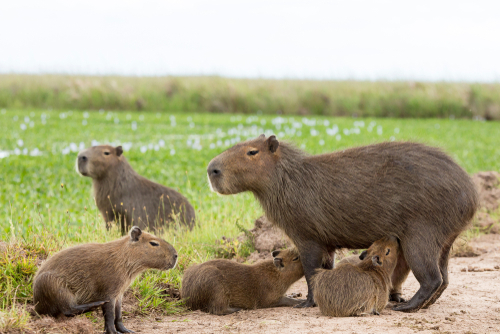
One of the most distinctive features of the carpincho is its large size. It is the world's largest rodent, and it can be quite intimidating to see one in person. Despite its size, however, the carpincho is a gentle creature that is not typically aggressive towards humans. In fact, it is often kept as a pet in some parts of South America, where it is considered a beloved and affectionate animal.
Habitat and Distribution
The carpincho is found in a variety of habitats, including grasslands, savannas, and wetlands. It is native to South America, where it can be found in countries such as Argentina, Uruguay, and Brazil. The carpincho is a semi-aquatic animal, which means that it spends a lot of time in the water. It is an excellent swimmer and can stay underwater for up to 5 minutes at a time.

The carpincho's habitat is typically characterized by slow-moving bodies of water, such as rivers, lakes, and swamps. It is also found in areas with dense vegetation, such as grasslands and savannas. The carpincho is a social animal that lives in large groups, called herds.These herds can range in size from a few individuals to over 100 carpinchos, and they are usually led by a dominant male.
Diet and Foraging
The carpincho is a herbivore, which means that it only eats plants and fruits. Its diet consists of a wide variety of plants, including grasses, aquatic plants, and fruit trees. The carpincho has a special digestive system that allows it to eat plants that are toxic to other animals. It can also eat a large amount of food at one time, which helps it to survive during times of scarcity.
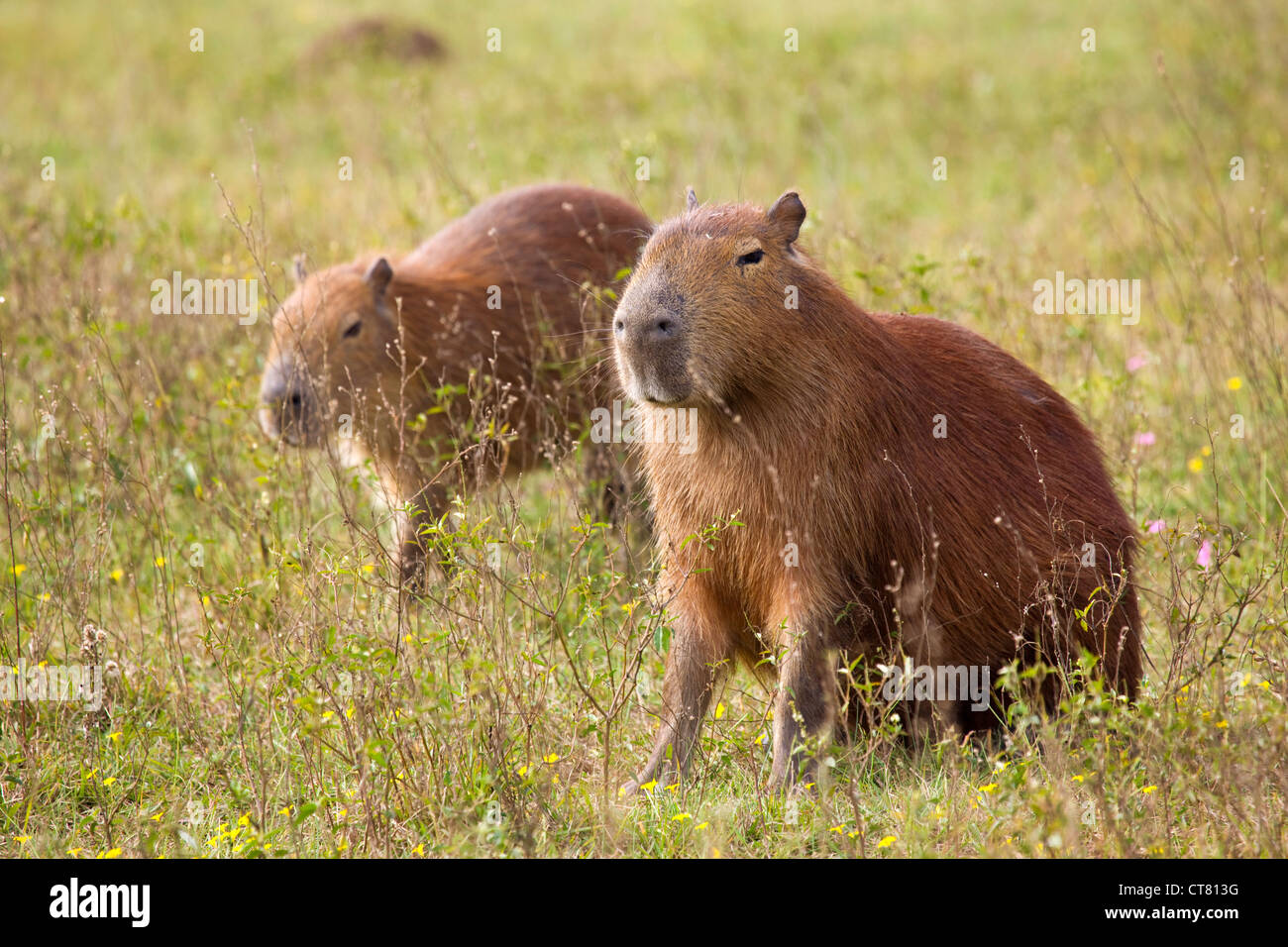
The carpincho is a grazer, which means that it spends most of its time eating grasses and other plants. It uses its sharp teeth to clip the grasses and then swallows them whole. The carpincho also has a special way of eating aquatic plants, which involves using its webbed feet to pull the plants underwater and then eating them. This unique way of eating allows the carpincho to survive in areas where other animals would not be able to find enough food.
Behavior and Social Structure
The carpincho is a social animal that lives in large groups. These groups are usually led by a dominant male, who is responsible for protecting the group from predators and other males. The carpincho is a gentle creature that is not typically aggressive towards humans, but it can be fierce when it feels threatened or when it is protecting its young.

The carpincho has a complex social structure that involves a strict hierarchy. The dominant male is at the top of the hierarchy, followed by the dominant female and then the rest of the group. The carpincho is also a communicative animal that uses a variety of sounds and body language to communicate with each other. It can make a range of sounds, from high-pitched squeaks to low grunts, and it can also use its body language to signal aggression or fear.
Conservation Status
The carpincho is not currently considered to be a threatened species, but its habitat is under threat from human activities such as deforestation and urbanization. The carpincho is also hunted for its meat and hide, which has led to a decline in its population in some areas. Conservation efforts are underway to protect the carpincho and its habitat, but more needs to be done to ensure the long-term survival of this unique and fascinating creature.
The carpincho is an important part of its ecosystem, playing a vital role in seed dispersal and nutrient cycling. It is also an important food source for many predators, including jaguars, pumas, and anacondas. The carpincho's loss could have a significant impact on the ecosystem, leading to a decline in biodiversity and ecosystem function.
Interesting Facts
There are many interesting facts about the carpincho that are worth mentioning. For example, the carpincho is a excellent swimmer and can stay underwater for up to 5 minutes at a time. It is also a very social animal and lives in large groups. The carpincho is also a very clean animal and spends a lot of time grooming itself and its group members.

The carpincho has a unique way of communicating with each other through a variety of sounds and body language. It can make a range of sounds, from high-pitched squeaks to low grunts, and it can also use its body language to signal aggression or fear. The carpincho is also a very intelligent animal and has been observed using tools to help it gather food and protect itself from predators.
Conclusion
In conclusion, the carpincho is a fascinating creature that is worth learning more about. Its unique characteristics, habits, and habitats make it an interesting animal to study and observe. The carpincho is also an important part of its ecosystem, playing a vital role in seed dispersal and nutrient cycling. Conservation efforts are underway to protect the carpincho and its habitat, but more needs to be done to ensure the long-term survival of this unique and fascinating creature.
The carpincho is a reminder of the importance of preserving and protecting our natural world. By learning more about this incredible animal and its habitat, we can gain a greater appreciation for the beauty and diversity of life on Earth. We can also take action to help protect the carpincho and its habitat, by supporting conservation efforts and making sustainable choices in our daily lives. By working together, we can ensure the long-term survival of the carpincho and the many other incredible creatures that call our planet home.
0 Response to "carpincho animal"
Post a Comment