How Parrots Mimic Human Speech
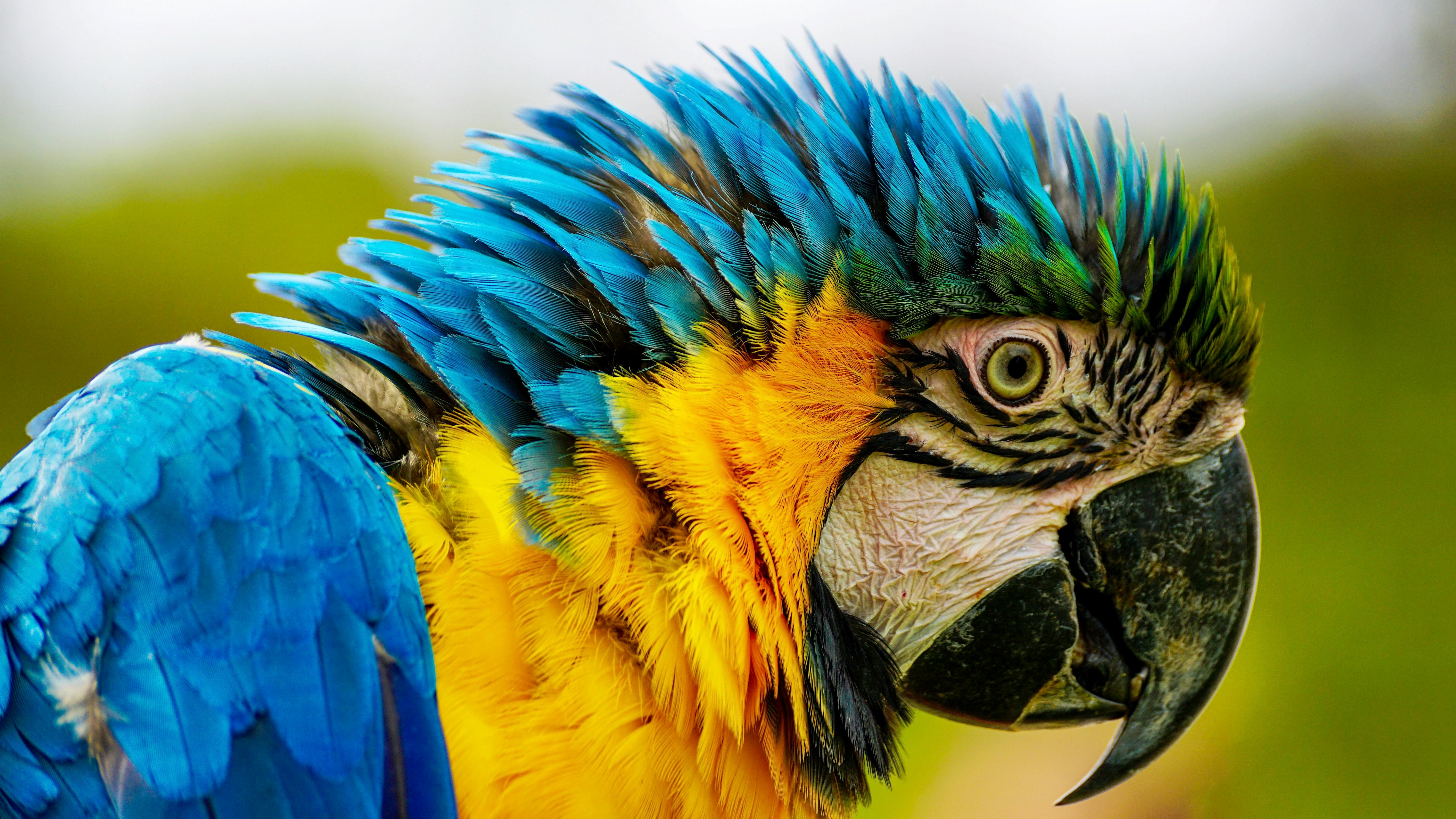
Have you ever been serenaded by a feathered friend, mimicking your own words back at you? Parrots, with their vibrant plumage and captivating personalities, are renowned for their incredible ability to imitate human speech. But how do they do it? What secrets lie behind their vocal mimicry? Let's delve into the fascinating world of parrot vocalization and uncover the science behind their chatty nature.
It's easy to be both amazed and a little perplexed when your parrot suddenly pipes up with a phrase you use all the time. Is it just random noise? Are they actually understanding what they're saying? It can be difficult to figure out how to encourage the behavior, or even understand what's going on in that little avian brain.
This blog post aims to unravel the mystery of how parrots mimic human speech. We'll explore the unique anatomical and neurological features that enable them to copy our sounds, delve into the reasons why they engage in this behavior, and even offer tips on how to encourage your parrot to talk. Prepare to be amazed by the intricate mechanisms that allow these avian wonders to "speak" our language.
We've journeyed into the heart of parrot vocalization, exploring the syrinx, the vocal learning process, the importance of social interaction, and the nuances of understanding versus simple mimicry. We have discussed the history, myths, secrets and recommendations around how parrots mimic human speech.
The Syrinx: A Parrot's Vocal Organ
I remember when I first learned that parrots didn't have vocal cords like humans. It completely blew my mind! I was so used to thinking of birdsong as just a simple, instinctive sound, I never really considered the mechanics behind it. Then I discovered the syrinx, and everything clicked. It's like a tiny, super-efficient voice box located where the trachea splits into the lungs. Imagine two independent sound sources working together! This allows parrots to produce a much wider range of sounds than we can with our larynx.
Think of the syrinx as a parrot's own personal instrument. They manipulate membranes and air flow to create a symphony of sounds, from squawks and whistles to surprisingly accurate renditions of human words. But the syrinx alone isn't enough to explain their mimicry. Vocal learning, the ability to modify vocalizations based on experience, is also crucial. Parrots are among the few animals, including humans, songbirds, and some marine mammals, capable of vocal learning. This means they can learn new sounds throughout their lives by listening and practicing. This ability, combined with their complex syrinx, is what makes their mimicry so extraordinary.
Vocal Learning: The Key to Mimicry
Vocal learning is the cognitive process that allows an animal to modify its vocalizations based on experience, meaning they can learn new sounds by listening to and imitating others. This is crucial to how parrots mimic human speech. Parrots, along with humans, songbirds, and some marine mammals, possess this remarkable ability. Unlike other animals whose vocalizations are largely instinctive, parrots can actively learn and reproduce sounds they hear in their environment. They don't just hear the sounds; they analyze, internalize, and then attempt to replicate them, which requires a level of cognitive processing that sets them apart.
The neural pathways in a parrot's brain that support vocal learning are different from most other animals. Researchers have identified specialized brain regions, often referred to as "vocal nuclei," that are involved in both the production and perception of sound. These regions are interconnected and allow the parrot to fine-tune its vocal output based on auditory feedback. This means the parrot is constantly listening to itself and adjusting its vocalizations to better match the sounds it's trying to imitate. This process is also incredibly social. Parrots often learn to mimic the sounds that are most salient in their social environment, such as the voices of their owners or the sounds of other birds in their flock. This helps them to integrate and communicate within their social group. For a parrot, mimicking human speech isn't just a parlor trick; it's a form of social bonding and communication.
The History and Myths of Parrot Mimicry
The ability of parrots to mimic human speech has fascinated people for centuries, leading to a rich tapestry of historical accounts and cultural myths. In ancient times, parrots were often seen as symbols of royalty and intelligence, and their ability to "talk" was attributed to divine gifts or magical powers. Pliny the Elder, a Roman author and naturalist, wrote about parrots that could greet emperors and recite phrases, contributing to their reputation as highly intelligent and almost mystical creatures.
Over time, as scientific understanding advanced, the myths surrounding parrot mimicry began to dissipate, but the fascination remained. Explorers and traders brought parrots back to Europe from distant lands, further fueling public interest in these exotic birds. During the Renaissance, parrots were often depicted in paintings and literature, symbolizing both wealth and wisdom. Even in modern times, parrots continue to captivate our imagination. They appear in movies, cartoons, and popular culture, often portrayed as witty and humorous characters. The myths may have faded, but the allure of a talking parrot endures, a testament to their unique and captivating ability.
The Hidden Secrets of Parrot Mimicry
While we understand the basic mechanics of how parrots mimic human speech, some hidden secrets remain. One fascinating area of research is the role of epigenetics in vocal learning. Epigenetics refers to changes in gene expression that don't involve alterations to the DNA sequence itself. Studies have suggested that epigenetic modifications may play a role in shaping the neural pathways that support vocal learning in parrots, influencing their ability to acquire and retain new sounds.
Another secret lies in the individual differences among parrots. Not all parrots are created equal when it comes to mimicry. Some species, like African Greys and Amazons, are renowned for their exceptional vocal abilities, while others may be less inclined to imitate human speech. Furthermore, individual parrots within the same species can vary greatly in their aptitude for mimicry, suggesting that genetic factors, environmental influences, and even personality traits may play a role.
Delving deeper into these hidden secrets could unlock new insights into the neural basis of language and communication, not just in parrots but also in humans. By understanding the intricate mechanisms that enable parrots to mimic our speech, we can gain a better appreciation for the complexity of their cognitive abilities and the evolutionary origins of language itself.
Recommendations for Encouraging Parrot Speech
If you're eager to encourage your parrot to talk, here are some recommendations to get you started. First, create a stimulating and interactive environment. Parrots are highly social creatures, so spend plenty of time interacting with your bird. Talk to them, sing to them, and engage them in games and activities. The more they feel connected to you, the more motivated they'll be to communicate.
Second, be patient and consistent. Learning to talk takes time and effort, so don't get discouraged if your parrot doesn't start mimicking you right away. Keep repeating phrases and words you want them to learn, and reward them with praise and treats when they make an attempt.
Third, use positive reinforcement. Parrots are more likely to learn when they're rewarded for their efforts. When your parrot says a word correctly, give them a treat, a scratch, or verbal praise. Avoid punishment, as this can create fear and anxiety, which can hinder their learning progress.
Fourth, use visual aids. Parrots are visual learners, so using flashcards or pictures can help them associate words with objects. Show them a picture of an apple while saying the word "apple," and they'll be more likely to remember it.
Finally, be creative and have fun! Learning to talk should be an enjoyable experience for both you and your parrot. Experiment with different techniques, find what works best for your bird, and celebrate their progress along the way.
By following these recommendations, you can create a positive and supportive learning environment that encourages your parrot to unlock their vocal potential and become a chatty companion.
The Role of Social Interaction
Social interaction is vital for parrots learning human language. In their natural habitat, parrots live in flocks and learn to communicate with each other through vocalizations. When brought into a human environment, they often view their human companions as part of their flock. This drives their desire to communicate and bond with their human family, and mimicking human speech is one way they achieve this connection.
Parrots are intelligent and social creatures that crave interaction and attention. When they see that mimicking human speech elicits a response from their owners, such as laughter, praise, or treats, they are more likely to repeat the behavior. This positive reinforcement strengthens the connection between the parrot and its owner, creating a bond built on communication.
Moreover, parrots learn by observing and imitating the behavior of others. In a household where people frequently talk and engage in conversation, parrots are more likely to pick up on words and phrases. They listen to the rhythm, intonation, and pronunciation of human speech and try to replicate it to the best of their ability.
By understanding the role of social interaction in parrot mimicry, owners can create an environment that fosters communication and encourages their parrots to talk. Spending quality time with your parrot, engaging in conversations, and providing positive reinforcement can help unlock their vocal potential and strengthen the bond between you and your feathered friend.
Tips for Training Your Parrot to Talk
Training your parrot to talk can be a rewarding experience. Start with simple words and phrases that are easy for your parrot to pronounce, such as "hello," "goodbye," or their own name. Use clear and consistent pronunciation, and repeat the words frequently throughout the day. Associate the words with actions or objects to help your parrot understand their meaning. For example, say "apple" when you give your parrot a piece of apple.
Be patient and persistent. It takes time for parrots to learn new words, so don't get discouraged if they don't start talking right away. Keep repeating the words and phrases, and reward them with praise and treats when they make an attempt.
Use positive reinforcement. Parrots are more likely to learn when they're rewarded for their efforts. When your parrot says a word correctly, give them a treat, a scratch, or verbal praise. Avoid punishment, as this can create fear and anxiety, which can hinder their learning progress.
Make it fun! Learning to talk should be an enjoyable experience for both you and your parrot. Use toys, games, and activities to keep them engaged and motivated. Sing songs, read books, and tell stories to expose them to a variety of words and phrases.
Create a consistent routine. Parrots thrive on routine, so try to incorporate training sessions into your daily schedule. Choose a time when your parrot is alert and receptive, and keep the sessions short and focused.
By following these tips, you can create a positive and supportive learning environment that encourages your parrot to unlock their vocal potential and become a chatty companion.
Understanding vs. Mimicry
While parrots can mimic human speech with remarkable accuracy, it's important to distinguish between mimicry and true understanding. Mimicry is the ability to reproduce sounds without necessarily comprehending their meaning. Parrots can learn to say words and phrases, but they may not always understand what they're saying.
However, some research suggests that parrots are capable of more than just rote mimicry. Studies have shown that parrots can use words in appropriate contexts, indicating that they have some understanding of their meaning. For example, the famous African Grey parrot Alex, studied by Dr. Irene Pepperberg, was able to identify objects, colors, and shapes and even answer simple questions using human language.
The extent to which parrots understand the meaning of the words they use is still a subject of debate. Some researchers believe that parrots can develop a basic understanding of language, while others argue that their abilities are limited to associating words with specific actions or objects.
Regardless of the level of understanding, the fact that parrots can learn to mimic human speech is a testament to their cognitive abilities. Their ability to analyze, internalize, and reproduce sounds requires a level of intelligence and vocal control that is rare in the animal kingdom.
Fun Facts About Parrot Mimicry
Did you know that parrots can mimic not only human speech but also other sounds in their environment? They can imitate the sounds of other animals, such as dogs barking or cats meowing, as well as household noises, such as telephones ringing or microwaves beeping. This ability to mimic a wide range of sounds is what makes them such entertaining and captivating creatures.
One of the most fascinating aspects of parrot mimicry is their ability to mimic human voices. They can often distinguish between different voices and imitate them with remarkable accuracy. Some parrots can even mimic the accents of their owners, adding another layer of complexity to their vocal abilities.
Parrots use their mimicry skills for a variety of purposes. They may use it to attract mates, communicate with their flock, or simply to entertain themselves. In a human environment, they may use mimicry to get attention, solicit food, or even express their emotions.
The ability of parrots to mimic human speech has made them popular pets around the world. People are fascinated by their ability to talk and interact with humans, and they often form strong bonds with their feathered companions.
Parrot mimicry is a complex and fascinating phenomenon that continues to intrigue scientists and bird enthusiasts alike. Their ability to learn and reproduce sounds is a testament to their cognitive abilities and their unique place in the animal kingdom.
How to Encourage Specific Words
If you want to encourage your parrot to learn specific words, there are several techniques you can try. One effective method is to use repetition and association. Repeat the word you want your parrot to learn frequently throughout the day, and associate it with an action or object. For example, if you want your parrot to say "apple," show them an apple and say the word "apple" repeatedly.
Another technique is to use positive reinforcement. When your parrot makes an attempt to say the word, even if it's not perfect, reward them with praise and a treat. This will encourage them to keep trying and associate the word with a positive experience.
You can also use visual aids to help your parrot learn new words. Show them pictures or flashcards of the object you want them to name, and say the word repeatedly. This will help them associate the word with the visual image.
Make it fun and engaging. Parrots are more likely to learn when they're having fun, so try to incorporate games and activities into your training sessions. Use toys, sing songs, and tell stories to keep them entertained and motivated.
Be patient and persistent. It takes time for parrots to learn new words, so don't get discouraged if they don't start talking right away. Keep repeating the words and phrases, and reward them for their efforts.
By following these techniques, you can create a positive and supportive learning environment that encourages your parrot to unlock their vocal potential and learn the words you want them to say.
What If My Parrot Doesn't Talk?
It's important to remember that not all parrots are created equal when it comes to talking. Some parrots are naturally more inclined to mimic human speech than others. If your parrot doesn't talk, it doesn't necessarily mean that there's something wrong with them. It simply means that they may not be as vocally inclined as other parrots.
However, there are several factors that can influence a parrot's ability to talk. These include genetics, environment, and training. Some parrot species, such as African Greys and Amazons, are known for their exceptional talking abilities, while others may be less inclined to mimic human speech.
The environment in which a parrot is raised can also play a role. Parrots that are raised in stimulating and interactive environments are more likely to talk than those that are kept in isolated or boring environments.
Training can also make a difference. By using positive reinforcement and consistent training techniques, you can encourage your parrot to talk, even if they're not naturally inclined to do so.
If your parrot doesn't talk, don't give up hope. Keep providing them with a stimulating and interactive environment, and continue to use positive reinforcement to encourage them to communicate. Even if they don't learn to talk, they can still be a wonderful companion and bring joy to your life.
Listicle of Fascinating Parrot Facts
Here's a listicle of fascinating parrot facts that showcase their incredible abilities and unique characteristics:
- Parrots have a unique vocal organ called a syrinx, which allows them to produce a wide range of sounds, including human speech.
- Parrots are among the few animals that can learn new sounds throughout their lives, a process called vocal learning.
- Parrots mimic human speech for a variety of reasons, including social bonding, communication, and entertainment.
- Parrots can mimic not only human speech but also other sounds in their environment, such as animal noises and household sounds.
- Some parrots can distinguish between different voices and mimic them with remarkable accuracy.
- Parrots are highly intelligent creatures with complex cognitive abilities, including problem-solving and social learning.
- Parrots have a long lifespan, with some species living for over 80 years.
- Parrots are social animals that thrive on interaction and attention.
- Parrots are found in a variety of habitats around the world, from rainforests to deserts.
- Parrots are threatened by habitat loss, poaching, and the illegal pet trade.
These fascinating facts highlight the incredible abilities and unique characteristics of parrots. By learning more about these amazing creatures, we can better appreciate their value and work to protect them from extinction.
Question and Answer
Q: Do parrots understand what they're saying?
A: While parrots can mimic human speech with remarkable accuracy, the extent to which they understand the meaning of the words they use is still debated. Some research suggests that parrots can develop a basic understanding of language, while others argue that their abilities are limited to associating words with specific actions or objects.
Q: What are the best parrot species for talking?
A: Some parrot species, such as African Greys and Amazons, are renowned for their exceptional talking abilities. Other species, such as cockatoos and macaws, can also learn to talk, but they may not be as vocally inclined as African Greys and Amazons.
Q: How can I encourage my parrot to talk?
A: To encourage your parrot to talk, create a stimulating and interactive environment, use positive reinforcement, be patient and consistent, and make it fun! Repeat words and phrases frequently, associate them with actions or objects, and reward your parrot for their efforts.
Q: What if my parrot doesn't talk?
A: If your parrot doesn't talk, don't give up hope. Some parrots are naturally more inclined to talk than others. Keep providing them with a stimulating and interactive environment, and continue to use positive reinforcement to encourage them to communicate. Even if they don't learn to talk, they can still be a wonderful companion.
Conclusion of How Parrots Mimic Human Speech
The ability of parrots to mimic human speech is a captivating and complex phenomenon. It's a testament to their unique anatomy, their capacity for vocal learning, and their social nature. While the exact mechanisms and the extent of their understanding are still being researched, their ability to replicate our words continues to fascinate and endear them to us. By understanding how parrots mimic, we can appreciate their intelligence and create a more enriching environment for these remarkable creatures. Understanding how parrots mimic human speech also allows us to explore the world of the hidden secrets of parrot mimicry.
0 Response to "How Parrots Mimic Human Speech"
Post a Comment