How Owls Turn Their Heads 270 Degrees
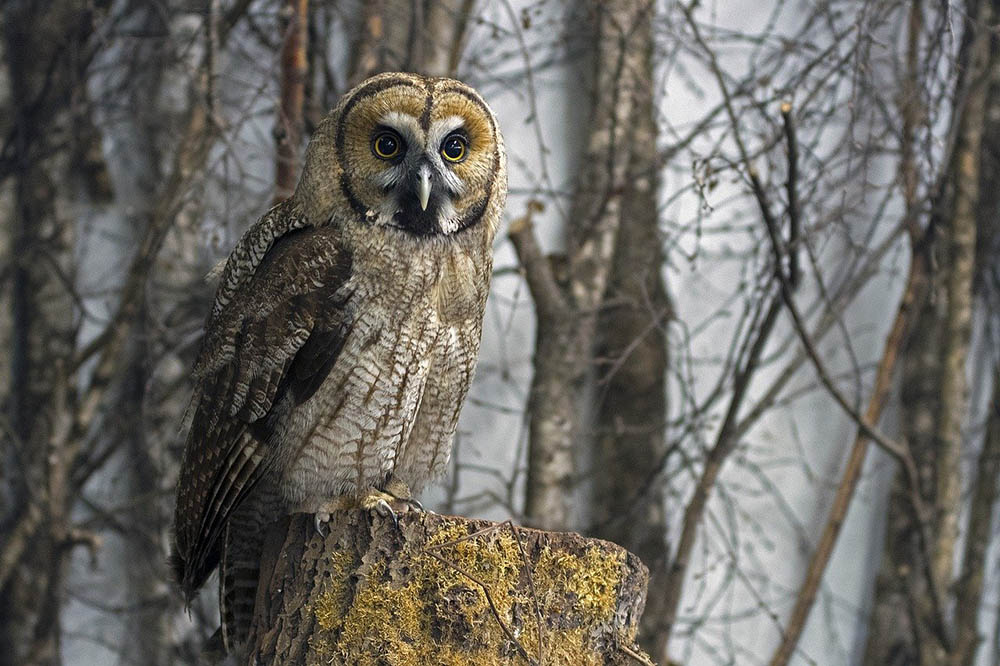
Have you ever watched an owl and been mesmerized by its ability to rotate its head almost a full circle? It's a captivating feat of nature, leaving many of us wondering just how they manage such incredible flexibility without causing themselves serious injury. It's more than just a cool trick; it's a crucial adaptation that helps them survive.
It's easy to assume that such extreme head rotation would come at a cost. We humans, with our relatively limited range of motion, can easily pull a muscle or strain our necks trying to achieve even a fraction of that flexibility. The thought of the potential damage to blood vessels and nerves in the neck is enough to make anyone wince. What allows owls to do this with seemingly no ill effects?
Owls can turn their heads up to 270 degrees thanks to several unique anatomical adaptations. These include extra vertebrae in their necks, specialized blood vessels with contractile ability, and a unique arrangement of their carotid and vertebral arteries. These features allow them to rotate their heads far beyond what would be possible for most other animals, including humans, without damaging vital tissues.
In summary, owls possess remarkable adaptations that enable them to rotate their heads 270 degrees. These adaptations include extra vertebrae, specialized blood vessels, and unique arterial arrangements. These features protect them from injury while allowing them to survey their surroundings effectively, making them formidable predators. Keywords: owls, head rotation, anatomy, vertebrae, blood vessels, carotid arteries, vertebral arteries, adaptations, predators.
Why Can't Humans Do That?
I remember once trying to imitate an owl's head turn as a kid. I was in elementary school and had just watched a nature documentary showcasing the owl's incredible flexibility. Naturally, I tried to copy it. A sharp twinge in my neck quickly reminded me that human anatomy isn't built for such maneuvers! The difference lies in the design. Humans have fewer vertebrae in their necks compared to owls, and our blood vessels and arteries aren't structured to accommodate extreme rotation. The carotid arteries, which supply blood to the brain, are vulnerable to compression and tearing with excessive neck movement. Our vertebral arteries, which run through the vertebrae in our neck, also lack the protective adaptations seen in owls. Consequently, attempting to replicate an owl's head rotation would likely result in severe pain, injury, or even a stroke. Owls, on the other hand, have evolved to overcome these limitations. They possess a network of blood vessels with small vessel contractile ability at the base of the head to allow blood to pool, serving as a blood reservoir that allows owls to perform head rotations without cutting off blood flow to the brain. Moreover, the holes in the owls' vertebrae, called the transverse foramina, are much larger than those in humans. The extra space, combined with the contractile vessel system, creates a cushion of air that allows an owl's vertebral artery to move around when the neck rotates and helps prevent the vessels from being pinched off or damaged. It’s a truly remarkable adaptation that highlights the ingenuity of natural selection.
The Owl's Unique Anatomy
To truly understand how owls achieve their impressive head rotation, we need to delve into the specifics of their anatomy. It all starts with their vertebrae. While humans have seven vertebrae in their necks, owls have more—typically 14. This increased number provides them with greater flexibility. But it’s not just the quantity of vertebrae that matters; it's their structure. Owl vertebrae are designed with specialized surfaces that allow for a greater range of motion compared to human vertebrae. Furthermore, owls have evolved unique mechanisms to protect their blood vessels during these extreme movements. The carotid and vertebral arteries, which supply blood to the brain, are vulnerable to damage if twisted or compressed. Owls have evolved expandable blood vessel structures at the base of the head and the transverse foramina structure, allowing these vessels to maintain blood flow even when the head is turned dramatically. The vertebral artery passes through these holes, which are large to allow the vertebral artery to move freely when the neck is rotated. It’s a complex interplay of bone structure and vascular adaptation that enables these birds to survey their surroundings with such incredible efficiency.
History and Myth of the Owl's Head Turn
Owls have captivated humans for centuries, appearing in folklore and mythology across diverse cultures. Their nocturnal habits, silent flight, and piercing gaze have often been associated with wisdom, mystery, and even the supernatural. The owl's remarkable ability to rotate its head has only added to its mystique. In some cultures, the owl's ability to see in the dark and turn its head almost completely around symbolized knowledge and insight. It was believed that owls could see the truth that was hidden from others. Conversely, in other cultures, owls were seen as harbingers of bad luck or omens of death. Their silent flight and eerie calls contributed to their association with the night and the unknown. The owl's head-turning ability was sometimes interpreted as a sign of its connection to the spirit world or its ability to see into the future. While modern science has debunked many of these myths, the owl continues to hold a special place in our imagination. Its unique adaptations, including its incredible head rotation, serve as a testament to the power and ingenuity of evolution. And let’s be honest, there’s still something a little bit magical about watching an owl swivel its head almost a full circle!
The Hidden Secret of Owl's Flexibility
While the anatomical adaptations of owls provide a clear explanation for their head-turning abilities, there are still some subtle details that contribute to their remarkable flexibility. One often-overlooked aspect is the role of soft tissues, such as muscles, tendons, and ligaments. These tissues provide support and stability to the neck, while also allowing for a wide range of motion. Owls have evolved specialized arrangements of these tissues that enhance their flexibility and prevent injury. For example, their neck muscles are incredibly flexible, allowing them to stretch and contract without strain. Their tendons and ligaments are also designed to withstand the forces generated during extreme head rotations. Another key factor is the owl's ability to control the movement of its head with precision. They can rotate their heads smoothly and gradually, avoiding sudden jolts that could damage their tissues. This precise control is achieved through a complex interplay of sensory feedback and motor coordination. The owl's brain receives constant input from its eyes, ears, and neck muscles, allowing it to monitor its head position and adjust its movements accordingly. It’s a testament to the intricate connection between anatomy, physiology, and behavior that allows owls to perform this incredible feat.
Recommendations for Owl Enthusiasts
If you're fascinated by owls and their head-turning abilities, there are plenty of ways to learn more and appreciate these amazing creatures. Start by doing some research. There are countless books, articles, and documentaries that explore the anatomy, behavior, and ecology of owls. Look for resources that provide detailed explanations of their head-turning adaptations, as well as information about their hunting strategies, social behavior, and conservation status. Another great way to learn about owls is to go birdwatching. Many parks and nature reserves offer guided owl prowls, where you can learn how to identify different species and observe them in their natural habitat. When observing owls, be sure to respect their space and avoid disturbing them. Use binoculars or a spotting scope to get a closer look, and keep a safe distance to avoid stressing the birds. You can also support owl conservation efforts by donating to organizations that work to protect owl habitats and educate the public about the importance of owl conservation. By taking these steps, you can deepen your understanding of owls and contribute to their long-term survival. Plus, you'll have plenty of interesting facts to share with your friends and family!
Owl Vertebrae and Blood Vessels
Delving deeper into the specifics of owl vertebrae and blood vessels reveals a fascinating level of adaptation. Owl vertebrae are not only more numerous than those of mammals but also have unique structural features. The articular surfaces, where the vertebrae connect, are flatter and more flexible, allowing for a greater range of motion. These surfaces are also covered with cartilage, which reduces friction and allows for smooth, fluid movements. The blood vessels that supply the owl's brain are also বিশেষভাবে adapted to withstand the stresses of extreme head rotation. The carotid arteries, which run along the sides of the neck, are connected by small communicating vessels that allow blood to flow even if one artery is compressed. The vertebral arteries, which run through the vertebrae, are surrounded by a network of veins that help to cushion them from damage. These adaptations, combined with the owl's flexible neck muscles and precise motor control, allow it to rotate its head with remarkable ease and safety. The complexity of these adaptations highlights the evolutionary pressures that have shaped the owl's unique anatomy and behavior.
Tips for Appreciating Owl Adaptations
While we can't replicate an owl's head rotation, we can still appreciate the marvels of their adaptations by adopting a few key practices. First, cultivate your observational skills. When you see an owl, take a moment to notice its posture, its movements, and the way it interacts with its environment. Pay attention to how it uses its head to scan its surroundings and locate prey. Second, learn about the different species of owls and their unique adaptations. Each species has evolved to thrive in a particular habitat, and their anatomical and behavioral traits reflect these adaptations. For example, some owls have asymmetrical ear openings that help them pinpoint the location of prey in three dimensions. Others have specialized feathers that allow them to fly silently. Third, share your knowledge with others. Talk to your friends and family about the amazing adaptations of owls, and encourage them to learn more about these fascinating creatures. By spreading awareness, you can help to inspire a greater appreciation for the natural world and the importance of conservation. And who knows, you might even spark someone else's interest in the science of owl head rotation!
Silent Flight and Sensory Acuity
Beyond head rotation, owls possess a suite of adaptations that make them highly effective predators. Their silent flight is a prime example. Owls have specially structured feathers with fringed edges that disrupt the flow of air, reducing turbulence and minimizing noise. This allows them to approach their prey undetected, giving them a significant advantage. In addition to their silent flight, owls have exceptional sensory acuity. Their large, forward-facing eyes provide excellent binocular vision, allowing them to judge distances accurately. Their ears are also highly sensitive, and in some species, they are asymmetrically positioned to help them pinpoint the location of prey based on sound. These adaptations, combined with their sharp talons and powerful beaks, make owls formidable hunters. Their ability to rotate their heads 270 degrees is just one piece of the puzzle, but it's a crucial one that allows them to scan their surroundings and locate prey with unmatched efficiency. The synergy between these adaptations highlights the power of evolution to shape organisms for success in their environment.
Fun Facts About Owl Head Rotation
Did you know that baby owls, or owlets, can't rotate their heads as far as adult owls? Their necks are still developing, and their vertebrae haven't fully fused. This means that they have to turn their entire bodies to see something behind them. Another fun fact is that scientists have used X-rays and CT scans to study the anatomy of owl necks in detail. These studies have revealed the intricate arrangement of bones, blood vessels, and nerves that allow owls to rotate their heads so far without injury. It's also worth noting that not all owls can rotate their heads 270 degrees. The exact range of motion varies depending on the species. Some owls can only turn their heads 180 degrees, while others can achieve a full 270-degree rotation. Despite these variations, all owls have evolved remarkable adaptations that allow them to see and hunt effectively in their environments. The more you learn about owls, the more you appreciate the ingenuity and diversity of nature. From their silent flight to their exceptional hearing, owls are truly remarkable creatures.
How to Observe Owls Safely and Respectfully
If you're lucky enough to encounter an owl in the wild, it's important to observe it safely and respectfully. First, keep a safe distance from the owl. Approach slowly and quietly, and avoid making sudden movements that could startle the bird. Second, avoid using flash photography. The bright light can temporarily blind the owl and disrupt its hunting. Third, do not attempt to feed the owl. This can habituate the bird to humans and make it dependent on artificial food sources. Fourth, respect the owl's habitat. Stay on established trails and avoid trampling vegetation. Be mindful of your surroundings and avoid disturbing other wildlife. By following these guidelines, you can enjoy observing owls without causing them harm. Remember that these birds are an important part of the ecosystem, and it's our responsibility to protect them. Take the time to learn more about owls and their conservation status, and support organizations that are working to protect their habitats.
What If Owls Couldn't Rotate Their Heads?
Imagine a world where owls couldn't rotate their heads 270 degrees. How would their lives be different? For starters, their hunting strategies would have to change drastically. They would no longer be able to scan their surroundings with such efficiency, making it harder to locate prey. They would likely have to rely more on other senses, such as hearing, to find food. Their social interactions might also be affected. Owls use head movements to communicate with each other, and a limited range of motion could make it harder for them to signal their intentions. They might also be more vulnerable to predators. Without the ability to quickly survey their surroundings, they would be less likely to detect approaching threats. In short, the owl's head-turning ability is a crucial adaptation that plays a vital role in its survival. Without it, owls would be at a significant disadvantage in their environments. It's a reminder of how even seemingly small adaptations can have a profound impact on an animal's life.
Top 5 Fascinating Facts About Owl Head Rotation
Here's a quick list of some of the most fascinating facts about owl head rotation:
- Owls have more vertebrae in their necks than humans, allowing for greater flexibility.
- They have specialized blood vessels that prevent blood from being cut off to the brain during extreme head movements.
- The holes in their vertebrae are larger than those in humans, providing more space for blood vessels to move around.
- Scientists have used X-rays and CT scans to study the anatomy of owl necks in detail.
- Not all owls can rotate their heads 270 degrees; the exact range of motion varies depending on the species.
These facts highlight the complexity and ingenuity of the adaptations that allow owls to rotate their heads so far without injury. They also underscore the importance of ongoing research in understanding the natural world.
Question and Answer Section
Q: How many vertebrae do owls have in their necks?
A: Owls typically have 14 vertebrae in their necks, compared to the 7 that humans have.
Q: What prevents owls from cutting off blood flow to the brain when they rotate their heads?
A: Owls have specialized blood vessels with contractile ability and a unique arrangement of their carotid and vertebral arteries that allow them to maintain blood flow even during extreme head movements.
Q: Can all owl species rotate their heads 270 degrees?
A: No, the exact range of motion varies depending on the species. Some owls can only turn their heads 180 degrees, while others can achieve a full 270-degree rotation.
Q: What other adaptations do owls have that make them effective predators?
A: In addition to their head-turning ability, owls have silent flight, exceptional hearing, and sharp talons that help them to hunt effectively.
Conclusion of How Owls Turn Their Heads 270 Degrees
The ability of owls to rotate their heads 270 degrees is a testament to the power of evolution and the ingenuity of nature. Their unique anatomical adaptations, including extra vertebrae, specialized blood vessels, and precise motor control, allow them to survey their surroundings with unmatched efficiency. This adaptation, combined with their other remarkable traits, makes them formidable predators and fascinating creatures to study. By learning more about owls and their adaptations, we can gain a deeper appreciation for the complexity and diversity of the natural world.
0 Response to "How Owls Turn Their Heads 270 Degrees"
Post a Comment