How Crows Solve Complex Problems
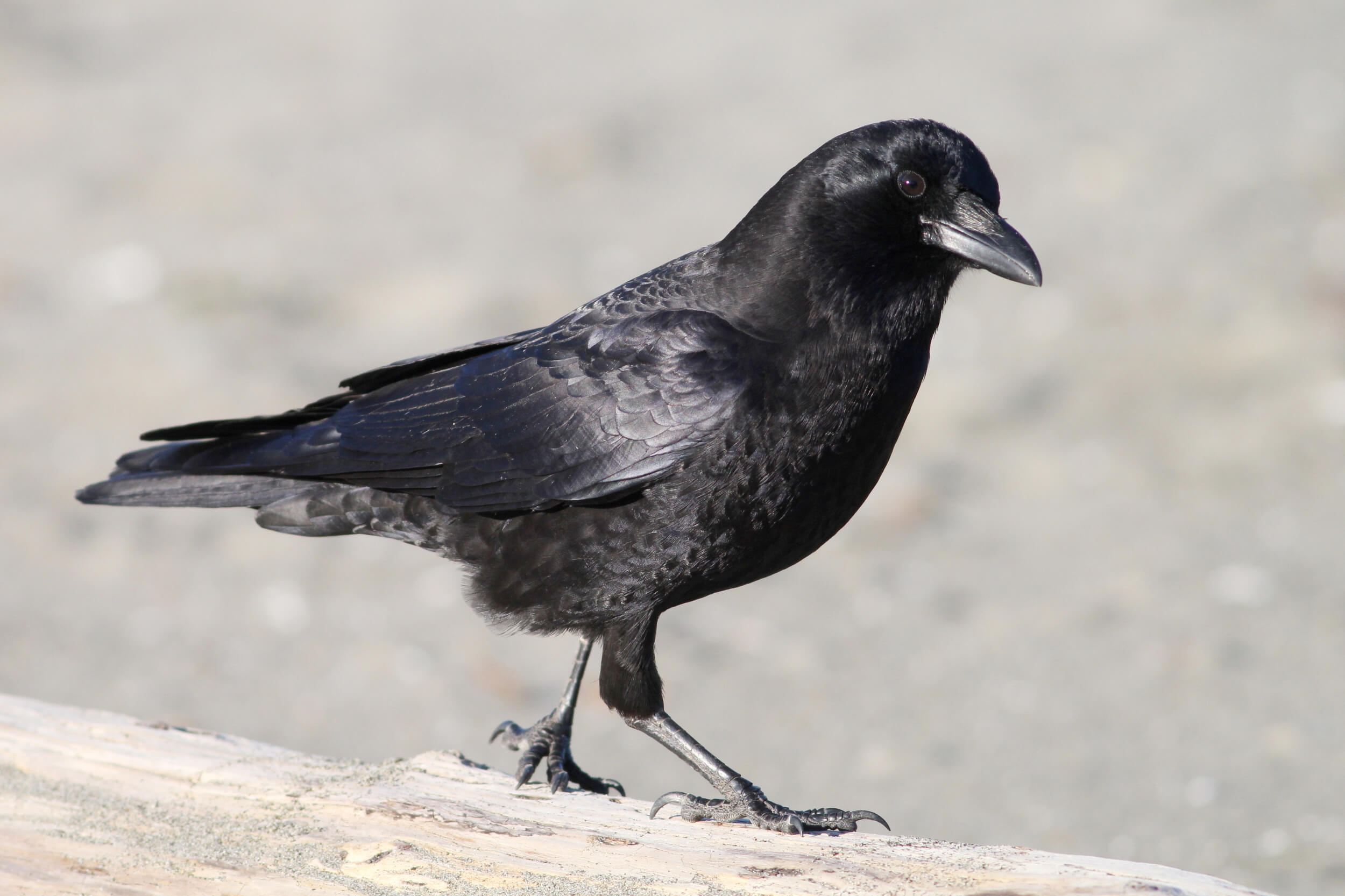
Ever watched a crow and felt like it was judging your intelligence? You're not alone. These feathered creatures, often dismissed as mere scavengers, possess cognitive abilities that rival those of primates. Get ready to have your perceptions challenged as we delve into the surprising world of corvid intelligence and how crows tackle complex problems.
It's easy to underestimate animals. We often assume that complex thinking is unique to humans. We look at their behaviors and chalk them up to instinct or simple learned responses, failing to recognize the depth of their cognitive abilities. Furthermore, appreciating animal intelligence challenges our anthropocentric worldview, forcing us to reconsider our place in the natural world.
Crows solve complex problems through a combination of impressive cognitive skills. They exhibit tool use, planning abilities, problem-solving skills, and social learning. These capabilities, once thought exclusive to humans and other large-brained mammals, demonstrate the remarkable intelligence packed into these avian creatures.
Crows are more than just noisy birds. They are intelligent creatures that solve problems with tools, plan for the future, and learn from each other. They showcase advanced cognitive abilities, comparable to some primates. This article explored their problem-solving prowess, tool use, social intelligence, and planning abilities. Understanding crow intelligence challenges our anthropocentric view and highlights the remarkable diversity of cognition in the animal kingdom. Key terms explored include: tool use, problem-solving, avian cognition, corvid intelligence, and animal behavior.
Personal Encounters with Crow Smarts
I'll never forget the day I watched a crow meticulously maneuver a small twig to dislodge a piece of bread stuck in a bird feeder. It wasn't a quick, instinctive peck; it was a deliberate, multi-step process. The crow assessed the situation, selected the appropriate tool (the twig), and then carefully used it to achieve its goal. It was a lightbulb moment for me. I realized I was witnessing intelligence in action, a cognitive capacity far beyond simple stimulus-response behavior. It made me question everything I thought I knew about animal intelligence. We often underestimate the cognitive abilities of animals, assuming that complex problem-solving is a uniquely human trait. This incident, however, highlighted the fallacy of that assumption. Crows, it turns out, are remarkably adept at analyzing situations, devising strategies, and executing plans to achieve their goals. Their tool use isn't simply innate; it's learned and adapted based on the specific challenge they face. This flexibility in problem-solving is a hallmark of intelligence and demonstrates the impressive cognitive power of these often-overlooked birds. The ability of crows to solve complex problems is not just about their individual intelligence. It's also about their capacity for social learning. They observe each other, learn from each other's successes and failures, and pass on knowledge and skills to future generations. This cultural transmission of knowledge allows crow populations to adapt to changing environments and develop innovative solutions to new challenges. It underscores the importance of social interaction in the development and expression of intelligence, both in crows and in other species, including humans.
Defining Complex Problem-Solving in Crows
When we talk about "complex problem-solving" in crows, we're not just referring to simple tasks like finding food. We're talking about behaviors that demonstrate planning, tool use, understanding cause and effect, and adapting to novel situations. It goes beyond instinct and involves cognitive processes like reasoning and decision-making. The ability of crows to solve complex problems lies in a few key areas. First, they demonstrate impressive tool use. New Caledonian crows, for example, are famous for crafting and using tools to extract insects from logs. They select twigs of specific lengths and shapes, modify them to create hooks, and then use these tools to probe for food. This requires an understanding of the physical properties of objects and the ability to plan and execute a sequence of actions to achieve a goal. Second, crows exhibit planning abilities. Studies have shown that they can plan for future needs, such as storing food for later consumption. They can also anticipate future events and adjust their behavior accordingly. This requires them to mentally represent the future and make decisions based on those representations. Third, crows have a keen understanding of cause and effect. They can observe the consequences of their actions and use this information to modify their behavior in the future. For example, they can learn to associate specific cues with the availability of food and then use those cues to predict where they will find food in the future. These abilities, combined with their impressive social intelligence, make crows remarkably adept at solving complex problems in a variety of contexts. They are truly one of the most intelligent animals on the planet, challenging our assumptions about the nature of intelligence and the relationship between brain size and cognitive ability.
The History and Myth of Crow Intelligence
Crows have long been associated with both positive and negative symbolism across different cultures. In some cultures, they are seen as symbols of wisdom and intelligence, while in others, they are associated with bad luck and death. This duality reflects our complex relationship with these birds and our ongoing fascination with their intelligence. Historically, observations of crow behavior have fueled both myths and scientific inquiry. Stories of crows outsmarting humans and exhibiting clever problem-solving skills have been passed down through generations, contributing to their reputation as intelligent creatures. However, it wasn't until relatively recently that scientists began to systematically investigate the cognitive abilities of crows and other corvids. Early studies focused on tool use and problem-solving in captive crows. These studies provided evidence that crows were capable of complex cognitive processes, such as planning, reasoning, and causal inference. More recent research has expanded our understanding of crow intelligence, revealing their impressive social learning abilities, their capacity for empathy, and their ability to adapt to changing environments. One of the most famous historical examples of crow intelligence is the story of Aesop's crow, which dropped pebbles into a pitcher of water to raise the water level and reach the water. This story, although likely apocryphal, highlights the enduring belief in the intelligence of crows and their ability to solve problems using creative solutions. In many cultures, crows are also seen as messengers or tricksters, reflecting their ability to observe and understand human behavior. They are often depicted as intelligent and resourceful creatures who can outsmart humans in various ways. This perception of crows as intelligent beings has influenced art, literature, and folklore for centuries, contributing to their enduring mystique.
The Hidden Secret of Crow Adaptability
Perhaps the biggest secret to crows' problem-solving prowess lies in their remarkable adaptability. They are not specialists; they are generalists, capable of thriving in a wide range of environments and adapting to new challenges with remarkable speed. This flexibility is key to their success. Crow adaptability is rooted in a combination of factors, including their intelligence, their social behavior, and their ability to learn from experience. Their intelligence allows them to analyze situations, devise strategies, and execute plans to achieve their goals. Their social behavior allows them to learn from each other, share information, and cooperate in solving problems. And their ability to learn from experience allows them to adapt to changing environments and develop innovative solutions to new challenges. One example of crow adaptability is their ability to exploit human-altered environments. Crows have learned to thrive in urban areas, where they can find abundant food and shelter. They have also learned to take advantage of human activities, such as agriculture and construction, to find new food sources and nesting sites. Another example of crow adaptability is their ability to cope with environmental changes, such as climate change and habitat loss. Crows have been able to adapt to these changes by altering their behavior, expanding their range, and developing new strategies for survival. The adaptability of crows is not just about their individual abilities. It's also about the resilience of their populations. Crows are able to recover quickly from population declines, thanks to their high reproductive rate and their ability to adapt to changing conditions. This resilience makes them one of the most successful and widespread bird species in the world. The hidden secret of crow adaptability is their ability to combine intelligence, social behavior, and learning from experience to thrive in a wide range of environments and adapt to new challenges. This adaptability is the key to their problem-solving prowess and their enduring success as a species.
Recommendations for Appreciating Crow Intelligence
To truly appreciate the intelligence of crows, I recommend taking the time to observe them in their natural environment. Watch how they interact with each other, how they forage for food, and how they solve problems. You might be surprised by what you see. One of the best ways to appreciate crow intelligence is to observe their tool use. If you live in an area with New Caledonian crows, you might be able to see them crafting and using tools to extract insects from logs. Even if you don't live in an area with New Caledonian crows, you can still observe crows using tools in other ways, such as using sticks to probe for food or using stones to crack open nuts. Another way to appreciate crow intelligence is to observe their social behavior. Crows are highly social birds that live in complex social groups. They communicate with each other using a variety of vocalizations and body language. They also cooperate in foraging, defending their territory, and raising their young. By observing their social behavior, you can gain a deeper understanding of their intelligence and their capacity for empathy. You can also learn more about crow intelligence by reading books and articles about crow behavior and cognition. There are many excellent resources available that can provide you with a more detailed understanding of the cognitive abilities of crows. Finally, you can support research on crow intelligence by donating to organizations that study crow behavior and cognition. By supporting this research, you can help to advance our understanding of crow intelligence and the nature of intelligence in general. Appreciating crow intelligence is not just about learning about their cognitive abilities. It's also about recognizing their value as members of the ecosystem. Crows play an important role in the environment by controlling insect populations, dispersing seeds, and scavenging carrion. By appreciating their intelligence and their ecological role, we can help to protect them and their habitats.
Further Exploration: The New Caledonian Crow
The New Caledonian crow (Corvus moneduloides) stands out even among its intelligent corvid cousins. Native to the islands of New Caledonia, this species is renowned for its sophisticated tool use, surpassing even some primates in its tool-making abilities. They don't just use tools; they craft them with specific purposes in mind, showcasing an impressive understanding of cause and effect. These crows manufacture different types of tools from twigs and leaves, each designed for a specific task. For instance, they create hooked tools for extracting insects from crevices and serrated tools for stripping leaves from branches. The process of creating these tools is complex and requires a high degree of skill and coordination. The crows must first select the appropriate raw materials, then modify them to create the desired shape and size. They also need to learn how to use the tools effectively, which can take time and practice. One of the most remarkable aspects of New Caledonian crow tool use is its cultural transmission. Young crows learn how to make and use tools by observing their parents and other adults. This social learning allows the crows to pass on their knowledge and skills to future generations, ensuring that the tradition of tool use continues. Studies have shown that New Caledonian crows can also innovate and improve their tools over time. They can adapt their tools to different tasks and environments, and they can even invent new tools altogether. This creativity and adaptability are hallmarks of intelligence and demonstrate the remarkable cognitive abilities of these birds. The New Caledonian crow is a fascinating example of how intelligence can evolve in response to specific environmental pressures. Its tool-making abilities are a testament to the power of natural selection and the ingenuity of nature.
Tips for Recognizing Crow Intelligence in the Wild
Observing crows in the wild can be a fascinating experience, especially when you know what to look for. Here are a few tips to help you recognize signs of crow intelligence: Pay attention to their foraging behavior. Do they seem to be using a specific strategy to find food? Are they using tools to access food that would otherwise be unavailable? Look for evidence of problem-solving. Have you ever seen a crow figure out how to open a container or access a bird feeder? These are signs of intelligence. Observe their social interactions. Crows are highly social birds, and their social interactions can reveal a lot about their intelligence. Watch how they communicate with each other, how they cooperate in foraging and defending their territory, and how they raise their young. Listen to their vocalizations. Crows have a complex repertoire of vocalizations that they use to communicate with each other. By listening to their vocalizations, you can learn more about their social structure and their individual personalities. Be patient and observant. Recognizing crow intelligence takes time and patience. Don't expect to see them solving complex problems every day. But if you pay attention to their behavior, you will eventually see evidence of their intelligence. Look for signs of play. Crows, like many intelligent animals, engage in play. They may play with objects, chase each other, or engage in other forms of playful behavior. Play is a sign of intelligence and can help crows to develop their cognitive and social skills. Be aware of their adaptations to human environments. Crows have adapted remarkably well to human environments. They have learned to take advantage of human activities, such as agriculture and construction, to find new food sources and nesting sites. By observing their adaptations to human environments, you can gain a better understanding of their intelligence and their ability to learn and adapt.
The Role of Brain Size and Structure
While crows may not have the largest brains in the animal kingdom, the structure and organization of their brains are surprisingly complex, particularly in regions associated with higher-level cognitive functions. Research suggests that the relative size and interconnectedness of brain regions play a crucial role in their intelligence. The avian brain differs significantly from the mammalian brain in terms of structure. Birds do not have a cerebral cortex, the outer layer of the brain that is responsible for higher-level cognitive functions in mammals. Instead, they have a structure called the pallium, which is thought to be analogous to the cerebral cortex. The pallium in crows is particularly well-developed, especially in the regions that are associated with learning, memory, and problem-solving. Studies have shown that these regions are highly interconnected, allowing crows to process information efficiently and make complex decisions. In addition to the pallium, crows also have a relatively large hippocampus, a brain structure that is important for spatial memory and navigation. This is not surprising, given that crows often need to remember the locations of food caches and other important resources. The size and structure of the crow brain are not the only factors that contribute to their intelligence. The organization of their brain cells is also important. Crows have a high density of neurons in their brains, which means that they have more brain cells per unit volume than many other animals. This high neuron density may allow them to process information more quickly and efficiently. The crow brain is a remarkable example of how evolution can shape the brain to produce intelligence. Despite having a relatively small brain, crows have developed cognitive abilities that rival those of some primates.
Fun Facts About Crow Intelligence
Did you know that crows can recognize human faces and hold grudges? They can also learn to mimic human speech and even use cars as nutcrackers. These fun facts highlight the remarkable versatility and adaptability of crow intelligence. Crows have excellent memories. They can remember the faces of people who have treated them badly and will avoid them in the future. They can also remember the locations of food caches and other important resources for months or even years. Crows can plan for the future. They can store food for later consumption and can even anticipate future events and adjust their behavior accordingly. Crows can understand cause and effect. They can observe the consequences of their actions and use this information to modify their behavior in the future. Crows can communicate with each other using a variety of vocalizations and body language. They can also cooperate in foraging, defending their territory, and raising their young. Crows can use tools to solve problems. New Caledonian crows, for example, are famous for crafting and using tools to extract insects from logs. Crows can learn from each other. They can observe the behavior of other crows and then imitate that behavior themselves. Crows can innovate. They can invent new ways to solve problems and can even improve on existing tools. Crows can adapt to changing environments. They have learned to thrive in urban areas and have even learned to take advantage of human activities, such as agriculture and construction. Crows are found all over the world, except for Antarctica. There are over 40 different species of crows, each with its own unique characteristics. Crows are an important part of the ecosystem. They help to control insect populations, disperse seeds, and scavenge carrion. Crows are intelligent, social, and adaptable creatures that play an important role in the environment. They are also fascinating to watch and learn about.
How to Encourage Crow Intelligence
While you can't "train" a wild crow like you would a dog, you can create opportunities for them to exercise their intelligence. Providing puzzles or challenges, like hiding food in simple containers, can be a stimulating activity for these curious birds. However, it's crucial to do so responsibly and ethically, avoiding any actions that could harm them or disrupt their natural behavior. One way to encourage crow intelligence is to provide them with opportunities to solve problems. You can do this by hiding food in containers that they have to figure out how to open. You can also create puzzles for them to solve, such as placing food inside a box with a latch. Another way to encourage crow intelligence is to provide them with opportunities to socialize. Crows are highly social birds, and they learn from each other. You can encourage them to socialize by creating a safe and welcoming environment for them in your yard. This could include providing them with food, water, and shelter. You can also encourage crow intelligence by providing them with opportunities to explore their environment. Crows are curious birds, and they enjoy exploring new things. You can encourage them to explore by providing them with a variety of different objects to play with, such as sticks, stones, and leaves. It is important to note that when providing opportunities for crows to exercise their intelligence, it is crucial to do so responsibly and ethically. Avoid any actions that could harm them or disrupt their natural behavior. For example, do not feed them junk food or leave out food that could attract other animals. Also, be sure to respect their space and do not try to get too close to them. By providing crows with opportunities to exercise their intelligence in a responsible and ethical way, you can help to support their cognitive development and their overall well-being. You can also gain a greater appreciation for their intelligence and their role in the ecosystem.
What If We Could Understand Crow Language?
Imagine a world where we could decipher the complex vocalizations of crows. What secrets would we uncover about their social lives, their problem-solving strategies, and their understanding of the world? This prospect opens up fascinating possibilities for scientific discovery and interspecies communication. If we could understand crow language, we could learn a great deal about their social lives. Crows use a variety of vocalizations to communicate with each other, including alarm calls, mating calls, and territorial calls. By deciphering these calls, we could learn more about how crows interact with each other, how they form social bonds, and how they resolve conflicts. We could also learn more about their problem-solving strategies. Crows are known for their intelligence and their ability to solve complex problems. By understanding their language, we could gain insights into how they think, how they plan, and how they communicate their ideas to each other. We could also learn more about their understanding of the world. Crows have a different perspective on the world than humans do. They see the world from a different height, they have different senses, and they have different experiences. By understanding their language, we could gain a better understanding of their perspective and their understanding of the world. The prospect of understanding crow language opens up fascinating possibilities for scientific discovery. It could help us to learn more about the intelligence of crows, their social lives, their problem-solving strategies, and their understanding of the world. It could also help us to develop new ways of communicating with animals and to understand their perspective on the world. Of course, understanding crow language would be a complex and challenging task. But if we could achieve it, the rewards would be enormous.
Listicle: 7 Amazing Examples of Crow Problem-Solving
Here's a quick rundown of some of the most impressive displays of crow intelligence:
1.Tool Creation: New Caledonian crows crafting hooked tools from twigs.
2.Aesop's Fable Come to Life: Crows dropping stones into a pitcher to raise the water level.
3.Traffic Savvy: Crows placing nuts on roads for cars to crack open.
4.Vending Machine Hackers: Crows learning to use vending machines to get food.
5.Memory Masters: Crows remembering human faces and holding grudges.
6.Cooperative Hunting: Crows working together to flush out prey.
7.Puzzle Solvers: Crows figuring out complex puzzles to access food rewards.
These examples showcase the remarkable range of problem-solving skills that crows possess, highlighting their intelligence and adaptability.
Question and Answer About How Crows Solve Complex Problems
Q: Are crows smarter than other birds?
A: While intelligence is difficult to measure definitively, crows are considered to be among the most intelligent birds, rivaling parrots and some birds of prey.
Q: Do all crows use tools?
A: Not all crow species use tools, but some, like the New Caledonian crow, are renowned for their sophisticated tool use.
Q: How do crows learn?
A: Crows learn through observation, imitation, and trial and error. They are also capable of social learning, where they learn from each other.
Q: Can crows solve any problem?
A: While crows are intelligent, they are not capable of solving every problem. However, they are remarkably adept at adapting to new situations and finding creative solutions to challenges.
Conclusion of How Crows Solve Complex Problems
Crows, often misunderstood and underestimated, are a testament to the diversity and complexity of intelligence in the animal kingdom. Their tool use, planning abilities, social intelligence, and adaptability challenge our anthropocentric views and inspire us to appreciate the cognitive abilities of all creatures. By observing and respecting these remarkable birds, we can gain a deeper understanding of intelligence itself and our place in the natural world.
0 Response to "How Crows Solve Complex Problems"
Post a Comment