Can De-Extinction Bring Animals Back to Life?
Imagine a world where woolly mammoths roam the Siberian tundra once again. Where the passenger pigeon darkens the skies with its vast flocks. It sounds like science fiction, but the burgeoning field of de-extinction is bringing these dreams closer to reality. But is it truly possible to bring extinct animals back to life?
The idea of resurrecting extinct creatures sparks a lot of debate. We're faced with difficult questions: Is it ethical to bring back animals that disappeared for a reason? Can we provide them with a suitable habitat in today's world? Will these resurrected species disrupt existing ecosystems, creating unforeseen consequences?
The short answer is: potentially, yes, but it's complicated. De-extinction is not about cloning dinosaurs from ancient DNA (sorry, Jurassic Park fans!). Instead, it involves using advanced genetic technologies like CRISPR to edit the DNA of a living relative and make it more like the extinct animal. It's a painstaking process, and success is far from guaranteed. But the potential is there to undo some of the damage we've inflicted on the planet and restore lost biodiversity.
This article explores the fascinating world of de-extinction, delving into the scientific methods, ethical considerations, and potential benefits and risks. We'll examine the different approaches being used, the animals currently being targeted, and the long-term implications for conservation and our relationship with the natural world. Keywords include: de-extinction, genetic engineering, conservation, biodiversity, woolly mammoth, passenger pigeon, CRISPR, ethics, extinct species.
Ethical Considerations of De-Extinction
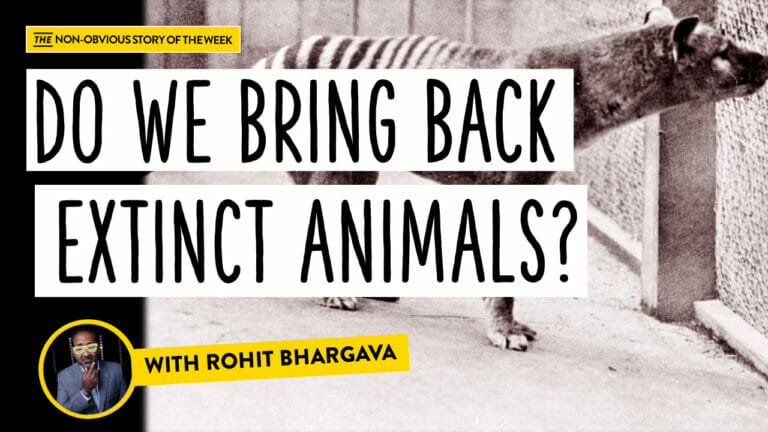
I remember watching a nature documentary as a child and being heartbroken by the story of the last Tasmanian tiger. It was a profound moment that sparked my lifelong interest in conservation. The thought that we could potentially reverse such a tragic loss is incredibly compelling. However, it also raises some serious ethical questions. Are we playing God? Do we have the right to bring back animals that went extinct, especially if human activities contributed to their demise in the first place? What if a de-extinct animal suffers in its new environment, unable to adapt to the changes that have occurred since its extinction?
The ethical considerations surrounding de-extinction are complex and multifaceted. One major concern is resource allocation. Should we be spending vast sums of money on bringing back extinct species when those resources could be used to protect existing endangered species? Many argue that preventing extinction in the first place should be our top priority. Another concern is the potential for unforeseen ecological consequences. Introducing a de-extinct species into an ecosystem could disrupt the delicate balance and negatively impact other species.
Moreover, the welfare of the de-extinct animals themselves must be considered. Will they be able to thrive in the modern world, or will they face a life of hardship and suffering? And what about the issue of genetic diversity? De-extinction efforts typically rely on limited genetic material, which could lead to inbreeding and other genetic problems. It is essential to carefully weigh the potential benefits of de-extinction against these ethical concerns before proceeding with such projects. A transparent and inclusive public debate is crucial to ensure that these decisions are made responsibly and in the best interests of both humanity and the natural world.
What is De-Extinction?
De-extinction is the process of bringing back to life species that have gone extinct. It’s not as simple as cloning a dinosaur from a mosquito trapped in amber, as depicted in the Jurassic Park movies. The reality is far more complex and involves cutting-edge genetic technologies. The most promising approach involves using CRISPR-Cas9, a revolutionary gene-editing tool, to alter the DNA of a living relative of the extinct species. The goal is to edit the genome of the living animal to resemble that of the extinct one, essentially recreating its key traits.
For example, scientists are working on bringing back the woolly mammoth by editing the DNA of Asian elephants. They are focusing on genes that control traits like cold resistance, thick fur, and small ears – characteristics that distinguished the woolly mammoth from modern elephants. The resulting animal wouldn't be a perfect replica of the woolly mammoth, but rather a hybrid that possesses many of its key features.
Other de-extinction projects are focusing on species like the passenger pigeon, a bird that once numbered in the billions in North America before being driven to extinction by hunting and habitat loss. Scientists are comparing the passenger pigeon's DNA to that of the closely related band-tailed pigeon and plan to use gene editing to introduce passenger pigeon traits into the band-tailed pigeon genome. De-extinction is not without its challenges and controversies. However, it holds the potential to restore lost biodiversity and address some of the ecological damage caused by human activities.
History and Myth of De-Extinction
The idea of bringing back extinct animals has been a recurring theme in mythology and science fiction for centuries. From ancient myths of phoenixes rising from ashes to Mary Shelley's Frankenstein, the concept of resurrection has always captured our imagination. But the modern concept of de-extinction, grounded in scientific principles, is a relatively recent development. The first serious discussions about de-extinction began in the late 20th and early 21st centuries, driven by advances in genetics and biotechnology.
One of the early milestones was the successful cloning of Dolly the sheep in 1996, which demonstrated that it was possible to create a living animal from the DNA of a deceased one. This breakthrough sparked renewed interest in the possibility of bringing back extinct species. However, cloning alone is not sufficient for de-extinction. Cloning requires intact DNA, which is rarely available for extinct animals. The DNA of extinct species is typically fragmented and degraded, making it difficult to piece together the complete genome.
This is where gene editing comes in. By comparing the DNA of an extinct species to that of its closest living relative, scientists can identify the key genetic differences that distinguish the two. They can then use gene editing tools like CRISPR-Cas9 to introduce those differences into the genome of the living relative, effectively recreating the extinct species. While the science is still in its early stages, the progress made in recent years has been remarkable. The dream of de-extinction is no longer just a fantasy; it is a tangible possibility that could reshape our relationship with the natural world.
Hidden Secrets of De-Extinction
One of the less discussed, yet crucial, aspects of de-extinction is the "social environment" of the target species. It's not enough to simply recreate the animal; it needs to be able to integrate into a social structure, often learned from its parents or peers. Think about elephants – their complex social behaviors are passed down through generations. A lone mammoth, even a genetically perfect one, wouldn't necessarily know how tobea mammoth.
Another hidden secret lies in the epigenome.This refers to the chemical modifications to DNA that don't change the underlying genetic code but do influence how genes are expressed. Environmental factors can affect the epigenome, and these changes can be passed down to future generations. So, even if we recreate the DNA of a woolly mammoth perfectly, the resulting animal might not be exactly the same as its extinct ancestor if its epigenome is different.
Furthermore, the success of de-extinction depends heavily on our understanding of the extinct animal's ecology and behavior. We need to know what it ate, where it lived, and how it interacted with its environment. Without this information, we risk introducing a de-extinct species into an ecosystem where it cannot survive or where it might disrupt the existing balance. De-extinction is not just about recreating a species' DNA; it's about understanding its entire life history and ensuring that it has a suitable place in the world.
Recommendations for De-Extinction
Before embarking on any de-extinction project, a thorough and rigorous assessment of the potential benefits and risks is essential. This assessment should consider not only the ecological impacts but also the ethical and social implications. A key recommendation is to prioritize species that played a crucial role in their ecosystems and whose extinction has had significant negative consequences. For example, the extinction of the passenger pigeon is believed to have contributed to the spread of Lyme disease, as the birds once helped control populations of ticks.
Another important recommendation is to focus on species that have a high chance of survival in the modern world. This means carefully considering the availability of suitable habitat, the presence of predators and competitors, and the potential for disease outbreaks. It is also crucial to ensure that there is sufficient genetic diversity within the de-extinct population to prevent inbreeding and other genetic problems.
Furthermore, de-extinction projects should be conducted in a transparent and collaborative manner, involving scientists, ethicists, policymakers, and the public. Open dialogue and public engagement are essential to ensure that these projects are carried out responsibly and in a way that reflects the values and concerns of society. Finally, de-extinction should not be seen as a replacement for traditional conservation efforts. Preventing extinction in the first place should always be our top priority. De-extinction should only be considered as a last resort, when all other options have been exhausted.
The Role of Technology in De-Extinction
Technology is the driving force behind the burgeoning field of de-extinction. Without advances in genetics, particularly gene editing tools like CRISPR-Cas9, the idea of bringing back extinct species would remain firmly in the realm of science fiction. CRISPR-Cas9 allows scientists to precisely target and edit specific genes in a living organism's DNA. This technology is crucial for introducing the genetic traits of an extinct species into its closest living relative.
However, technology alone is not enough. De-extinction also requires a deep understanding of the extinct species' genome. This involves sequencing the DNA of the extinct animal and comparing it to that of its living relatives to identify the key genetic differences. Unfortunately, obtaining high-quality DNA from extinct species is often challenging, as DNA degrades over time. Scientists are constantly developing new techniques for extracting and sequencing DNA from ancient remains, such as bones, teeth, and fossils.
Another technological challenge is creating a suitable environment for the de-extinct species. This may involve restoring degraded habitats, controlling invasive species, and mitigating the effects of climate change. Furthermore, we need to develop strategies for managing and monitoring de-extinct populations to ensure their long-term survival. The successful implementation of de-extinction will require a multidisciplinary approach, combining cutting-edge genetic technologies with ecological restoration and conservation management.
Tips for Understanding De-Extinction
De-extinction is a complex and rapidly evolving field, and it can be difficult to keep up with the latest developments. Here are a few tips for staying informed and understanding the key issues. Firstly, it's important to distinguish between de-extinction and cloning. Cloning involves creating an exact copy of an existing organism, while de-extinction aims to recreate a species that has gone extinct by modifying the DNA of a living relative.
Secondly, be aware of the ethical considerations surrounding de-extinction. These include questions about resource allocation, potential ecological impacts, and the welfare of the de-extinct animals themselves. Thirdly, recognize that de-extinction is not a simple process and that success is far from guaranteed. There are many technical challenges that need to be overcome, and the resulting animal may not be an exact replica of its extinct ancestor.
Fourthly, be critical of media portrayals of de-extinction. The popular press often oversimplifies the science and exaggerates the potential benefits and risks. Look for reliable sources of information, such as scientific journals, reputable news organizations, and websites of conservation organizations. Finally, engage in open and respectful discussions about de-extinction with others. This is a complex issue with no easy answers, and it is important to consider different perspectives before forming your own opinion.
The Challenges of Recreating a Lost Ecosystem
Bringing back a single species is a monumental task, but recreating an entire ecosystem is an even greater challenge. Extinct species don't exist in isolation; they are part of a complex web of interactions with other organisms and their environment. When a species goes extinct, it can have cascading effects throughout the ecosystem, disrupting food chains, altering nutrient cycles, and changing habitat structure.
If we bring back an extinct species without considering its role in the ecosystem, we risk creating further imbalances and unintended consequences. For example, the extinction of the passenger pigeon is believed to have contributed to the spread of Lyme disease, as the birds once helped control populations of ticks. If we were to bring back the passenger pigeon without addressing the underlying factors that led to its extinction, we might inadvertently exacerbate the Lyme disease problem.
Recreating a lost ecosystem requires a holistic approach that considers all of the interacting species and their environment. This may involve restoring degraded habitats, controlling invasive species, and reintroducing other native species. It also requires a deep understanding of the ecological processes that maintain the health and stability of the ecosystem. While the prospect of restoring lost ecosystems is appealing, it is important to recognize the challenges involved and to proceed with caution.
Fun Facts of De-Extinction
Did you know that scientists are working on bringing back the gastric-brooding frog, a species that swallowed its eggs and incubated them in its stomach? The frog, native to Australia, went extinct in the 1980s. The scientists are using cloning techniques to insert the frog's DNA into the eggs of a closely related species. Another fun fact: one of the biggest challenges of de-extinction is finding a suitable surrogate mother to carry the de-extinct animal to term.
For example, scientists are considering using Asian elephants as surrogate mothers for the woolly mammoth. However, there are significant ethical and logistical challenges associated with this approach. Another interesting fact: some scientists believe that de-extinction could help combat climate change. For example, woolly mammoths helped maintain the permafrost in the Arctic by trampling vegetation and compacting the soil.
Bringing back the woolly mammoth could help prevent the permafrost from thawing and releasing large amounts of greenhouse gases into the atmosphere. Finally, de-extinction is not just about bringing back extinct animals; it's also about learning from the past and preventing future extinctions. By studying the factors that led to the extinction of a species, we can better protect existing endangered species and prevent them from suffering the same fate. De-extinction is a fascinating and complex field that holds the potential to reshape our relationship with the natural world.
How to Support De-Extinction
Supporting de-extinction can take many forms, from staying informed about the latest research to contributing to conservation organizations that are working on de-extinction projects. One of the simplest ways to support de-extinction is to educate yourself about the science and the ethical considerations. Read articles, watch documentaries, and follow the work of leading researchers in the field.
Another way to support de-extinction is to donate to conservation organizations that are involved in de-extinction efforts. These organizations often rely on private funding to conduct their research and implement their conservation programs. You can also support de-extinction by advocating for policies that promote biodiversity conservation and prevent extinction. This may involve contacting your elected officials, participating in public forums, and supporting legislation that protects endangered species and their habitats.
Furthermore, you can support de-extinction by making sustainable choices in your daily life. This may involve reducing your carbon footprint, consuming less meat, and buying products from companies that are committed to environmental sustainability. By making these choices, you can help create a world where de-extinction is not necessary, because we have done everything possible to prevent extinction in the first place. Finally, remember that de-extinction is not a replacement for traditional conservation efforts. Preventing extinction should always be our top priority. De-extinction should only be considered as a last resort, when all other options have been exhausted.
What if De-Extinction Succeeds?
Imagine a world where de-extinction has become a routine practice. What would the consequences be? On the one hand, we could see the restoration of degraded ecosystems, the recovery of endangered species, and the creation of new economic opportunities through ecotourism. De-extinct animals could play a vital role in restoring ecological balance and providing valuable ecosystem services.
For example, woolly mammoths could help maintain the permafrost in the Arctic, while passenger pigeons could help control populations of forest pests. On the other hand, a successful de-extinction program could also lead to unintended consequences. De-extinct animals could compete with existing species for resources, disrupt food chains, and spread diseases. Furthermore, the availability of de-extinct animals could reduce the incentive to protect existing endangered species.
Some people might argue that if we can simply bring back a species from extinction, there is no need to worry about preventing extinction in the first place. This could lead to a decline in conservation efforts and a further loss of biodiversity. The long-term consequences of de-extinction are difficult to predict, but it is important to consider both the potential benefits and the potential risks before proceeding with such projects. A careful and responsible approach is essential to ensure that de-extinction benefits both humanity and the natural world.
Listicle of Can De-Extinction Bring Animals Back to Life?
Here’s a quick list of key facts about de-extinction:
- De-extinction isn't cloning. It's more like genetic "tweaking" of a living relative.
- CRISPR-Cas9 is the tool of choice for editing DNA.
- Ethical concerns are paramount, from animal welfare to ecosystem disruption.
- The woolly mammoth and passenger pigeon are popular de-extinction targets.
- Recreating the animal is only half the battle; a suitable habitat is crucial.
- The social behavior of the species needs to be considered.
- Understanding the extinct animal's ecology is essential for success.
- De-extinction isn't a replacement for conservation; it's a last resort.
- Technology alone isn't enough; collaboration and ethical considerations are key.
- The long-term consequences of de-extinction are still unknown.
- Epigenome is an important factor.
- Support with making sustainable choices in daily life
- Ecosystem need to be recreate
De-extinction is a complex field with no easy answers. It's a journey into the unknown, with the potential to reshape our relationship with the natural world.
Question and Answer about De-Extinction
Here are some frequently asked questions about de-extinction:
Q: Is de-extinction the same as cloning?
A: No. Cloning creates an exact copy of an existing organism. De-extinction involves using genetic engineering to make a living species more like an extinct one.
Q: What are the ethical concerns surrounding de-extinction?
A: Major concerns include the welfare of the de-extinct animals, potential ecological consequences, and whether resources should be used for de-extinction or for protecting existing endangered species.
Q: Which animals are being considered for de-extinction?
A: Popular targets include the woolly mammoth, passenger pigeon, gastric-brooding frog, and Tasmanian tiger.
Q: Can de-extinction solve the biodiversity crisis?
A: De-extinction is not a substitute for traditional conservation efforts. Preventing extinction in the first place should always be the top priority.
Conclusion of Can De-Extinction Bring Animals Back to Life?
The quest to bring extinct animals back to life is a testament to human ingenuity and our evolving understanding of genetics. While the scientific hurdles are significant, the ethical and ecological considerations are even more profound. De-extinction holds the potential to restore lost biodiversity and heal some of the wounds we've inflicted on the planet, but it also carries the risk of unintended consequences and further ecological disruption. As we move forward, a cautious, ethical, and collaborative approach is essential to ensure that de-extinction serves the best interests of both humanity and the natural world. The dream of seeing woolly mammoths roam the earth once again may one day become a reality, but it is a dream that must be pursued with wisdom and responsibility.
0 Response to "Can De-Extinction Bring Animals Back to Life?"
Post a Comment