The Reason Why Some Fish Can Walk on Land

Have you ever wondered how some fish can walk on land? It's a fascinating phenomenon that has puzzled scientists and aquarium enthusiasts alike for centuries. While most fish are confined to the water, some species have evolved to thrive in both aquatic and terrestrial environments. In this article, we'll delve into the reasons behind this incredible ability and explore the amazing world of fish that can walk on land.
Introduction to Amphibious Fish
Amphibious fish, also known as anamniotes, are a group of fish that have developed the ability to survive and even thrive outside of water. These fish have evolved unique physiological and anatomical adaptations that enable them to breathe air, move around on land, and even feed on terrestrial organisms. While they are still fish, they have developed characteristics that are similar to those of amphibians, such as lungs, skin that can absorb oxygen, and powerful fins that can support their body weight on land.

One of the most well-known examples of amphibious fish is the mudskipper. These fish are found in tropical and subtropical regions around the world and are known for their ability to climb up onto mudflats and even walk on land. Mudskippers have large, powerful pectoral fins that they use to push themselves up onto land, where they can feed on small invertebrates and even absorb oxygen through their skin. They are also able to breathe air using their mouth and gill rakers, which are rich in blood vessels and can absorb oxygen from the air.
The Evolution of Amphibious Fish
So, how did these fish evolve to become amphibious? The answer lies in the fact that many fish species have been forced to adapt to changing environments over millions of years. In some cases, fish have been stranded in shallow pools of water or have had to navigate through wetland areas to reach their spawning grounds. Over time, natural selection has favored individuals that were able to survive and thrive in these environments, leading to the development of unique adaptations such as lungs, skin that can absorb oxygen, and powerful fins.
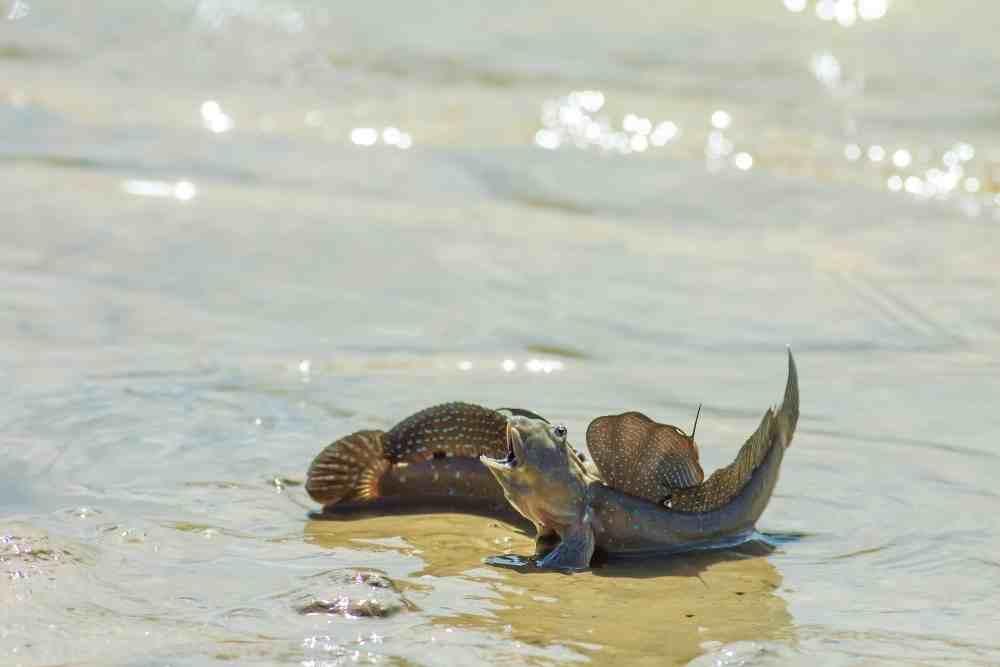
For example, the African lungfish is a species of fish that has evolved to survive in low-oxygen environments. These fish have developed lungs that are similar to those found in humans and are able to breathe air directly. They are also able to estivate, or burrow into the mud and seal themselves in a layer of mucus, where they can survive for months without water. This adaptation has allowed them to thrive in environments where other fish would quickly perish.
Anatomical Adaptations
So, what are the key anatomical adaptations that allow fish to walk on land? One of the most important is the development of powerful fins that can support their body weight on land. In many cases, these fins are much larger and more muscular than those found in non-amphibious fish. They are also often modified to include bony or cartilaginous structures that provide additional support and stability.

Another important adaptation is the development of lungs or air-breathing organs. In some cases, these are true lungs that are similar to those found in humans and other terrestrial animals. In other cases, they are more primitive structures that are capable of absorbing oxygen from the air. Either way, they provide the fish with a means of obtaining oxygen when they are out of the water, which is essential for their survival.
In addition to these adaptations, many amphibious fish have also developed specialized skin that can absorb oxygen and moisture from the air. This skin is often thin and highly permeable, allowing the fish to absorb oxygen and nutrients directly from the environment. It is also often covered in mucus, which helps to prevent water loss and protect the fish from dehydration.
Behavioral Adaptations
In addition to their anatomical adaptations, amphibious fish have also developed a range of behavioral adaptations that enable them to thrive in both aquatic and terrestrial environments. For example, many species of amphibious fish are able to move around on land using a variety of different gaits, including walking, crawling, and even jumping. They are also able to use their powerful fins to push themselves up onto land and to maneuver in tight spaces.

Another important behavioral adaptation is the ability to estivate or burrow into the mud and seal themselves in a layer of mucus. This allows the fish to survive for extended periods of time without water, where they can conserve energy and protect themselves from predators. It also allows them to survive in environments where the water may be temporarily absent or of poor quality.
In addition to these adaptations, many amphibious fish have also developed complex social behaviors that enable them to interact with other members of their species. For example, some species of mudskippers are known to form large colonies and to engage in complex courtship behaviors, including territorial displays and mating rituals. These behaviors are often similar to those found in terrestrial animals and are an important part of the fish's overall biology and ecology.
Ecological Importance
So, why are amphibious fish important from an ecological perspective? One of the main reasons is that they play a key role in the transfer of energy and nutrients between aquatic and terrestrial ecosystems. By moving between these two environments, they are able to transport nutrients and energy from one ecosystem to another, which can have a significant impact on the overall health and productivity of the ecosystem.
For example, many species of amphibious fish are important predators in aquatic ecosystems, where they feed on small invertebrates and other fish. By moving onto land, they are able to feed on terrestrial organisms, such as insects and worms, which can help to regulate their populations and maintain the balance of the ecosystem. They are also an important food source for other animals, including birds, mammals, and other fish.
Conservation Status
Unfortunately, many species of amphibious fish are facing significant threats to their survival, including habitat destruction, pollution, and overfishing. As a result, many of these species are now considered to be endangered or vulnerable, and conservation efforts are needed to protect them and their habitats.
For example, the African lungfish is listed as vulnerable on the IUCN Red List, due to habitat destruction and degradation, as well as overfishing and the introduction of non-native species. The mudskipper is also listed as near threatened, due to habitat destruction and degradation, as well as pollution and overfishing.
Conservation efforts are needed to protect these species and their habitats, including the establishment of protected areas and the regulation of fishing and other human activities. Additionally, research is needed to better understand the biology and ecology of these fish, as well as the impacts of human activities on their populations and habitats.
In conclusion, the ability of some fish to walk on land is a fascinating phenomenon that has evolved in response to changing environments and the need to survive and thrive in both aquatic and terrestrial ecosystems. By studying these fish, we can gain a better understanding of the complex interactions between different ecosystems and the importance of conservation and management efforts to protect these unique and fascinating creatures.
0 Response to "The Reason Why Some Fish Can Walk on Land"
Post a Comment