How Hummingbirds Hover in Mid-Air
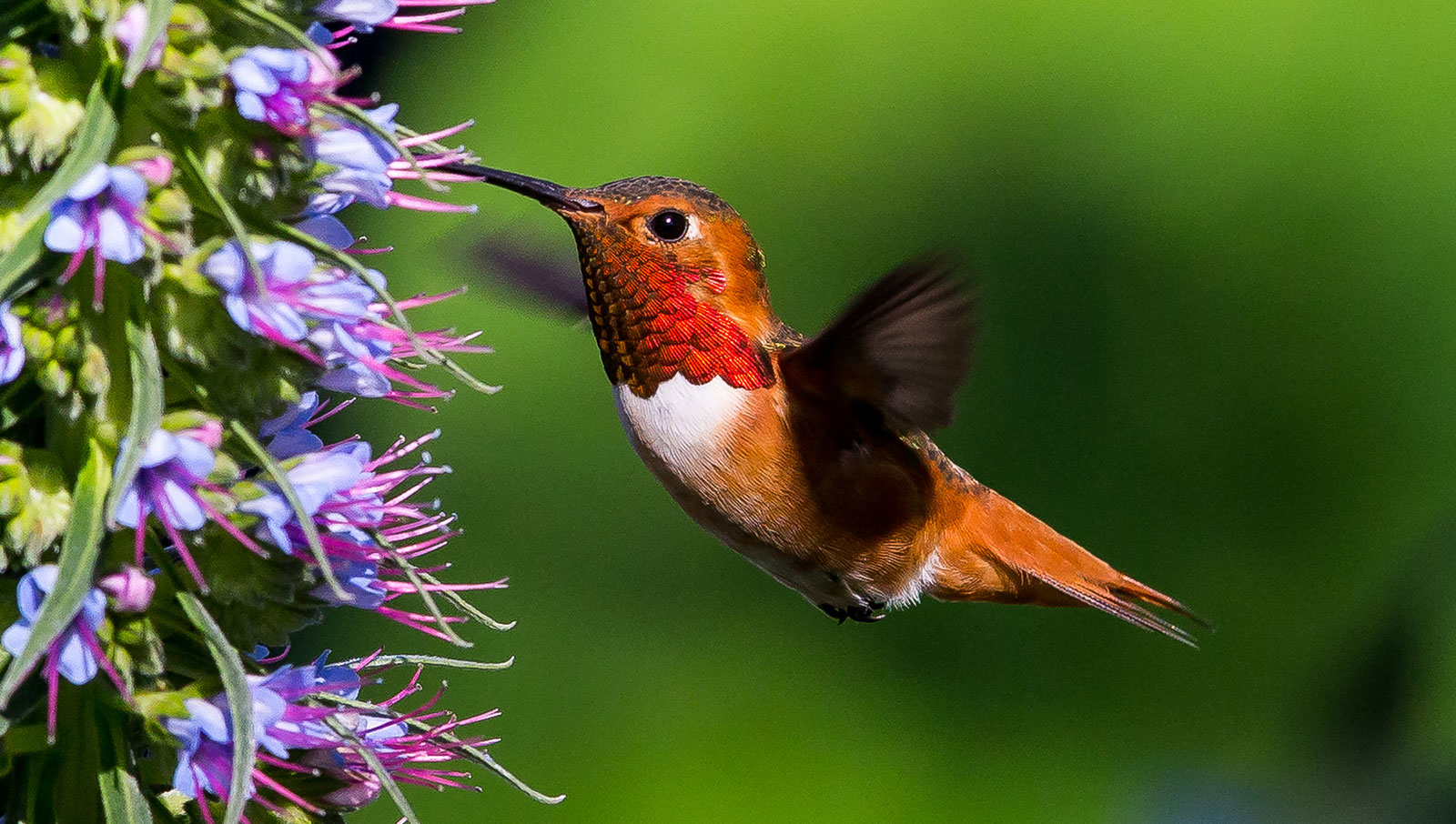
Have you ever been mesmerized by a tiny hummingbird, seemingly frozen in mid-air as it sips nectar from a flower? It’s a feat of nature that seems almost impossible, a dance of precision and power that defies our everyday understanding of flight. How do these little dynamos pull it off?
Many of us are accustomed to airplanes needing forward motion to stay aloft, or birds needing to glide and soar. The idea that something so small can remain perfectly still in the air, while beating its wings at an incredible rate, feels like a puzzle. We wonder if it's magic, or perhaps a special trick of physics we don't fully grasp.
The secret to the hummingbird's hovering ability lies in its unique wing structure and flight mechanics. Unlike most birds that generate lift primarily on the downstroke, hummingbirds generate lift on both the upstroke and the downstroke of their wings. They achieve this through a figure-eight wing motion, rotating their wings almost 180 degrees at the shoulder. This allows them to create thrust in almost any direction, enabling them to hover, fly backward, and maneuver with incredible agility.
In summary, hummingbirds achieve their amazing hovering ability through a combination of rapid wingbeats, a unique figure-eight wing motion, and the generation of lift on both the upstroke and downstroke. This allows them to defy gravity and perform incredible aerial feats. Key elements are wing structure, flight mechanics, lift generation, and maneuverability.
The Figure-Eight Flight
I remember the first time I really noticed a hummingbird hovering. I was sitting on my porch, enjoying a cup of coffee, when a ruby-throated hummingbird zipped up to the hanging fuchsia basket. It hung there, suspended as if by an invisible thread, its wings a blur. It was mesmerizing. I spent the next hour just watching it, trying to understand how it was physically possible. It defied everything I thought I knew about flight. It was more than just flapping its wings really fast. There had to be something more at play. It's this figure-eight motion that distinguishes hummingbird flight from that of most other birds. Think of it like an oarsman rowing a boat. The hummingbird’s wing acts like an oar, pushing air down and back on the downstroke, and then forward and down on the upstroke. This continuous motion generates lift and thrust in all directions. The bird’s shoulder joint allows for this incredible range of motion, enabling it to control the angle and direction of its wings with precision. This remarkable maneuverability is also aided by the hummingbird's relatively stiff wing bones, which provide the necessary stability for generating lift during both phases of the wingbeat. Without the ability to rotate their wings in this manner, hummingbirds would be unable to hover and perform their characteristic aerial acrobatics. The evolution of this specialized flight technique is a testament to the power of natural selection, enabling hummingbirds to exploit a unique niche in the ecosystem by feeding on nectar.
Aerodynamics of Hovering
Hummingbird hovering is a marvel of aerodynamics, showcasing a delicate balance of forces that allows these tiny creatures to defy gravity. The fundamental principle at play is the generation of lift, the upward force that counteracts the bird's weight. Unlike most birds that rely on forward motion to create lift over their wings, hummingbirds generate lift through the rapid oscillation of their wings in a figure-eight pattern. This motion creates a continuous stream of air flowing over the wings, generating a pressure difference that produces lift. The hummingbird's ability to precisely control the angle of its wings during both the upstroke and downstroke is crucial for maintaining stable hovering. By adjusting the angle of attack, the bird can manipulate the airflow and fine-tune the amount of lift generated. This requires a sophisticated neurological control system and highly specialized muscles that allow for precise and rapid adjustments. Furthermore, the hummingbird's small size and high wingbeat frequency create unique aerodynamic challenges. At such small scales, air behaves differently, becoming more viscous and prone to turbulence. Hummingbirds have evolved specific wing shapes and textures to minimize drag and maximize lift in these challenging conditions. The leading edge of the wing, for example, is often serrated, which helps to delay the onset of turbulence and maintain smooth airflow. Overall, the aerodynamics of hummingbird hovering is a complex interplay of physics, physiology, and evolution, showcasing the remarkable adaptations that allow these tiny birds to thrive in their ecological niche.
History and Myth of Hummingbirds
Hummingbirds, with their vibrant colors and dazzling flight, have captured the human imagination for centuries, weaving their way into the history and mythology of cultures around the world. In many indigenous cultures of the Americas, hummingbirds are revered as symbols of good luck, love, and joy. The Aztecs, for example, associated hummingbirds with Huitzilopochtli, the god of war, believing that the fallen warriors would return to earth as these tiny birds. The Mayans saw hummingbirds as messengers between the human world and the spiritual realm, carrying prayers and blessings to the gods. These beliefs reflect the hummingbird's energetic nature and its ability to seemingly defy the laws of physics. In some cultures, hummingbirds are also associated with healing and medicine. Their ability to extract nectar from flowers is seen as a metaphor for extracting the essence of life and restoring balance to the body. The hummingbird's association with beauty and love is also prevalent in folklore. Its vibrant colors and delicate features are often seen as symbols of romance and passion. In some stories, hummingbirds are believed to carry the spirits of loved ones, bringing messages of hope and comfort from beyond. As European explorers encountered hummingbirds in the Americas, they were equally fascinated by these unique creatures. Their rapid wingbeats and ability to hover in mid-air seemed almost magical, leading to a variety of fanciful theories about their origins and behavior. The hummingbird's role in pollination was also recognized, further highlighting its importance to the ecosystem. Today, hummingbirds continue to inspire awe and wonder, reminding us of the beauty and diversity of the natural world. Their presence in our gardens and parks brings a touch of magic to our everyday lives, connecting us to the rich tapestry of history and mythology that surrounds these remarkable birds.
The Hidden Secret of Hummingbird Flight
Beyond the visible spectacle of rapid wingbeats and aerial acrobatics, there lies a hidden secret to the hummingbird's hovering prowess: the intricate interplay of muscle control, neurological coordination, and sensory feedback. While we can observe the figure-eight motion of the wings and measure the aerodynamic forces at play, the underlying mechanisms that orchestrate this complex behavior are far more subtle and fascinating. One key aspect of this hidden secret is the hummingbird's exceptional muscle control. Unlike most birds, hummingbirds have a high proportion of red muscle fibers in their wings, which are specialized for sustained power output and fatigue resistance. These muscle fibers allow the bird to maintain its high wingbeat frequency for extended periods, enabling it to hover and maneuver with precision. Furthermore, the hummingbird's brain plays a crucial role in coordinating the complex muscle movements required for hovering. Specialized neural circuits in the brainstem and cerebellum regulate the timing and amplitude of wing movements, ensuring that the bird maintains a stable position in the air. This requires constant sensory feedback from the bird's eyes, inner ears, and proprioceptors (sensory receptors that detect body position and movement). By integrating this sensory information, the brain can make fine-tuned adjustments to the wing movements, compensating for changes in wind conditions and other environmental factors. Another hidden secret of hummingbird flight is the role of elastic energy storage in the wings. The hummingbird's wing bones and tendons are highly elastic, allowing them to store and release energy during each wingbeat. This reduces the metabolic cost of flight, allowing the bird to conserve energy and fly for longer periods. Finally, the hummingbird's ability to learn and adapt its flight behavior is also crucial for its survival. Young hummingbirds must learn to coordinate their wing movements and fine-tune their hovering technique through trial and error. This learning process is guided by sensory feedback and is essential for developing the skills needed to forage efficiently and avoid predators. In conclusion, the hidden secret of hummingbird flight lies in the intricate interplay of muscle control, neurological coordination, sensory feedback, elastic energy storage, and learning, showcasing the remarkable adaptations that allow these tiny birds to thrive in their ecological niche.
Recommendations for Attracting Hummingbirds
If you're captivated by the hummingbird's hovering abilities and want to witness these aerial displays up close, attracting them to your garden is a rewarding endeavor. Creating a hummingbird-friendly environment involves providing a reliable source of nectar, offering suitable nesting habitat, and minimizing threats from predators and pesticides. One of the most effective ways to attract hummingbirds is to plant a variety of nectar-rich flowers. Native flowering plants are particularly attractive to hummingbirds, as they have evolved together over time. Some popular choices include salvia, bee balm, trumpet vine, and honeysuckle. When selecting flowers, choose a mix of colors, shapes, and blooming times to provide a continuous source of nectar throughout the hummingbird season. In addition to flowers, you can also provide supplemental nectar feeders. These feeders should be cleaned and refilled regularly to prevent the growth of harmful bacteria and mold. Use a solution of one part white sugar to four parts water, and avoid adding any food coloring or honey, as these can be harmful to hummingbirds. Providing suitable nesting habitat is also important for attracting hummingbirds. These birds typically build their nests in trees and shrubs, using materials such as moss, lichen, and spider webs. Plant a variety of trees and shrubs in your garden to provide potential nesting sites. Minimizing threats from predators and pesticides is crucial for protecting hummingbirds. Keep cats indoors or supervise them closely when they are outside, as they can prey on hummingbirds. Avoid using pesticides in your garden, as these can harm hummingbirds and other beneficial insects. Finally, providing a source of fresh water can also attract hummingbirds. A shallow birdbath or a gentle spray from a garden hose can provide a refreshing drink for these tiny birds. By following these recommendations, you can create a welcoming environment for hummingbirds in your garden and enjoy the spectacle of their hovering flight.
Challenges Hummingbirds Face
Despite their remarkable hovering abilities and ecological importance, hummingbirds face a number of challenges that threaten their populations. Habitat loss, climate change, and pesticide use are among the most significant threats to these tiny birds. Habitat loss is a major concern for hummingbirds, as it reduces the availability of food and nesting resources. As forests and meadows are converted to agricultural land and urban areas, hummingbirds lose access to the nectar-rich flowers and suitable nesting sites they need to survive. Climate change is also posing a significant threat to hummingbirds. As temperatures rise and precipitation patterns change, the timing of flowering events is shifting, disrupting the synchrony between hummingbirds and their food sources. This can lead to starvation and reduced reproductive success. Pesticide use is another major threat to hummingbirds. Many pesticides are toxic to hummingbirds and other beneficial insects. Even when pesticides are not directly lethal, they can reduce the availability of insects, which are an important source of protein for hummingbirds, especially during the breeding season. In addition to these threats, hummingbirds also face challenges from predation and competition with other nectar-feeding animals. Cats, hawks, and other predators can prey on hummingbirds, while bees and other insects can compete with them for nectar resources. To help protect hummingbirds, it is important to address these challenges through conservation efforts. This includes protecting and restoring hummingbird habitat, reducing pesticide use, and mitigating the impacts of climate change. By working together, we can ensure that these remarkable birds continue to thrive in our gardens and ecosystems for generations to come.
Tips for Photographing Hummingbirds
Capturing the beauty of a hummingbird in flight is a rewarding challenge for any photographer. Their speed and agility make them elusive subjects, but with the right equipment, techniques, and patience, you can capture stunning images of these tiny birds in action. One of the most important tips for photographing hummingbirds is to use a telephoto lens. A lens with a focal length of at least 300mm is recommended, as it will allow you to capture close-up images of the birds without disturbing them. A fast aperture is also important, as it will allow you to use a faster shutter speed, which is essential for freezing the hummingbird's rapid wingbeats. Another important tip is to use a tripod. A tripod will help you to stabilize your camera and avoid blurry images, especially when using a telephoto lens. A gimbal head is particularly useful for photographing hummingbirds, as it allows you to smoothly track the birds as they move. When photographing hummingbirds, it is important to use a fast shutter speed. A shutter speed of at least 1/1000th of a second is recommended, as it will freeze the hummingbird's wingbeats and prevent motion blur. You may need to increase your ISO to achieve a fast enough shutter speed, especially in low-light conditions. Using continuous shooting mode can also increase your chances of capturing a great shot. This mode allows you to take a rapid burst of images, increasing the likelihood that you will capture a moment of perfect focus and composition. Finally, patience is key when photographing hummingbirds. These birds are unpredictable and may not cooperate with your photographic efforts. Be prepared to spend time observing their behavior and waiting for the right moment to capture your shot. By following these tips, you can increase your chances of capturing stunning images of hummingbirds in flight.
Understanding Hummingbird Behavior
To successfully photograph hummingbirds, understanding their behavior is crucial. Knowing their feeding patterns, preferred habitats, and social interactions will help you anticipate their movements and capture the perfect shot. Hummingbirds are primarily nectarivores, meaning they feed on nectar from flowers. They also consume small insects and spiders, which provide them with essential protein. Hummingbirds typically visit flowers in a specific sequence, following a "trapline" to maximize their energy intake. They are also territorial and will defend their feeding areas from other hummingbirds. Hummingbirds are most active during the early morning and late afternoon, when the light is softer and the temperatures are cooler. They often perch on branches or wires between feeding bouts, allowing them to rest and conserve energy. When photographing hummingbirds, it is important to be aware of their feeding patterns and territorial behavior. Position yourself near a nectar source that they frequent, such as a hummingbird feeder or a patch of flowering plants. Be patient and wait for them to arrive. Avoid making sudden movements or loud noises, as this can scare them away. When photographing hummingbirds, it is also important to consider the background. A clean, uncluttered background will help to isolate the hummingbird and make it stand out in the image. Use a wide aperture to blur the background and create a shallow depth of field. Finally, be respectful of hummingbirds and their habitat. Avoid disturbing them or damaging their environment. By understanding their behavior and following ethical photography practices, you can capture stunning images of these remarkable birds without causing harm.
Fun Facts About Hummingbirds
Hummingbirds are truly fascinating creatures, full of surprises and unique adaptations. Here are a few fun facts that might make you appreciate these tiny dynamos even more. Did you know that hummingbirds are the only birds that can fly backward? Their unique wing structure and flight mechanics allow them to maneuver in ways that other birds simply can't. This ability is essential for hovering and for extracting nectar from flowers. Hummingbirds have the highest metabolism of any warm-blooded animal. They need to consume a large amount of nectar each day to fuel their rapid wingbeats and maintain their body temperature. Some hummingbirds can beat their wings up to 80 times per second! This incredible speed generates the lift and thrust needed for hovering and maneuvering. Hummingbirds have long, slender bills that are perfectly adapted for reaching into flowers to extract nectar. Their tongues are also specially designed for this purpose, with tiny grooves or bristles that help them to lap up the nectar. Hummingbirds are found only in the Americas, from Alaska to Tierra del Fuego. There are over 300 different species of hummingbirds, each with its own unique colors, patterns, and behaviors. Some hummingbirds migrate thousands of miles each year to breed and find food. The ruby-throated hummingbird, for example, migrates from Canada to Central America each fall. Hummingbirds are important pollinators, playing a vital role in the reproduction of many plants. As they move from flower to flower, they transfer pollen, helping to fertilize the plants. These are just a few of the many fun facts about hummingbirds. Their remarkable adaptations and behaviors make them one of the most fascinating and charismatic groups of birds on the planet. By learning more about these tiny dynamos, we can better appreciate their role in the ecosystem and help to protect them for future generations.
How to Support Hummingbird Conservation
Hummingbirds, with their vibrant colors and energetic flight, are a joy to observe. However, their populations face numerous threats, including habitat loss, climate change, and pesticide use. Supporting hummingbird conservation is essential to ensure that these remarkable birds continue to thrive. One of the most effective ways to support hummingbird conservation is to create a hummingbird-friendly habitat in your own backyard. Plant a variety of native, nectar-rich flowers to provide a reliable source of food for hummingbirds. Avoid using pesticides, as these can harm hummingbirds and other beneficial insects. You can also put up a hummingbird feeder to supplement their diet, but be sure to clean it regularly to prevent the growth of harmful bacteria and mold. Another way to support hummingbird conservation is to participate in citizen science projects. These projects involve collecting data on hummingbird populations and distribution, which can help scientists to track trends and identify conservation priorities. You can also support organizations that are working to protect hummingbird habitat and promote sustainable land management practices. Many conservation organizations rely on donations and volunteer support to carry out their work. By donating to these organizations or volunteering your time, you can make a significant contribution to hummingbird conservation. Finally, you can educate others about the importance of hummingbird conservation. Share your knowledge with friends, family, and neighbors, and encourage them to take action to protect these amazing birds. By working together, we can make a difference for hummingbirds and ensure that they continue to thrive in our gardens and ecosystems for generations to come.
What if Hummingbirds Disappeared?
The thought of a world without hummingbirds is a sobering one. These tiny, vibrant creatures play a vital role in our ecosystems, and their disappearance would have far-reaching consequences. As pollinators, hummingbirds are essential for the reproduction of many plants. Without them, many plant species would struggle to survive, leading to a decline in biodiversity. This could have a cascading effect on other animals that depend on these plants for food and shelter. The disappearance of hummingbirds would also have economic consequences. Many farmers rely on hummingbirds to pollinate their crops, and the loss of these pollinators could lead to reduced yields and increased food prices. Furthermore, the absence of hummingbirds would diminish the aesthetic value of our gardens and parks. Their vibrant colors and energetic flight bring joy to many people, and their disappearance would be a significant loss. From an ecological perspective, the loss of hummingbirds could disrupt complex food webs and ecological interactions. Their absence could create opportunities for other species to thrive, potentially leading to imbalances in the ecosystem. Certain plants that rely solely on hummingbirds for pollination might face extinction, leading to further biodiversity loss. The disappearance of hummingbirds would also impact cultural traditions and folklore. In many cultures, hummingbirds are revered as symbols of good luck, love, and joy. Their disappearance would be a loss of cultural heritage and a reminder of the fragility of the natural world. In conclusion, the disappearance of hummingbirds would have far-reaching consequences for our ecosystems, economies, and cultures. It is essential that we take action to protect these amazing birds and ensure that they continue to thrive for generations to come.
Listicle: 10 Amazing Hummingbird Facts
Here's a quick list of ten fascinating facts about hummingbirds that will leave you in awe of these tiny creatures:
- They're the only birds that can fly backward: Hummingbirds' unique wing structure allows them to hover, fly forward, backward, and even upside down.
- Their hearts beat incredibly fast: A hummingbird's heart can beat up to 1,260 times per minute!
- They have the highest metabolism of any warm-blooded animal: They need to consume half their weight in sugar each day.
- They migrate long distances: Some species travel thousands of miles between breeding and wintering grounds.
- They're found only in the Americas: There are over 300 species of hummingbirds, all native to the Western Hemisphere.
- Their tongues are specially adapted for nectar feeding: They have long, grooved tongues that act like straws.
- They can enter a state of torpor: To conserve energy, they can slow their metabolism and lower their body temperature.
- They build tiny, intricate nests: Their nests are often made of moss, lichen, and spider webs.
- They play a vital role in pollination: They help to pollinate many plants, including some important crops.
- They come in a dazzling array of colors: Their iridescent feathers are created by the way light reflects off their feather structure.
These facts highlight the remarkable adaptations and behaviors that make hummingbirds so unique and fascinating. Their presence in our gardens and ecosystems is a testament to the beauty and diversity of the natural world. By learning more about these tiny dynamos, we can better appreciate their role in the ecosystem and help to protect them for future generations.
Question and Answer About Hummingbirds
Here are some common questions about hummingbirds and their amazing hovering abilities:
Q: How do hummingbirds hover so effortlessly?
A: Hummingbirds hover by beating their wings in a figure-eight pattern. This motion generates lift on both the upstroke and the downstroke, allowing them to stay suspended in mid-air.
Q: How fast do hummingbirds beat their wings?
A: The wingbeat frequency varies depending on the species, but some hummingbirds can beat their wings up to 80 times per second.
Q: What do hummingbirds eat?
A: Hummingbirds primarily feed on nectar from flowers. They also consume small insects and spiders, which provide them with essential protein.
Q: How can I attract hummingbirds to my garden?
A: Plant a variety of native, nectar-rich flowers, and put up a hummingbird feeder. Be sure to clean the feeder regularly to prevent the growth of harmful bacteria and mold.
Conclusion of How Hummingbirds Hover in Mid-Air
The ability of hummingbirds to hover is a testament to the wonders of natural adaptation and the power of evolution. By understanding the mechanics of their flight, the history and mythology surrounding them, and the challenges they face, we can gain a deeper appreciation for these remarkable birds and work to protect them for future generations. Their tiny bodies hold a complex secret, a dance of muscle and bone and feather, all working together to defy gravity and paint the air with fleeting color.
0 Response to "How Hummingbirds Hover in Mid-Air"
Post a Comment